
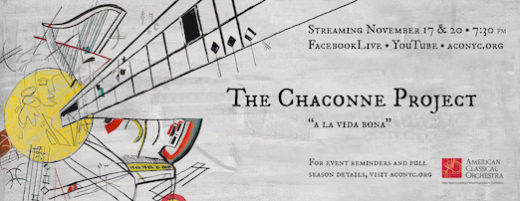
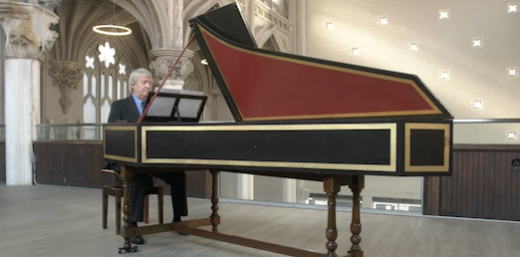
On November 17, American Classical Orchestra (ACO) opens its 2020-2021 season with a unique two-part concert dedicated to the music genre of the chaconne, available on the American Classical Orchestra’s website starting at 7:30 PM. (Part II will follow on November 20). The program features award-winning Mexican mezzo-soprano Guadalupe Peraza, violinists Karen Dekker and Chloe Fedor, gambist Arnie Tanimoto, theorbo player Charles Weaver, and ACO founder and artistic director Thomas Crawford on harpsichord. This concert is a riveting start to what promises to be an awe-inspiring and versatile season offered digitally with the hope that the featured masterpieces played by brilliant musicians on period instruments will bring joy, comfort, beauty, and unity. Maestro Thomas Crawford shared his vision for this season as well as his thoughts on playing on period instruments and keeping music performance alive, engaging, and relevant as we near the end of this difficult year and head into 2021.
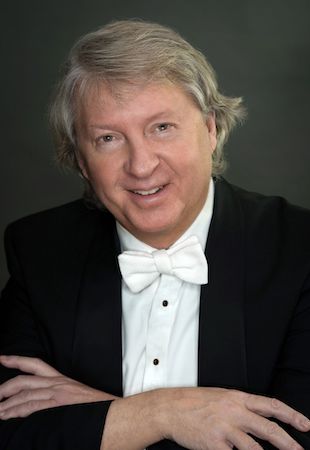
You have just announced your 2020-2021 season during which American Classical Orchestra will present concerts throughout Manhattan from November 17, 2020 to May 15, 2021. Please tell us about your vision and mission behind the planning and execution of this season, which will take place, at least for the first concerts, under the unusual and restricted circumstances of our time.
The two most impactful harms to the music world are the utter decimation of employment for musicians and disappearance of performances for audiences. Both supply and demand vanished in an instant. ACO’s first loss was a major Beethoven festival in May, 2020, then the autumn programs, then our Beethoven 9th Symphony on the occasion of the composer’s 250th birthday, and just this week Lincoln Center cancelled its spring 2021 season, which also affects us. As Artistic Director, I’ve held out longer than some others in hopes that things will improve over such large six-month swaths of time. But the virus has continued, so I had to figure out a way to employ some musicians and provide video and virtual music to our audience.
Our first initiative is a beautiful program based on the chaconne form. I had always been intrigued by the quality of chaconnes written by composers from 1650-2000. The moods range from quick, syncopated raucous dances to heart-wrenching laments by great composers such as Monteverdi and Purcell.
I surveyed our musicians for favorite chaconnes and landed on a wonderful group of ten. We secured a visually and acoustically generous venue in Harlem, hired a top videographer, and found ourselves just as excited as we would be if producing a regular live concert.
The awesome take-away from our Chaconne Project wasn’t the employment or ability to finesse Covid protocols. It was the musicians’ return to inspiration from making music with others.
The “Chaconne” program includes music by a woman composer, Barbara Strozzi, a rarity in the 17th century. She was a singer as well as a composer and she is said to have had more music in print than other composers of the time. Please share with us your thoughts on this remarkable woman and her music.
To be candid, I asked singer Guadalupe Peraza for her chaconne suggestions and Strozzi was one among many. I looked at the score and found it captivating. I selected it solely on its musical merit. Later I noticed the first name ‘Barbara’, and realized with excitement that we’re performing music by a 17th-century rare female composer. The repeating bass line of her chaconne is identical to the one Monteverdi uses in his aria on this same program. Clearly Ms. Strozzi was fully learned in the music of her day. She must have had exceptional self-esteem because while there were surely more women writing music, few had the confidence to put it in print… that she made that effort is the reason we know her work today.
In honor of Beethoven’s 250th anniversary, your season will offer a recital marathon of Beethoven’s 32 piano sonatas between May 12 and 14, 2021, an incredible feat. This is part of ACO’s “Sfzp Project,” a three-year cycle of programs and events designed to advance fortepiano performance in New York City and beyond, and which will also include a fortepiano competition. Would you tell us more about this project and its implications?
While the period instrument movement has become mainstreamed worldwide in the last quarter century, the fortepiano has lagged behind most other instruments when it comes to performer studies and audience interest. Yet, of all instruments, the piano is of course dominant in music history. Our international competition, piano recitals, master classes by the world’s leading artists, chamber and concerto repertoire, all can draw great attention to the fortepiano and contribute to its future in the period instrument world. Hear Petra Somlai’s recent recording for ACO of Beethoven’s Moonlight Sonata. The sound of the fortepiano is so very different from a modern piano. Indeed, the softer sound was frustrating to the near-deaf composer, but 250 years later, the authentic sound carries us back to Vienna in 1800.
When you founded American Classical Orchestra—initially the Orchestra of the Old Fairfield Academy—did you envision how far the orchestra would come and what a profound cultural impact it would have?
Modestly, I think I did know that a professional period instrument orchestra would grow in its cultural impact. People don’t go to museums to view copies. The use of original instruments known to great composers affirms the lasting value of the literature. Thousands of listeners to the ACO over the years have gradually fallen in love with the more open texture, the organic materials, the ability to hear Bach’s music more clearly and intimately. That is not likely to go backward now!
It must be quite an experience not only to be enveloped by the sounds of period instruments but to also produce those sounds by performing, like having direct contact with and control of how music was meant to sound in the centuries of its composition. How does this artistic time travel feel and what does it mean for you to keep it intact? Do you find it less authentic or satisfying to hear the same piece played on a non-period instrument?
At first I did NOT find it less satisfying to hear Mozart played on modern instruments because A) I myself as a child had played Mozart on a modern Steinway, B) the early pioneer musicians of the period instrument movement were struggling with tone, intonation, technique, basically the relearning of artisan craft. In Europe it was described as the most important change to classical music in a century. So true. As the players improved and period orchestras and conservatories proliferated around the globe, I knew it was a permanent change to the way we play and hear this great music of the past. I have had a number of supernatural experiences since childhood that I view as sympathetic vibrations with the past. Think of ‘ultrasound’, or vibrations that penetrate a barrier. The medium of music is vibration. Once in a great while, vibrations in the present align with vibrations that were set in motion in the past. When that happens, a whole new consciousness opens, that which we call ‘sympathetic vibrations’. While I have only experienced this a handful of times, even as I hear music every day of my life, those moments reveal the legacy, the continuity of our ancestors….
How do you think this era’s enforced adaptability to engage audiences virtually will impact the future of the performing arts? I would like to believe that there will be a surge of music and theatre lovers taking over concert halls and artistic venues when we emerge from covid. What kind of post-covid future do you see for ACO and for music performance in general?
No one could argue that such a devastating event has many positives. But humans will always need to congregate. No movie has ever elicited the grip of a thrilling live theater. No recording of Beethoven’s 9th can equal the experience of 100 musicians vibrating the venue in unison. Remember, recordings started a hundred years ago and had a major impact on the music industry… yet statistics show that live audiences have grown and grown worldwide.
Do you have any special message for your New York City audiences who undoubtedly miss attending your concerts in person?
Yes of course: Go to our website and view our new film, The Chaconne Project. That will make everyone long to return to hear it in person soon! People speculate that the pandemic may have caused permanent damage to live performing arts events, as people have become accustomed to listening to recordings and electronic broadcasts. But I ask myself if I miss the particular meal I’ve shared with a family member or friend, and answer that I don’t remember the food because I miss the people. Performing arts are, at best, a medium for all of us to share. Live. In the moment and in the same place. We are wired to share. We are reinforced by sharing in person more than by Instagram, TikTok, or any social media or afterthought. We will all rejoice when we return to attending concerts, the musicians onstage and, equally, the audience. I think the long ‘fermata’ (the musical term for an indeterminate silence in a score) will be followed by the deepest love of sharing music at live concerts when we resume.
To learn more about the two-part Chaconne concert on November 17 and 20 visit the American Classical Orchestra website (aconyc.org)
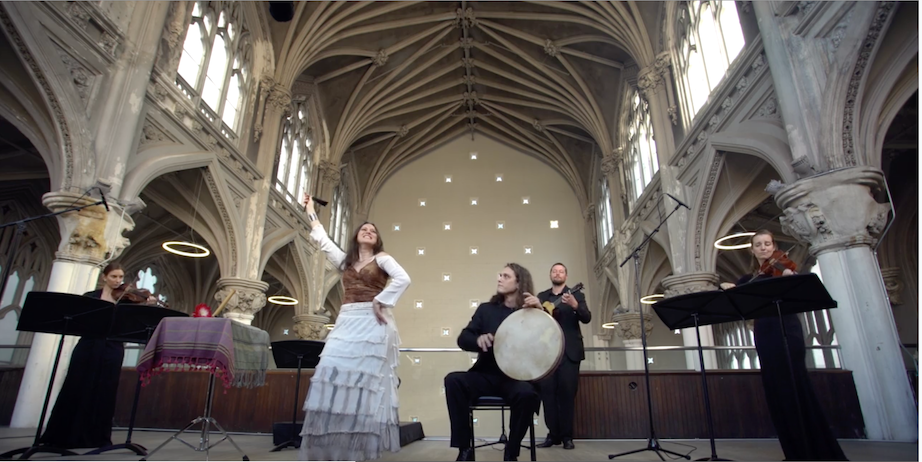
Opening photo: Performers in the Chaconne concert (left to right): Chloe Fedor, violin; Guadalupe Peraza, mezzo; Michael K. Harrist, bendir; Charles Weaver, Baroque guitar; Karen Dekker, violin; obscured (behind Guadalupe): Arnie Tanimoto, viola da gamba
Photo of Thomas Crawford is courtesy of American Classical Orchestra. All other photos are courtesy of American Classical Orchestra from Ibis Productions – Jeremy Robins