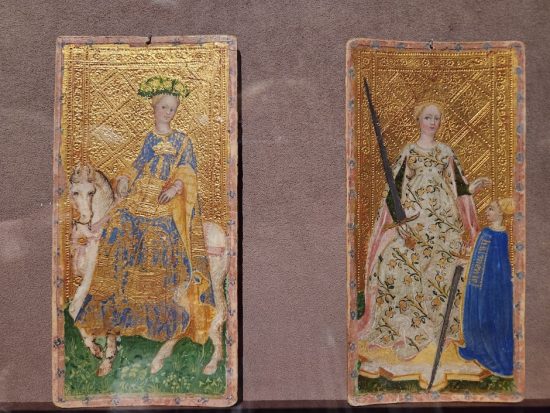
With two rooms to explore, visitors can view the earliest cards from the 15th century, ones commissioned by royalty for afternoon games like our modern-day Bridge or Rummy. The second room follows the cards into the twentieth century after French occultists deemed them more mystical and based on an ancient Egyptian book of wisdom and magic.

Guests explore the two rooms of tarot history
A short film illustrates how a deck of cards was produced during that time, which makes the experience of viewing of the cards more remarkable. Each of the 78 cards were typically commissioned, then hand-painted on several layers of paper accompanied by tiny pin-sized holes to create texture and patterns. The result was a collection of miniature Renaissance paintings on strong and sturdy card stock that would last and withstand years of frequent handling.
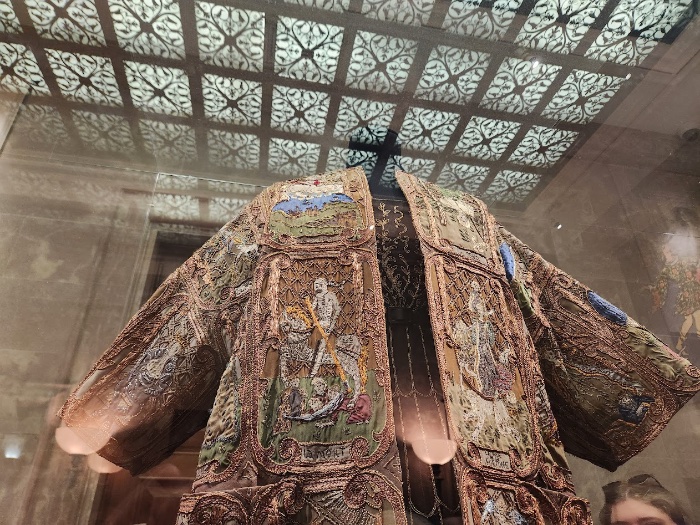
Coat embroidered with images of tarot, from the Christian Dior collection 2017
Of special note is the display of the Visconti-Sforza cards, made for high society in 15th century Milan. It’s the first time these cards from collections from New York and Italy were together in one exhibit. Guests can then compare the cards’ transformation over the centuries where artists took creative licenses to add their own artistic interpretation into the symbols and images. Finally, come 1909, British poet and mystic Arthur Edward Waite brought his own version of cards to life, bringing characters and storytelling into the picture. They’re the ones most of the cards are today are fashioned after.
Plan to spend a few hours here not only to see the exhibits, but also to take in the history of the Morgan Library & Museum from its beginnings in the late 1890’s when manuscripts, early printed books and old master drawings and prints were being collected.
Tarot! Renaissance Symbols, Modern Visions runs until October 4, 2026
themorgan.org
Photos by MJ Hanley-Goff
Top: Samples of the Visconti-Sforza tarot cards