Most people think the highlights of travel are the big ticket moments. The famous viewpoint, the cathedral, the museum, the guided excursion. Those things matter, of course. But what often makes a trip feel personal instead of prewritten is something much smaller: where your money lands during the day.
The Best Part of a Trip Might Be the Small Purchase You Did Not Plan
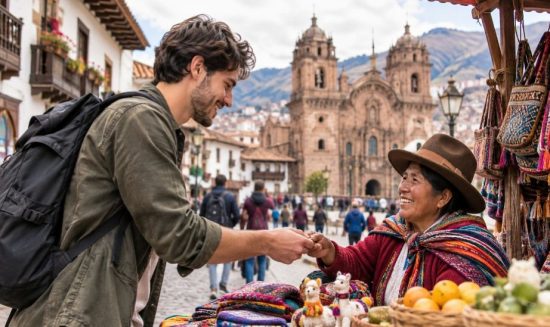
A trip becomes more interesting when you leave a little room for unplanned spending at neighborhood businesses. That could mean buying fruit from a market stall, stopping for coffee at a family run café, or chatting with a bookseller after browsing maps and postcards. Even if you booked one of many Cusco tour packages, the hours around the itinerary can shape your memory just as much as the main attraction. Those small choices pull you closer to the place itself.
Why Local Spending Changes the Feel of Travel
Prepackaged travel can be smooth and efficient, but it can also flatten a destination into a checklist. You move from one polished experience to the next, often without much real contact with daily life. Local spending interrupts that pattern in the best possible way.
When you buy from a neighborhood bakery or hire a local driver for a short ride, you are not just paying for a service. You are stepping into someone else’s routine for a few minutes. You hear what time people actually eat lunch. You find out which plaza fills up in the evening. You learn which dish is only made on certain days. These details rarely appear in brochures, yet they are often what travelers remember years later.
There is also a wider effect. The U.S. Small Business Administration describes small businesses as central to vibrant communities, a reminder that spending locally supports the character that travelers came to experience in the first place. Small businesses are the heart of communities is not just a policy idea. It is something travelers can feel on the ground.
Human Connection Is the Real Upgrade
Luxury in travel is often sold as convenience. No waiting, no guessing, no friction. But some of the most rewarding moments come from light, human friction. You ask a vendor what an unfamiliar snack is. You mispronounce the name of a street and someone laughs kindly before helping you. You go into a shop for water and walk out with a restaurant recommendation scribbled on a receipt.
These moments cannot be mass produced. They come from dealing with people whose business is rooted in the neighborhood, not designed to keep visitors in a bubble. The exchange may last three minutes, but it gives texture to the day. Suddenly the place stops feeling like a backdrop and starts feeling lived in.
That is especially true in cities with strong local identity. A neighborhood merchant can tell you more about how a place breathes than a polished welcome packet ever could. If travel is supposed to expand your perspective, then interaction matters as much as scenery.
Unexpected Surprises Usually Cost Very Little
One of the funny things about travel is that expensive does not always mean memorable. Often the best stories begin with a small, casual decision. You duck into a market because it starts raining. You buy a handmade snack because the line is long and locals seem excited. You wander into a side street and hear music coming from a courtyard café.
Local spending creates openings for discovery because it slows you down enough to notice what is happening nearby. Instead of moving through a destination in a sealed corridor, you become responsive to it. That is when surprise enters the trip.
This is one reason community based tourism is so appealing. UN Tourism has noted that community tourism can bring income to families through local enterprises such as meals, guiding, and crafts, while also keeping travelers closer to authentic community life. Community tourism can support rural development because it connects visitor interest with local knowledge and participation. For travelers, that connection often makes the experience feel less staged and more alive.
How to Spend Locally Without Turning It Into a Project
You do not need to turn every purchase into a moral statement or spend your vacation researching every storefront. The point is simply to leave room for curiosity.
Start with one meal a day outside the obvious tourist zone. Buy one practical thing from a local shop instead of a hotel desk or chain store. If you are choosing souvenirs, look for something made nearby rather than something imported in bulk. Ask open ended questions. What do people order here in the morning? Which market is busiest on weekends? Is there a dish locals eat during festivals?
Most importantly, keep some slack in the schedule. If every hour is booked, you will miss the little detours that make local spending meaningful. A trip does not need to be disorganized to feel spontaneous. It just needs breathing room.
A More Personal Way to Measure Value
Travelers often judge value by how much they managed to see. A better measure might be how much they actually encountered. Did the trip include real conversation? Did it make room for surprise? Did it reveal a rhythm that belonged to the place rather than to the itinerary?
Spending money locally will not guarantee a perfect trip. But it often makes a trip more interesting because it replaces passive consumption with participation. You notice more. You talk more. You come home with stories that do not sound borrowed.
In the end, the purchase you remember most may not be the one with the highest price tag. It may be the simple one that came with a recommendation, a laugh, a new flavor, or a sudden turn down a street you were not planning to explore. That is the kind of spending that does more than fill a shopping bag. It gives the journey a pulse.
Photo created in AI
Contributed posts are advertisements written by third parties who have paid Woman Around Town for publication.