
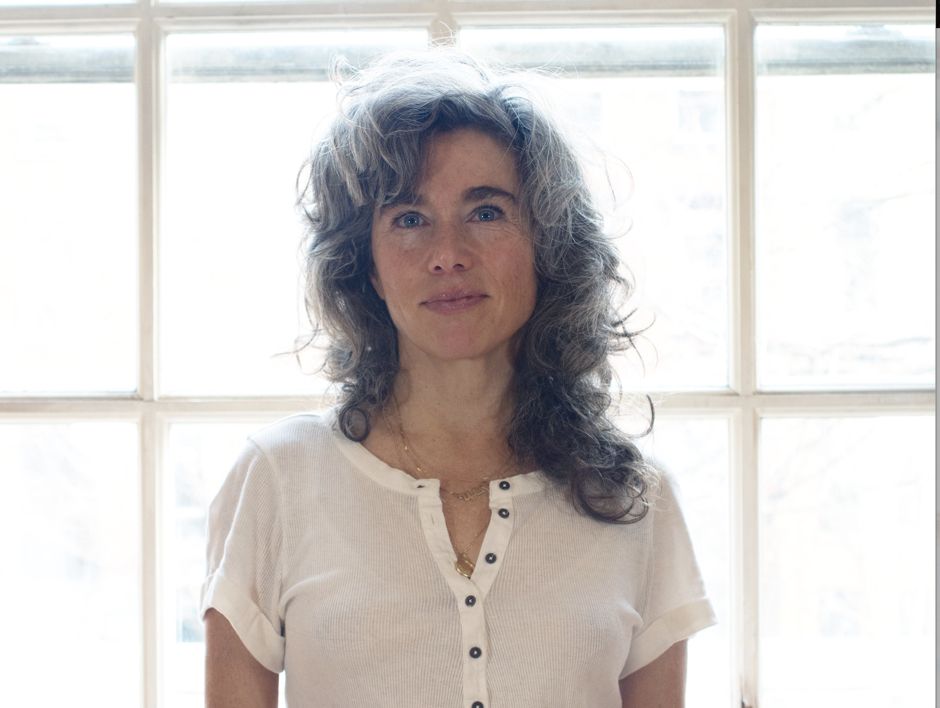
Vieve Radha Price is living proof that our past experiences inform our futures. Before she launched TÉA Artistry, she worked with Nitestar, a theatre company specializing in HIV prevention education and adolescent reproductive health, and then joined the Peace Corps in Tanna, Vanuatu, using theatre performance programs that taught young people about sexual health. With TÉA Artistry she is able to focus on contemporary issues, truly making this venue a “theatre for social change.” Talk about perfect timing! The company’s new production Being Chaka, will run from May 6 through May 27, opening is May 8, in a limited engagement at New Ohio Theatre (154 Christopher Street). Vieve took time from her busy rehearsal schedule to answer our My Career Choice questionnaire.
Can you point to one event that triggered your interest in your career?
When I think about my career, I have a hard time pinning it down to one role or professional category – so it is difficult to identify one event that triggered my interest in it. But I do have a title, which helps clarify what I am doing with my professional life. I am the Co-Director of TÉA Artistry, which means that I am a social entrepreneur in the arts, and one of the leaders of the small non-profit organization that I founded some years ago. What event triggered my decision to launch TÉA? I couldn’t find an organization to work for that was creating and producing the kind of art I wanted to create, so I had to start my own.
As Co-Director of TÉA Artistry, I create art. More specifically, I lead teams of artists in the collaborative process of researching and devising original theatrical performance pieces on topics of contemporary social concern. In this capacity, I have a career as an artist who helps to create, direct, and produce theatrical performance pieces in the genre of “theatre for social change.” What triggered my interest in the theatre? A love of theatrical performance that began in high school and continued in college.
As Co-Director of TÉA Artistry, I am a methodologist of theatre artistry and I have developed an approach to devising theatrical performance pieces called Insight artistry. What triggered my interest in developing a theatrical aesthetics of social change? Two years serving in the Peace Corps coupled with a graduate degree in conflict analysis and resolution.

What about this career choice did you find most appealing?
TÉA Artistry is dedicated to the integration of conflict transformation and the performing arts. We gather companies of multidisciplinary artists together to create what we call insight art. Insight artistry is based on asking curious questions to ourselves and our communities about issues that matter in our lives. By asking people about themselves in their own terms we engage in a process that can be deeply transformative. The appeal of creating art from this curious and open place is vast. There is so much appeal to becoming involved in a wonder-filled process! When we are engaging at this level, we can never guess, never assume, never hypothesize what someone might say. People are so rich in their interiority, so compelling in the things they are feeling and the choices and decisions they are making – it is illuminating and dramatic. Making art from these stories is a most astounding aesthetic experience.
What steps did you take to begin your education or training?
After finishing college, I moved to New York City to involve myself in the world of theatre. To my surprise, I found myself drawn to work with Nitestar, a theatre company specializing in HIV prevention education and adolescent reproductive health. The art we created at Nitestar came from our own stories as well as those in our communities. The pieces were informative, fun, and certainly they started young people not only talking, but questioning. This was my first experience in using artistic performance for educational purposes. It was formative for me, but it was only the beginning.

Being Chaka – The Company
After working with NiteStar I joined the Peace Corps — it was here that I learned the power of humility, of asking questions, of saying I don’t know, and wondering with people about what might be the best next step. I worked with young adults to start theatre performance programs that taught their peers about sexual health. This was a very delicate topic to be raising in Tanna, Vanuatu. I had to go to the chief of every village to ask permission, and many times our conversations began with a hard no. Still, the village chiefs and adults all wanted their children to be safe. And even though no cases of HIV had been diagnosed in the country at that point in time, people knew about the ravages of the virus on other islands in the south pacific like Papua New Guinea and the Solomon Islands. So no turned to yes.
After Peace Corps I entered graduate school, and I began learning about the Insight approach to conflict transformation. It was this philosophy that helped me begin to piece together all of the elements that I cared about – human beings and the way we make meaning, and the ways in which our minds are carried by the questions we ask and the stories we tell. I began to study the Insight approach with a focus on using the performing arts to illuminate on stage the inner drama of being human.
The next step was the establishment of TÉA Artistry as an organization.

Tara Amber and Kahiem Riviera in Being Chaka
Along the way, were people encouraging or discouraging?
Most of the people I have encountered along my journey have been encouraging, supportive, receptive, and engaged. The work we do with Insight artistry is inherently a journey of wonder and curiosity, and when people are exposed to the process – and to the art we produce – they find themselves compelled by the collaborative nature of our process. We ask people about themselves and about what they care about. We wonder with them about their stories and their experiences. We want to hear what people think and feel, what they worry about, and what they hope for. This is intrinsically engaging.
The only discouraging element is that building a career in this work – making a living at it – it can be hard. Funding for the arts is scarce and competitive in the U.S. That has definitely been a challenge.

Lawanda Hopkins, Jae Jackson, Kahiem Rivera in Being Chaka
Did you ever doubt your decision and attempt a career change?
I have many doubts about my career, and they show up in the form of “What in the world am I doing?” “I’m not sure I can do this.” “I don’t know how.” But I have never been tempted to try something else. I guess that’s because doubt and discovery are at the heart of my work.
I’m the Co-Director of TÉA artistry, but this is not a defined role with a discrete set of tasks and predictable outcomes. The main responsibility of my role is to foster curiosity and to facilitate discovery – artistic discovery, methodological discovery, social discovery – discovery of how a theatrical performance can dramatically reflect to our audience members the inner conscious dynamics of social and cultural conflicts in which they are already immersed: race, religious identity, community violence, polarization. If this were an easy puzzle to solve, it would have been solved already. I’ve been working on it for over a decade, and Insight artistry is my answer. But questions remain, and so does doubt. But not about my career choice.

TÉA Artistry’s Chuk Obasi and Vieve Radha Price (Photo by John Keon)
When did your career reach a tipping point?
Has it reached a tipping point? I supposed the answer depends on what we think of as a tipping point. I founded TÉA in 2009 and I have been dedicated to developing the method for artistic creation ever since. Insight artistry is what we call the method that guides and orients our aesthetic process. In that respect I would say the tipping point came when we were able to move Insight artistry into a fully realized method of artistic practice.
In the early stages we experienced the tension between theory and practice. I was teaching artists the theory of conflict analysis and resolution I learned in graduate school and then working with them to apply that theory to our artistic efforts. We struggled with this. But then in 2017, we received a grant from World Connect for a project that would enable us to integrate the two – the philosophy and the art – into a fully realized practice. We shifted from a practice of applied theory to a practice of methodologically grounded artistic creation. We began to speak formally about Insight artistry as the method of TÉA Artistry, and it was at this point that we tipped into being a fully realized organization with a specific, unique method for creating theatrical performance pieces.

The Insight Artist Collective members: Vieve Price, Chuk Obasi, Adriana Rossetto, Amanda Marikar, Nabil Viñas, Tayla Hernandez-Ritter, Marnie Jull, Lucy Di Rosa and Sarah Wharton
Can you describe a challenge you had to overcome?
Our mission is lofty. TÉA creates art that attends to some of the most pressing issues facing us as human beings, and more specifically as Americans. We have wrestled with what it is like to be Muslim and non-Muslim post 9/11, the decisions faced by veterans returning from Iraq and Afghanistan, community police relations in a community torn apart by retaliatory violence, the inner dynamics of polarization, and now, in our latest multi-part initiative, the personal dynamics of race in the U.S. It is not our purpose to teach or preach or scold. Rather, we are dedicated to exploring and bringing to the stage the personal, human dimensions of the decisions, fears, hopes and concerns of individuals caught up in these dilemmas. Our performance pieces immerse our audiences in the inner conscious dimensions of these dilemmas and enable them to become curious about their own responses. Getting this right is a major challenge.
What single skill has proven to be most useful?
Curiosity. The ability to wonder about another person in their own terms is incredibly powerful. By asking a person about how they are experiencing their lives, by wondering about what matters to them, what gaps in their fulfillment they decern, what they worry about, what they are trying to defend and protect against…this is what we are all doing all the time. If we can get curious not only about others but about ourselves as well, we are on a course towards more expanded experiences and more profound interactions. This is what will help to move us all into a more peaceful world both external and internal.
What accomplishment are you most proud of?
I am proud of the performance pieces we have produced, the method we have developed, and the community of artists we have created. The “we” I refer to here is my Co-Director, Chuk Obasi, with whom I am both grateful and lucky to say I have worked with for over 14 years. At TÉA Artistry, Chuk and I have worked with over 150 artists and performed for over 6000 people. This feels like an accomplishment with which I am well pleased.
Any advice for others entering your profession?
I will be delighted when creating Insight art becomes a recognized professional option, and I will continue to work for the dawning of that day.
In the meantime, my advice would be: discern what you love and then do what you love; prepare to suffer for it; be nimble and smart; change course if you need to, but stick to it. There is always room in this world for people pursuing their highest aims and aspirations.