Against that backdrop, Helen Fox, an American from Chicago, finds herself caught up in an arms race. Back then in the midst of war, she made decisions she thought were right. Ten years later, an ex-lover is writing a “novel” about that time and she’s the main character. She barely survived what happened during the war. Can she survive now?
The circumstances surrounding the beginnings of World War I are not as clear as what caused the next global conflict, World War II. The German Empire was on the rise decades before anyone heard of Adolf Hitler, challenging the balance of power in Europe. But the spark that probably triggered the war occurred on June 28, 1914, when Gavrilo Princip, A Bosnian Serb, assassinated Franz Ferdinand, the heir to the Austro-Hungarian throne. Austria-Hungary blamed Serbia and declared war on July 28. Other nations quickly got into the fight.
In 1916, Helen Fox is working in Switzerland’s Grand Hotel de Saint-Hubert-des-Arbes, where allied soldiers are being treated for their injuries. Although she wears a nurse’s uniform and administers minor treatments, she never received any formal medical training. She becomes a valuable asset, however, because she helps the men relieve hours of boredom by supplying them with books. If an eye injury prevents them from being able to read, she reads to them. Helen is an avid reader and her selections never fail to delight the men and, in many cases, give them hope. If characters in a novel can survive even the worst, who’s to say a soldier can’t recover, too?
One of the soldiers who receives books from Helen is another American, August Hegland. He sustained a leg wound that is taking time to heal. There’s a spark of attraction between them, but August wants to make sure Helen is who she says she is. When she tells him she’s from Illinois, he asks her, “What’s the fastest route from Chicago to Marseille?” She answers, “A few hours on horseback.” Someone who didn’t know Illinois would assume August was asking about Marseille, France. But there’s a Marseille in LaSalle County, Illinois and the best way to get there fast is by horseback because there are no paved roads.
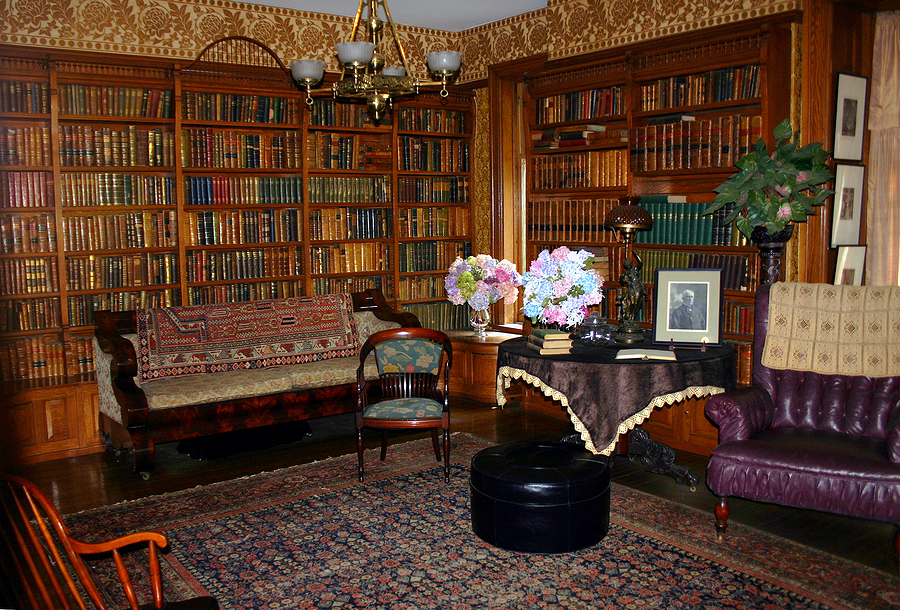
The men enjoy the books so much that Helen soon finds herself looking for a new supply. She is shocked when she learns that the hotel has a library filled with perhaps hundreds of books. Determined to gain access to the library, she travels to Geneva to meet the hotel’s owner, Baron von Lamberg, someone she would soon know as Leo. Not only does Leo consent to open the library for Helen, but when she spies a piece of paper on the ground, she realizes she’s happened upon information about the ammunitions being produced by Leo’s factories. Those weapons include automatic weapons that can be fired faster thus killing more men.
You see, Helen is more than a nurse or a librarian, she’s a spy and what she’s just stumbled upon could change the trajectory of the war. Since Leo is already enamored of Helen, she has no trouble keeping him close, all the while searching for information about his weapons.
Helen and August will grow close, even have an affair. But ten years later, he’s become a famous author and his next book, a Great War novel, as he calls it, may be fiction but the main female character, Pandora, or Dora for short, resembles Helen. When he turns up in Geneva, he begins passing Helen chapters from the book. Her life, she realizes, is about to implode unless she can convince August not to publish the book.
Emily Dunlay tells the story from several vantage points. In 1916, Helen is tending to the soldiers. By 1926, she’s living a quiet life as a librarian in Switzerland. Interspersed between these two decades, we have chapters from August’s novel, pages from a diary kept by Ransom Townsend III, whose company also makes weapons, and letters from the British passport office, tracking Helen’s movement. She manages all this skipping around with skill, never losing the flow of the story.
And the books! Her mentions will have you wanting to read a classic she mentions, or reread it if you have enjoyed it before. And she includes a bibliography at the end of the book for easy reference.
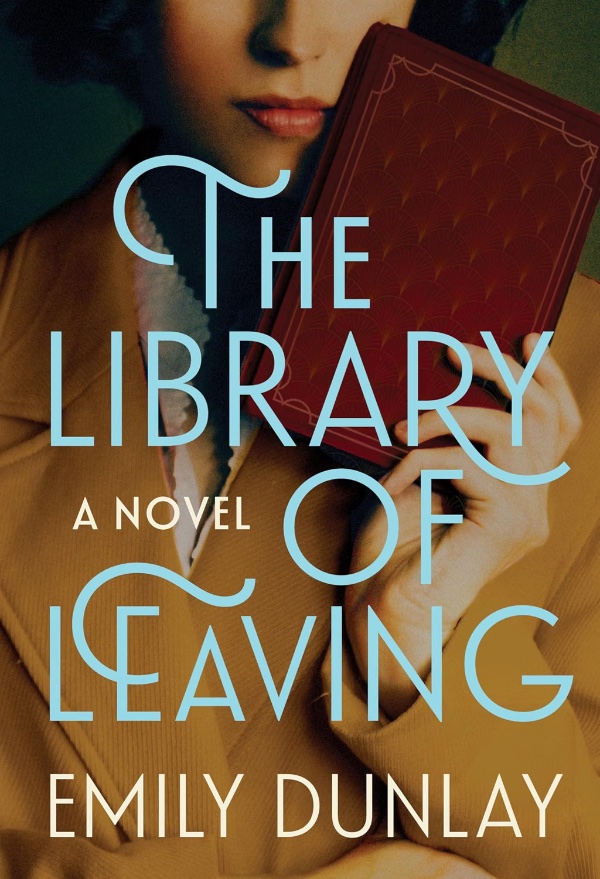
The Library of Leaving
Emily Dunlay
Top Bigstock photo by digitalphotonut
Our editors love to read and independently recommend these books. As an Amazon Affiliate, Woman Around Town may receive a small commission from the sale of any book. Thank you for supporting Woman Around Town.