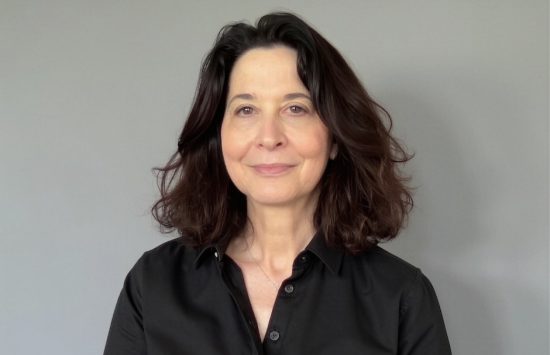


About the play: The Stein family gathers on Manhattan’s Upper West Side to celebrate an engagement. But when their youngest son arrives with an unexpected guest, the joyful occasion begins to unravel—revealing old wounds, buried secrets, and divisions that may be impossible to overcome. As a mysterious blue violinist watches over them, three generations must confront what it means to remain a family when the people they love no longer see the world in the same way. Inspired by the spirit of Sholem Aleichem’s Tevye, The Blue Violinist Over West End Avenue is a funny, provocative, and deeply moving new play about family, faith, identity, and the enduring—and sometimes fragile—power of love.
Was there one event that triggered your interest in your career?
My interest in becoming a writer and filmmaker began in childhood, largely through my love of movies and theater. I was particularly captivated by the great musicals, especially Fiddler on the Roof and West Side Story. Those early experiences first sparked my desire to tell stories of my own.
What was it about those experiences that piqued your interest?
I loved the magic of storytelling—the way a film or play could transport you into another world, make you feel things deeply, and allow you to escape your everyday life for a few hours. I was fascinated by the power of stories to move people.
Interestingly, I also considered a career in medicine and spent one summer working in an emergency room. It was an extraordinary experience, but by the end of that summer, I realized I’d rather explore the drama of human life through storytelling than experience it firsthand in an ER.
What steps did you take to pursue your career?
I was constantly writing and making films. As an undergraduate at Brown University, I majored in English, with a special concentration in Restoration comedy—which some people consider a precursor to today’s sitcom.
From Brown, I went on to Columbia University’s film school, where I earned my MFA. But some of my most valuable education came from the work itself. I worked on industrial films and documentaries, learning every aspect of production, and began writing screenplays for hire shortly after graduating.
Those early experiences taught me not just how to tell stories, but how to navigate the practical realities of getting them made.
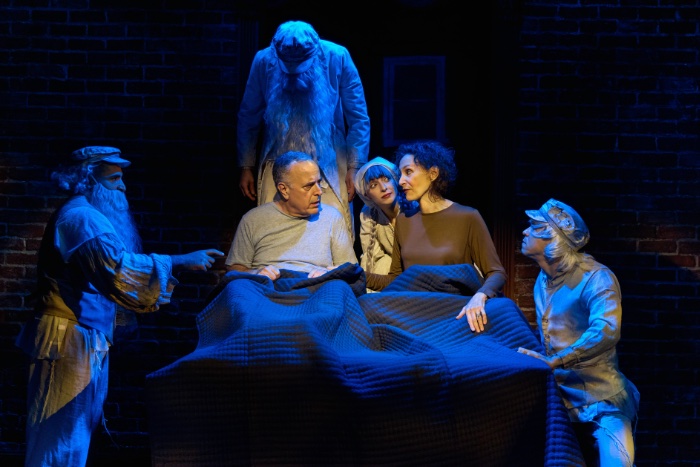
Cast of the Blue Violinist Over West End Avenue
Along the way, were people encouraging or discouraging?
I was fortunate to have encouragement from most of my family, as well as from teachers and mentors who believed in my abilities.
My father, however, was a pragmatist. He worried about how I would make a living in such an unpredictable profession and strongly encouraged me to become a lawyer. For years, I carried around an LSAT prep book, but somehow I never quite found the time to open it.
Did you ever doubt your choice and consider a career change?
Many times! In college, I briefly became premed, but organic chemistry quickly convinced me that medicine wasn’t my calling.
After college, while working on documentaries, I also traded commodities for a time. Investing remains a passion of mine.
And even after writing and producing an award-winning film, I enrolled in psychology classes at Columbia, thinking it might offer a more practical long-term career. That lasted exactly one semester. I left to direct a short film.
I suppose storytelling kept pulling me back, no matter how many other paths I explored.
When did you reach your career tipping point?
I don’t think there was one defining tipping point. My career has been more of an evolution, with different milestones that have felt significant for different reasons.
Making my first documentary, Voices from the Attic, was certainly one of them. It was an intensely personal project that showed me how powerful storytelling could be, not just as entertainment, but as a way of preserving history and giving voice to experiences that might otherwise be forgotten.
More recently, bringing my play The Blue Violinist to the New York stage has felt like another turning point. After years of working primarily in film, I discovered the extraordinary immediacy of live theater and the emotional connection that develops between actors and an audience.
If there’s a common thread, it’s that each new chapter has reminded me why I chose this profession in the first place.
Can you describe a challenge you’ve had to overcome?
One of my greatest challenges has been balancing my creative ambitions with family life.
When I went south to direct a feature film, I had to leave my family behind for an extended period. With my husband also pursuing a demanding career, the logistics of caring for our children became increasingly difficult.
It forced me to rethink the kind of work I wanted to pursue and the sacrifices I was willing to make. I decided that, at least while my children were growing up, I would concentrate on projects I could develop and produce closer to home, which led me to focus primarily on documentaries.
It wasn’t always an easy compromise, but I came to understand that a creative career doesn’t have to follow a straight line. Sometimes you have to redefine success to accommodate the other things that matter in your life.
What single skill have you found most useful?
Communication, without question.
Writing well is obviously essential to telling a compelling story, but I’ve learned that communication extends far beyond the script. You have to be able to articulate your vision, persuade people to believe in it, and sometimes convince them to invest their time, talent, or money in making it happen.
I’ve also found that good interpersonal skills are invaluable. Filmmaking and theater are enormously collaborative endeavors. You may begin with an idea alone at your desk, but bringing that idea to life requires working with dozens of people, each with their own perspectives and talents.
Being able to listen, communicate clearly, and build relationships is every bit as important as the writing itself.
What professional accomplishment are you most proud of?
I’m still most proud of my first documentary, Voices from the Attic, because it was such a deeply personal film.
Making it allowed me to discover my own family history and document an extraordinary story of survival, courage, and hope during the Holocaust.
It also gave me something I hadn’t anticipated when I began: a permanent record of my family’s experiences that could be passed down to future generations.
Long after I’m gone, that film will remain. And there’s something profoundly meaningful about knowing that the people and stories it preserves will not be forgotten.
What advice would you give someone entering the profession?
First, make sure you love the work itself, because there will inevitably be disappointments, rejections, and long stretches when things don’t go according to plan.
Don’t wait for someone to give you permission to create. Write the screenplay, make the short film, put on the play. You learn far more by doing than by waiting for the perfect opportunity.
I’d also encourage young writers and filmmakers to remain curious about the world beyond their profession. Read widely, travel, meet people whose lives are different from your own, and pursue interests that have nothing to do with the entertainment business. All of those experiences eventually find their way into your work.
And finally, don’t confuse rejection with failure. In a creative profession, persistence is often as important as talent. The people who succeed aren’t necessarily the ones who encounter the fewest obstacles. They’re the ones who find a reason to keep going.
For more info and the full schedule visit https://www.blueviolinistplay.com
Photos by Jeremy Daniel