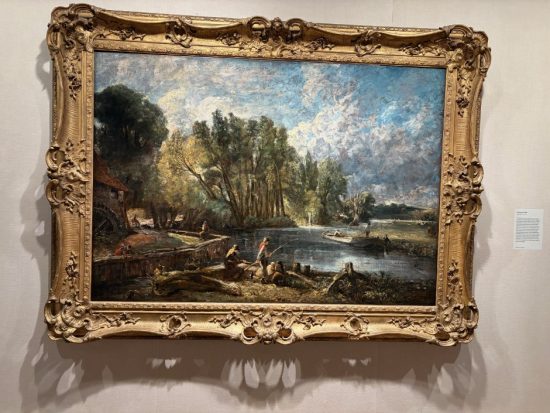

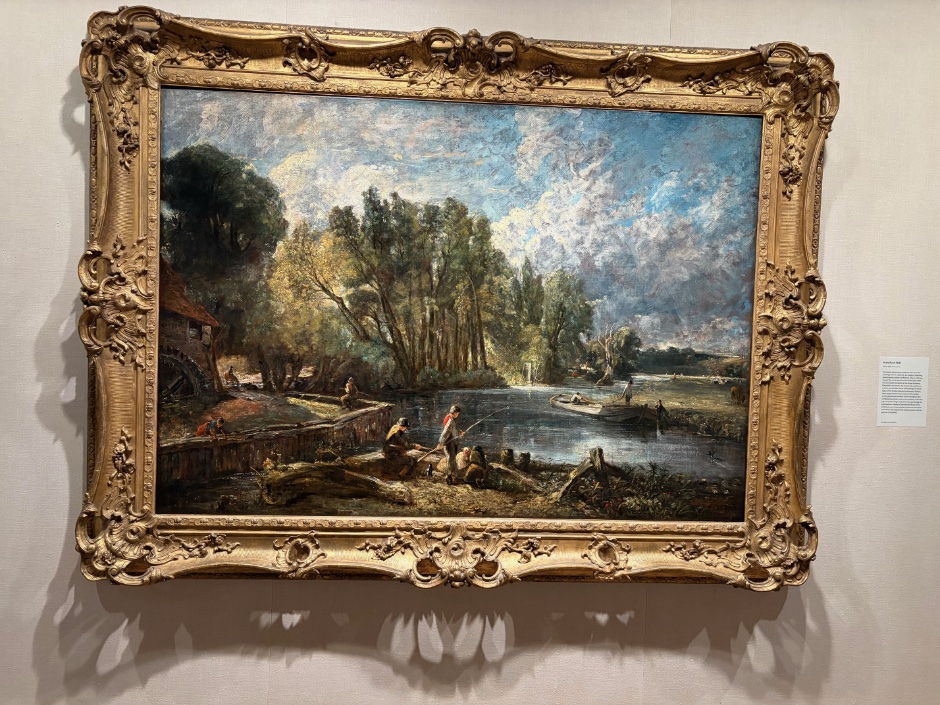
The museum’s website sums up Constable’s influence perfectly. “Working against the `picturesque’ tradition, in which long-established conventions governed what landscape painting should look like, Constable made the skies, light, seasons, and atmosphere the central subjects of his art. Created outdoors and rooted in the direct observation of nature, his iconic pictures of the English landscape have shaped the image of Britain in the popular imagination.”
While many of Constable’s most famous paintings still reside in London’s museums, the Yale Center for British Art has pulled together an impressive collection of his work, not only paintings, but his cloud studies, plein air sketches, two of his “six-footers,” as well as engravings and drawings that document his creative process.
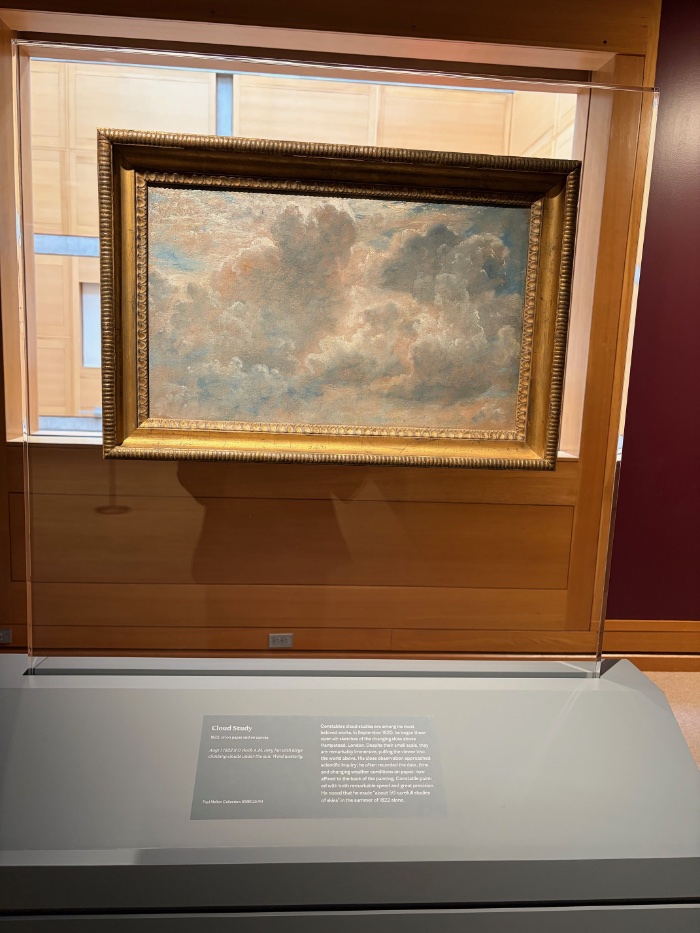
At the entrance to the exhibition, one of his cloud studies captures our attention. Not only is the painting mesmerizing, but the back of the painting includes his notations about the date, time, and changing weather conditions that existed when he captured those clouds on canvas.
Many other of this cloud paintings are on display, each one more fascinating than the last one.
“I really don’t know clouds at all,” Joni Mitchell’s lyrics kept running through my mind. How many times do we look at the sky and not see the clouds? Not anymore thanks to Constable.
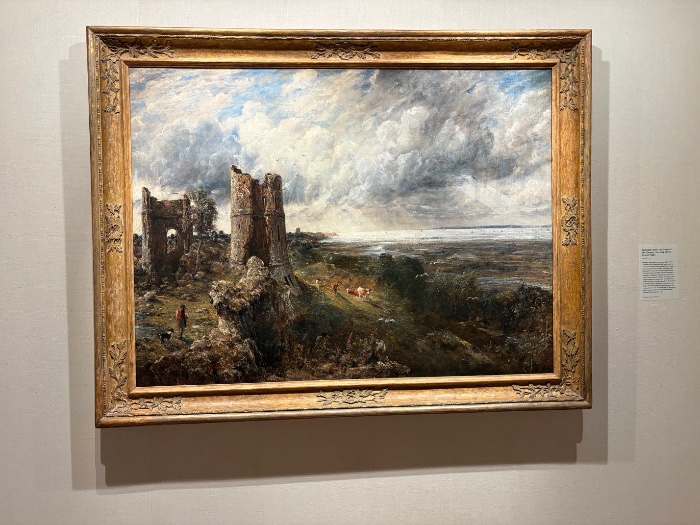
Constable’s “six-footers,” including Hadleigh Castle, are best viewed from a distance. Exhibition notes say that Constable first visited the castle in 1815, and wrote to his wife, Maria, of “the melancholy grandeur of the sea shore.” Maria, stricken with tuberculosis, died in 1828. Constable never recovered from her death, although he raised his seven children alone. When he returned to Hadleigh Castle, what he captured in his painting seems to be a reflection of his sadness.
John Constable: The Landscape Reimagined
Yale Center for British Art
Through July 25, 2027
Photos by Woman Around Town