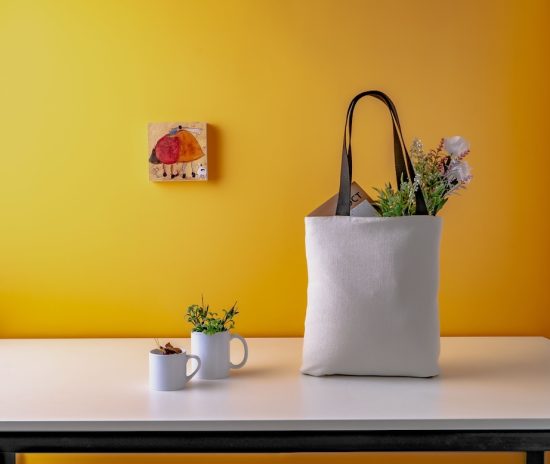


On Tuesday, your bag holds a laptop, a charger, lunch, and the folder you promised to read on the train. On Saturday, it carries a paperback, a water bottle, and a light cardigan for a chilly cafe. One bag can do both if you choose it around what you carry. Settle the fit and carrying comfort first, check how you’ll keep it clean, and save the decorative choices for last.
- Check the load. Write both packing lists and measure the awkward item.
- Test the carry. Fill the bag and try it over the layer you normally wear.
- Then personalize. Choose initials, color, or pattern once fit and care are settled.
Start With What You Carry
Make two realistic packing lists. Write down what goes in the bag on a normal workday. Then make a second list for a typical weekend. Include the umbrella you never take out and the spare charger. Circle the items that appear on both lists. Those shared essentials set the minimum capacity; the remaining items show how much extra room you’ll need for each routine.
Size labels such as small, medium, and large tell you little about whether your things will fit. Compare the bag with your packing lists before choosing a size.
Measure the awkward item. For a work bag, that may be your laptop. A 13-inch laptop label refers to the screen’s diagonal measurement, and device widths vary by model. Measure your laptop in its sleeve and compare those measurements with the bag’s usable interior. Exterior dimensions alone do not confirm a fit. Check the opening too: a zipper or narrow top can block a laptop that would otherwise fit inside. A gusset, the side panel or boxed corner that gives a tote depth, also affects capacity, so check depth alongside width and height.
Try the loaded carry. Fill the bag with your workday items, or something of similar weight, and put it on. The straps should clear your shoulder comfortably over your usual blazer or coat. Reach for your keys without unpacking. Notice whether the base keeps its shape or sags under the laptop. Try the lighter weekend load too, and check whether the bag still sits comfortably against your side.
Choose a Bag You Can Live With Every Day
Read the fabric details. Canvas describes a weave, not a fiber. A bag sold as canvas may be cotton or polyester. L.L.Bean lists its Boat and Tote Zip-Top as 24 oz. cotton canvas; that number describes the fabric weight, not the empty bag’s weight. Longchamp’s personalized canvas bags, for example, use a 100% recycled polyester canvas body with leather trim, so that fiber claim covers the fabric rather than every part of the finished bag. Compare the material and care requirements with how you plan to use the bag.
Check the closure and small-item storage. An open top offers quick access, while a zipper helps keep contents inside. Try the closure and decide whether you can use it comfortably during your commute. The My Pliage L tote is listed with a zip-and-snap closure and one interior flat pocket. LeSportsac lists a zip-top main compartment plus an exterior zipped back pocket on its Deluxe Easy Carry Tote. These layouts give you different places to keep your phone and keys, so consider which items you need within reach.
Inspect the stress points. Look at where the handles meet the body, the seams along the base, and the zipper. Open and close it a few times and tug gently on the handles. This won’t predict how many years a bag will last, but it gives you a chance to spot loose stitching or a zipper that catches.
Match care to your routine. Cotton canvas does not automatically mean machine washable. The Boat and Tote above is listed as spot clean. BAGGU lists its Horizontal Zip Duck Bag, made from 16 oz canvas that includes recycled cotton, as machine washable. Follow the instructions for the exact model, including any guidance for its trim, hardware, and personalization.
| Feature | What to check | Why it matters |
| Size | Your laptop in its sleeve, the opening, and the base depth | Size labels do not confirm a fit |
| Straps | Shoulder clearance over your usual layer | The bag needs to feel comfortable when loaded |
| Closure | How easily you can open and close it | You need both access and a way to contain your belongings |
| Care | The instructions for the exact model | Bags with similar fabrics can require different cleaning methods |
Make the Personal Details Work for You
Choose a base you already like. Compare the bag, or a photo of it, with the clothes you wear most. Does the color work with your office wardrobe and weekend jeans? You might prefer a neutral base or want the bag to be the brightest thing you wear. Pick a color you’d still choose without initials. That is a practical way to begin matching bags to your lifestyle before comparing specific personalization options.
Decide how visible you want the personalization to be. Small initials keep the detail subtle. A bold motif or patterned panel makes it more noticeable, while an interior message offers a more private option. If you’d rather add the detail yourself, learning embroidery lets you stitch initials or a small motif onto a plain cotton tote. Some services go further: My Pliage, for instance, lets you choose the leather trim and hardware finish and add a message inside, and each bag is made to order in France. Options vary by model and market, so check what the configurator offers for your chosen bag.
Review before paying. Check the spelling letter by letter and review the placement preview. Confirm the model, size, final total, and care instructions. Then read the store’s return terms, since personalized items are often final sale and can’t be returned or exchanged.
Conclusion
Before ordering, return to your two packing lists, check the loaded fit and care label, then decide whether the personal details still feel right. A bag that works with your everyday routine is more useful than one chosen for decoration alone.
FAQs
What should I measure before ordering?
Measure your largest or most awkward item, usually a laptop in its sleeve. Compare its width, height, and depth with the bag’s usable interior and opening. Exterior dimensions alone do not confirm a fit.
Can the same bag suit office days and casual plans?
Yes, if it fits both packing lists and feels comfortable with either load. Check whether it becomes cumbersome when lightly packed or leaves too little space for your workday essentials.
Can every fabric bag go in the washing machine?
No. Even two cotton-canvas bags can have different instructions: one may require spot cleaning while another is machine washable. Follow the care label for your specific model, including any instructions for personalized details.
What should I check before adding initials?
Confirm the spelling, review the placement preview, and read the care instructions. Check the seller’s return terms for your market before paying, since personalized items may be final sale.
Photo by bach hanzo at Pexels.com
Contributed posts are advertisements written by third parties who have paid Woman Around Town for publication.