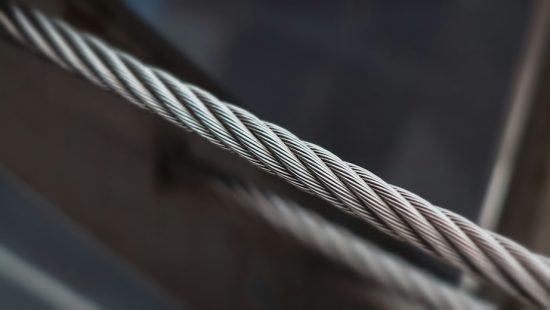

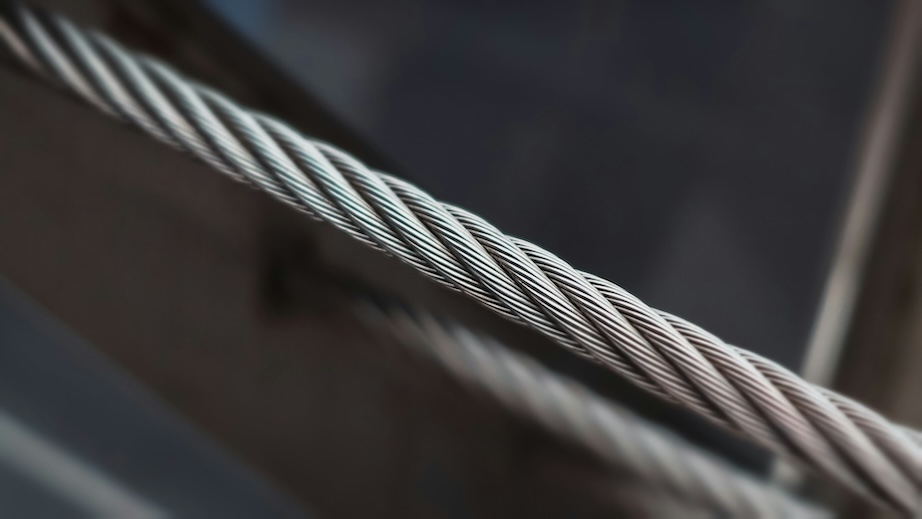
Nine times out of ten, the sling fails not because it was too weak but because it was the wrong shape for the job. Chains quit on you when the lift gets long. Polyester roundsling tags get chewed up when you drag them across a weld seam. And flat nylon webbing turns into a shallow bowl of water the first time it sits out in the rain. Knowing which one to grab before you climb the ladder saves you a return trip and, more often, a load that never should have swung.
Here’s the short answer: if the lift is long, the corners are sharp, or the sling is going to live outdoors on a skid or a barge, you want steel. That’s when most crews go looking to buy heavy-duty wire rope slings built to the load and the geometry instead of whatever’s hanging on the rack. The rest of this guide is about earning that decision instead of guessing at it.
The long reach problem, and why steel solves it
A chain sags under its own weight. Stack three or four legs of it from a crane hook down to a spreader bar and you’ve given away a surprising chunk of your available height before the load even leaves the ground. Wire rope behaves better because it’s stiffer and lighter per foot of capacity, so the hook point stays closer to the load. On a low-clearance pick, inside a plant with a fixed ceiling, that difference is the whole job.
I watched a crew spend half a morning re-rigging a pump skid under a low mezzanine because the chain assembly bottomed out the hook travel. Same capacity in wire rope would have cleared it on the first attempt. That’s the kind of thing you remember, and it’s why I’d reach for wire rope slings on anything where vertical space is tight.
Steel isn’t magic, though. Every cut end, kink, or crushed spot in a wire rope sling is a real loss of capacity, and inspectors look for exactly those. If a machine has been running a wire rope sling over a sharp edge without a corner protector, retire it. No argument.
Where wire rope slings actually beat chain
Chains shine when you need to choke a load tight and don’t care about weight or surface contact. Wire rope wins in a different set of situations, and once you’ve worked them it’s hard to unsee the pattern.
- Long lifts. Fewer legs, less self-weight, less sag to fight.
- Outdoor storage. Steel and galvanized terminations handle weather that turns webbing into a sponge.
- Ratings that need to be read. A tagged, proof-tested assembly tells you its working load limit at a glance.
- Repeat geometry. If the same lift happens weekly, a custom length beats building the assembly every time.
- Sharp but not razor-sharp edges. A properly sized steel sling with a protector is far more forgiving than webbing.
What wire rope doesn’t like is repeated bending around a small radius, so keep softeners and protectors in the kit and use them without being asked.
How to spec one without getting burned
The order of operations matters more than any single number. Work in this sequence and you’ll catch the expensive mistakes before they leave the dock.
- Know the load weight. Weigh it or get it off the drawing. Guessing at a shipping weight is how under-rated gear ends up on a hook.
- Pick the hitch and count the legs. A vertical leg carries far more than a choker leg of the same sling, so the angle and hitch type set your derating before you pick a diameter.
- Measure the geometry. Hook height, load width, and the angle between legs. A shallow angle between legs is the quiet killer in most poor rigging.
- Choose the termination. Thimbled eyes and swaged sockets behave differently on site. Match the terminal to how you’ll attach it, not to what’s cheapest.
- Ask about the rating and the test. A working load limit you can read, a proof test you can point to, and a tag that survives the trip.
- Store it right. Coil it and hang it. Dropped on gravel and walked over is how a good sling dies early.
If your loads and hitches are already settled, the conversation usually narrows to diameter and length, which is a much cheaper conversation than debugging a lift in the yard with the crane idling.
One more practical note: the federal rules governing rigging and sling use live in OSHA‘s standards, and they’re worth a read if you write or approve lift plans. The requirements for inspection and removal from service are not suggestions.
A quick field check before you hook up
Before any sling leaves the bench, I run the same five-second pass. Tag matches the sling and the capacity exceeds what you need. No broken wires clustered in one spot. No kinks, bird caging, or crush points. Eyes and thimbles aren’t worn through. The load connection is protected from the edge it’s sitting on. Fail any one of those and the sling goes out of service, full stop.
That pass is the one habit I’d copy from any good rigging crew. It’s cheap, it’s fast, and it catches most of the failures that matter.
Steel in space also carries a real engineering pedigree, which is a strange comfort but a comfort nonetheless. NASA’s work on lifting tackle is a reminder that the parts nobody photographs are often the parts that matter most. If you want a sense of how seriously the aerospace side takes this, the National Aeronautics and Space Administration documents a lot of it publicly.
The bottom line
Pick the sling that matches the geometry, the environment, and the hitch, and don’t buy for the lift you wish you had. Wire rope earns its place on long picks, tight corners, and gear that stays outdoors. You’ll likely pay a little more than you would for a chain of the same capacity, and you’ll spend a lot less time re-rigging. So before your next pick, take two minutes to actually measure the hook height and the angle between legs. Then go buy the sling that fits. Which job on your board has been quietly fighting its rigging for the longest?
Photo by Gleb Paniotov on Unsplash
Contributed posts are advertisements written by third parties who have paid Woman Around Town for publication.