For over two decades, Carmen’s practice has been driven by a single impulse: listening to real people and turning their stories into art. She is the only director in Romania to have received both the country’s highest theatre directing award and its highest documentary film award — and only the third woman in Romanian theatre history to be honoured in this way.
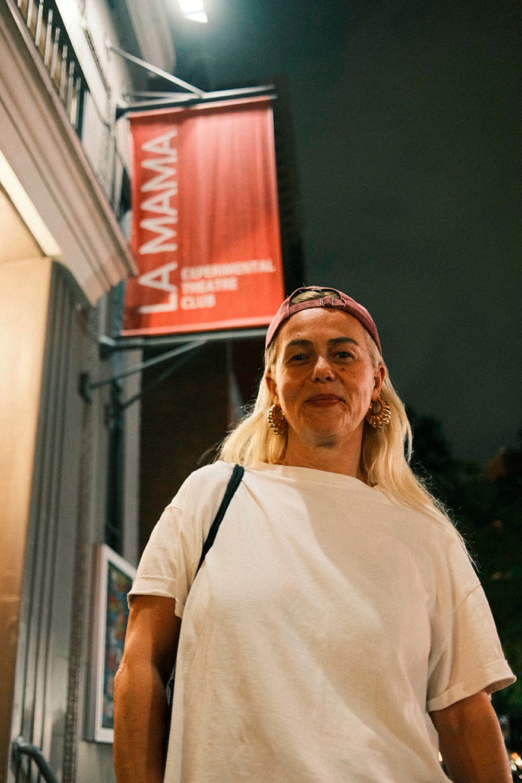
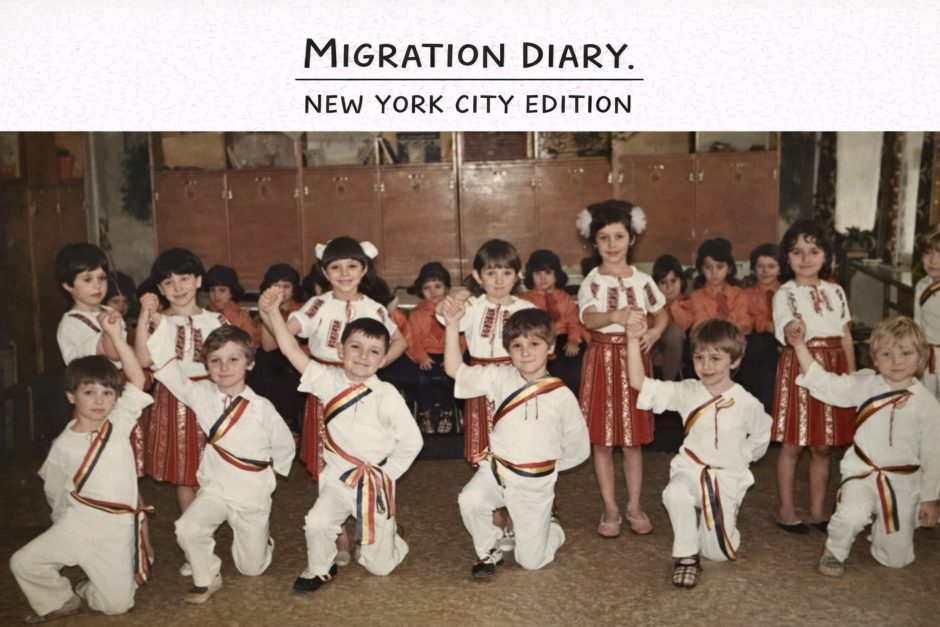
Upcoming for Carmen: La MaMa Experimental Theatre Club welcomes the world premiere of Migration Diary, New York City Edition, a new theatrical collaboration with the Romanian Cultural Institute and the National Theatre of Bucharest. Created by Carmen, Migration Diary, New York City Edition is a raw, visually immersive, new multimedia theater experience, running June 25 – 28 at La MaMa’s The Club.
The production brings real lives to the stage inside one of the world’s most influential homes of experimental theater. No invented characters. No fictional dialogue. Just the stories people carry across borders. Built through an extensive documentary process of interviews, personal archives, video diaries, and autobiographical testimony, Migration Diary continues the groundbreaking artistic method Vidu created more than a decade ago for her internationally acclaimed Diary of Romania (Jurnal de România) series, presented across Europe at major festivals and theaters. Performed by Sam Xu, Lia Fietz, Ana-Maria Bandean, and Ellen Ko, the show follows women whose lives passed through Romania, China, Germany, Portugal, Singapore, London, Moscow, and finally New York — and asks the question this city has always asked, and never fully answered: what does it mean to stay?
Can you point to one event that triggered your interest in your career?
There were two turning points.
The first was growing up in Romania after the fall of communism. Suddenly, a country that had been isolated from the world opened its borders. Through MTV, films, magazines, books and music, I discovered Western culture. I wanted to understand this larger world, and theatre became my way of entering the conversation.
The second turning point came after the Colectiv nightclub fire in Bucharest in 2015. It was the first time I joined a public protest. It forced me to rethink my relationship to art, politics, feminism and civic responsibility. Gradually, I lost interest in fiction and became increasingly interested in reality. That shift has defined the last decade of my career.
What about this career choice did you find most appealing?
What attracted me most was the realization that art does not simply reflect the world. It participates in building it. The stories we tell influence how we think about identity, power, memory, gender and belonging. They shape what a society considers important, visible or worthy of attention. I was drawn to that intersection between artistic creation, research and social impact. I still am.
What steps did you take to begin your education or training?
I studied Theatre Directing for five years at the National University of Theatre and Film in Bucharest.
But my education started much earlier. I learned photography as a child, recorded interviews on a tape recorder, filmed local artists as a teenager and spent countless hours watching films, listening to music and exploring visual culture. Looking back, the path I eventually followed was almost inevitable. University taught me how to build a performance. The years that followed taught me how to investigate reality.
Along the way, were people encouraging or discouraging?
Both. I met remarkable mentors and collaborators, but I also became aware of something that is rarely discussed openly: the difference between talent and access.
Many opportunities circulate through informal networks of trust and influence. As a woman, I often felt that I had to prove more in order to receive the same level of confidence. That experience shaped both my career and my interest in feminism. It taught me that individual talent matters, but structures matter too.
Did you ever doubt your decision and attempt a career change?
Constantly. I never doubted my need to make art. I often doubted the systems in which art is produced.
There were moments when the profession seemed irrational: enormous effort, constant uncertainty and very few guarantees. You can receive an important award and still wonder how the next project will happen.
Looking back, I have been far more familiar with doubt than with certainty.
When did your career reach a tipping point?
The turning point was not an award or a promotion. It came when I stopped asking myself what performance I wanted to create and started asking what reality I wanted to understand.
That shift changed everything. From that moment on, my work no longer began with a script. It began with people.
Can you describe a challenge you had to overcome?
One of the most important lessons of my career was understanding the difference between merit and access.
For a long time, I believed that good work would naturally find its place. Eventually, I realized that access to information, professional networks and decision-making positions matters almost as much as talent itself.
Understanding those mechanisms changed the way I viewed both my profession and society. It also made me much more attentive to questions of representation, power and inclusion.
What single skill has proven to be most useful?
The ability to ask questions. Most of my projects begin with a question rather than an answer. I am interested in memory, identity, power, migration, belonging and the stories societies tell about themselves.
I don’t trust easy certainties. Good questions have taken me much further than convenient answers ever could.
What accomplishment are you most proud of?
The accomplishment I am most proud of is becoming a voice rather than an echo.
For many years, I listened to the voices of others—teachers, directors, critics, institutions and cultural models that seemed larger than life. It took me a long time to stop asking what kind of artist I was expected to become and start asking what kind of artist I wanted to be.
International experience played an important role in that process. It forced me to articulate my own perspective rather than rely on the perspectives of others.
Awards, invitations and recognition matter, of course. But the achievement that changed my life was developing a point of view and having the courage to defend it.
Any advice for others entering your profession?
Don’t spend your life inside theatre.
Read history. Travel. Learn languages. Talk to people who have nothing to do with the arts. Most of what you need to know about theatre can be learned in a theatre. Most of what you need to know about life cannot.
One of the biggest traps of this profession is ending up making performances about other performances. Theatre only became interesting to me when I started looking beyond it.
And don’t build your career around validation. Awards are unpredictable. Institutions change. Trends disappear. Curiosity lasts longer.
Migration Diary, New York City Edition
LaMama’s The Club
74A East 4th Street
For more information on Carmen Lidia Vido, go to her website.
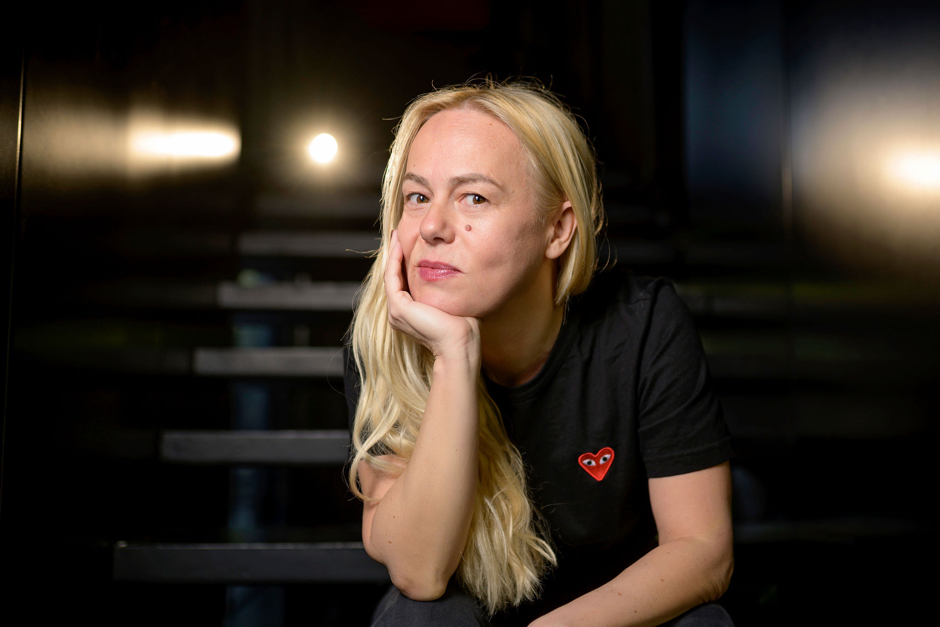
Top photo of Carmen Lidia Vidu by Doria Dragusin