In 2008, Karen La Rosa made her first trip to Sicily, riding a bicycle to explore the eastern and western sides of the island. “There is something so intimate about riding a bicycle through quiet streets, through farmland, and small towns,” she says. “With the warm sun, the winds, the fragrance of the soil and flowers, all of my senses were engaged and I felt very connected. The food and wine was a gift. The beauty is breathtaking. The people welcomed us. It all felt very natural to be there. From the ceramics, to the fishermen, to the incredible Greek Temples, every day was outstanding.”
That vacation was a turning point. Karen returned to Sicily, meeting with the guide she had used for her first trip who took her to places she had not seen before and her enthusiasm for the Italian island grew. “I had to share all of this,” she says. “That was my motivation. There weren’t many tourists [to Sicily] back then, mostly owing to the perpetuated stories of poverty and hardship from 100 years ago, but also because of the negative image the media created through film and books. I was determined to do what I could to shout out the reality and encourage people to visit.”

Cloister – Monreale Cathedral
Karen has been running La RosaWorks Sicily Tours and Travel for 17 years. For fall, 2025, she offers three tours she has designed: Beating Heart of Sicily; Imagine Sicily Tours; and Crossroads of the Mediterranean Western Sicily. (See the details about these tours on her website.) She also arranges custom tours for family or friendship groups, as well as those for companies. Last year she did more than 65 custom tours. She’s designed tours for the 92nd Street Y, wine companies, and for many artistic groups. “Sicily is a paradise for artists, architecture, yoga,” she says. “It’s fun to have such varied interests on which to focus. They are all seeing Sicily, but through different lenses.”
Karen was born in Jackson Heights, Queens, and now lives on Manhattan’s Upper West Side where she raised her family. Sicily is in her DNA. Her relatives came through Ellis Island in and around 1898. “The La Rosas were shoemakers, making them a little better off than most,” she says. “They were from Castelvetrano in Sicily’s southwest. The Abruzzo side of the family were farmers from Santa Margherita del Belice, a smaller town not far away.” Although her relatives initially settled in Brooklyn, they mostly ended up in Queens. “Today Jackson Heights is known as the most diverse community in this country which seems fitting for anyone with Sicilian ancestry,” she says. “Sicily is mosaic of diverse peoples.”
Karen has many repeat clients who enjoy the professionalism of her tours, but also are proof that one trip to Sicily is never enough. “Even though it’s an island the size of Massachusetts, it’s very different, from east side to west side, from north to south,” she says. “It’s different everywhere – a different terrain, different traditions, different customs, different foods, all under a certain umbrella. There’s a lot of different things to see, so you could make an argument to go back a few times.”
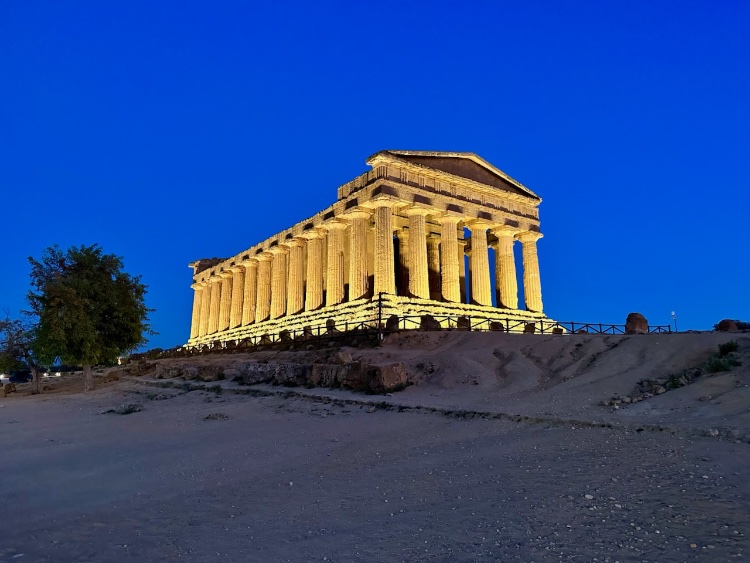
Temple of Concordia, Valley of the Temples, Agrigento
What’s happening now is in contrast to what Karen experienced years ago when she first began her business. “I would pick up the phone with a new client and the first thing they would ask me is: `Is it safe to go to Sicily?’ So many questions like that,” she says. The violence perpetrated by the mafia, portrayed in the Godfather films, presented Sicily as a dangerous place to visit.
Sicilians who came to the U.S. in the early 1900s, were fleeing extreme poverty. Although the country’s unification promised prosperity, northern Italy profited from manufacturing and the businesses that settled there, while the southern part of the country became more agricultural. “Farming just doesn’t make a lot of money, so that was the first problem,” she says.
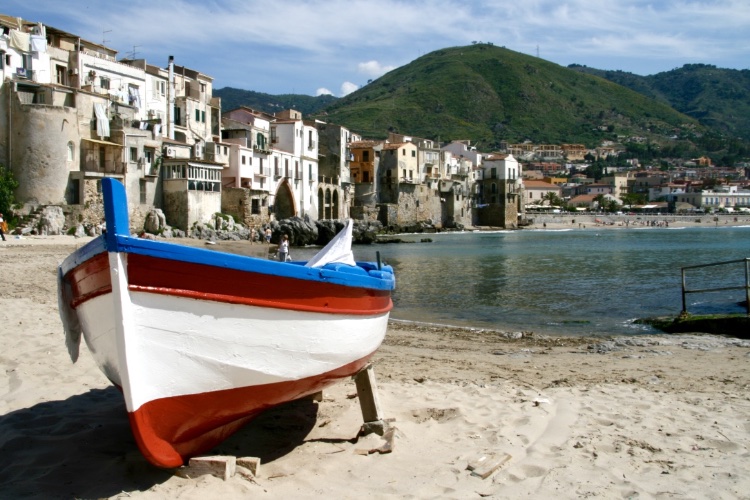
A boat on the shore in Cefalù
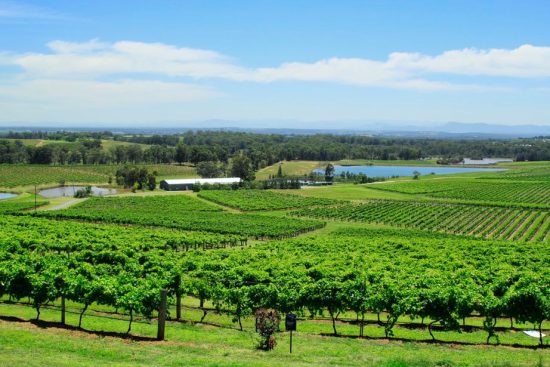
Karen says that about 15 years ago, Sicily’s wine business began to lead a change. “Sicilians make wine because they drink wine,” she says. During the 19th century, some of Sicily’s rich and heavy wines were sent to northern Italy and France to give those wines more body. Sicily’s prominent wine families, those that managed wineries for many generations, “started wondering why they were driving pickup trucks and people in France were driving Maseratis,” she says. “So they did something very smart. They formed a consortium and joined for the same purpose, to upgrade what they were able to do.”
Sicily has been gifted with fertile soil and a climate where “everything grows here like magic,” Karen says. Wineries began to upgrade their production methods. Within a few years, what was happening to the wine industry in Sicily began to attract the attention of journalists looking for something new to write about. “That’s what jump started people going to Sicily, people who were interested in wine,” Karen says. “Then once you’re there, you realize, wow, there’s so much to see here. What a dense, historically rich place in an island that’s just not that large.”
Throughout its history, Sicily has been invaded and controlled by various ethnic groups. On a drive, the island’s diversity is on full display. “On the east side, it’s Greek and Roman,” Karen says. “Going west, you run into the Arab and Norman influence. And there are Byzantine sites everywhere, loaded with ruins that are among the world’s best, mosaics that are among the world’s best. This history keeps your head spinning, because it’s so rich.”
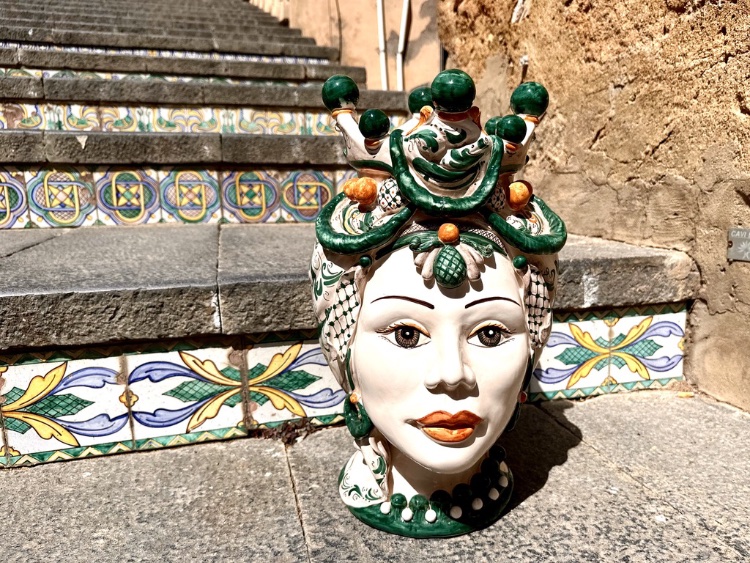
Moorish head displayed in Caltagirone
Sicily has also benefitted from a turn around in how the island is portrayed in films, TV shows, and books. The HBO-MAX hit The White Lotus, set in the renovated San Domenico Palace in Taormina, Sicily — a real life Four Seasons Hotel – was a runaway hit. Netflix’s The Leopard, a period drama inspired by Giuseppe Tomasi di Lampedusa’s classic novel, focuses on a Sicilian nobleman and his family during Garibaldi’s conquest. The series has been lauded for its beautiful costumes and sets. Inspector Montalbano, based on Andrea Camilleri’s novels about a police detective in the fictitious city, Vigàta, has inspired tours to the show’s actual locations. The actor Stanley Tucci visited Sicily in his “Searching for Italy” series which can be streamed online. Each placed Sicily on the public’s radar. In addition, there’s a plethora of videos on YouTube, Instagram, and TikTok extolling Sicily’s beauty, culture, people, and food.
Many of Karen’s clients are Baby Boomers who, like Bert Di Grasso, F. Murray Abraham’s character in The White Lotus, come to Sicily looking to find their relatives. Karen recently had clients who wanted to visit a small town in the north near the Nebrodi Mountains. Karen did research and sent her clients some information. “She contacted a bunch of people there,” Karen said. “They arrived and the mayor was there, the vice mayor was there, the priest was there. They had people there who had their same surname, even though they weren’t sure they were related. Everybody was so happy that they were coming back to this small town. They rolled out the red carpet for them. And that’s not the first time that’s happened.” Her clients, of course, were thrilled and made out better than Di Grasso did whose relatives told him to get lost.
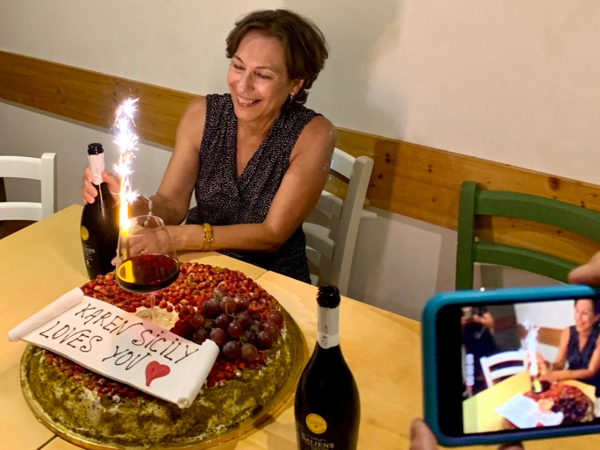
A birthday surprise for Karen from her sommelier friend and the chef of a restaurant she often visits. “It was beyond special,” she says.
Karen likes to keep her tours between 12 and 15 people so that people can get to know each other. She also sets up a WhatsApp chat so people can keep in touch before, during, and after their tour. “I’m still talking to people from a year ago,” she says.
There are three tours people can sign up for. “The Beating Heart of Sicily,” September 10-20, explores the island’s interior from Palermo to Catania. In Palermo, dinner is served in an historic palace of Palermo. “It’s expensive, but it’s a wonderful way to experience the time of nobility in Sicily, because it’s still there,” she says. “The palace is full of generations of family art and decorative arts. It’s fascinating, stunning and what a treat to be there for an evening.” “Imagine Sicily,” from October 4-14, includes an Inspector Montalbano Day, with excursions to many important places and also goes off the beaten path. “The Crossroads of the Mediterranean” focuses on Sicily‘s West, the Arab/Norman/Phoenician roots, sprinkled with Greek, Roman and the Baroque. The tours include breakfasts – “ which are huge” – and another meal, often at a winery.
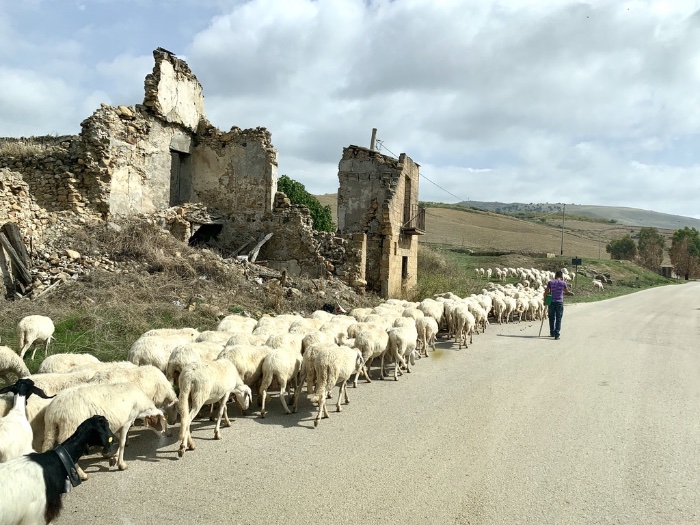
Sheep being herded near Piazza Armerina
For a custom tour, Karen learns about the client’s expectations, what they want to do, what type of accommodations they prefer. “I’ve done all kinds of things, from yoga to horseback riding to five star to budget, to whatever it is that people want,” she says. “I try to accommodate them the way they want to travel.”
Most of the tours are priced around $5,000 per person and, excluding air fare, will include hotels, two meals a day, guides, admission fees, and tips. Karen has never advertised. She has many repeat clients and new ones come to her after hearing from others about the tours. “All the hard work pays off,” she says. “My clients have a wonderful time and fun. That makes me very happy.”
For more information, go to the website for La RosaWorks Sicily Tours and Travel.
Photos courtesy of Karen La Rosa.