Jennifer Muller, an influence in the dance world for over 45 years, is known for her visionary approach and innovations in dance/theater, multi-discipline productions incorporating the spoken word, live and commissioned music, artist-inspired decor and unusual production elements. As Artistic Director of The Works, she founded the company in 1974. Over the last 43 years, her vision has led the company to become renowned for its dynamic dance/theater productions, distinctive movement style and technical virtuosity. With the company, she has toured to 39 countries on four continents, performed in 30 states, and self-produced 26 seasons in New York City.
For the past 6 years, Jennifer Muller/The Works (JMTW) has curated a festival celebrating the innovation of women in choreography, now named WOMEN / CREATE! – A Festival of Dance. This festival brings together prominent female choreographers to present an annual New York City season in a shared program format. This year’s program will include works from choreographers Karole Armitage (Armitage Gone! Dance), Jacqulyn Buglisi (Buglisi Dance Theatre), Carolyn Dorfman (Carolyn Dorfman Dance), and Jennifer Muller (Jennifer Muller/The Works). The festival will be held June 12 through June 16
Can you point to one event that triggered your interest in your career?
I can’t point to one specific event, but I was brought up by a parent that wanted me to be in the arts. I acted, sang and danced as a child. I started studying dance at the age of 3 and because of the time commitment needed, dance just took over. I was a professional dancer by 15 and just kept going on that track. I also feel that what spurred me on that path was that I was a very shy child, and I was most comfortable expressing myself on stage via dance. I think that was the real reason that it became a passion; it became my voice.
What about this career choice did you find most appealing?
I feel blessed in many ways. So many people in life take a job and just try to get through the job, but I’m lucky enough to have found a calling that I am passionate about. One person asked me, “why don’t you do something else?” and I responded, “THIS is what I do.” No matter what will happen, this is my life. Dance is what I do and I’ll keep doing it until I can’t do it anymore.
What steps did you take to begin your education or training?
I started at an improvisational school when I was 3 years old, so I was a “color,” or a “tree,” that kind of thing. It wasn’t until I was 8-years old that I started formal training when I attended Julliard Preparatory Division and I began dancing professionally at 15. I thought dance was about expressing myself. Later on I realized there was such a thing as just being a dancer. I never thought of it that way when I was young, it was always an expressive voice.
Along the way, were people encouraging or discouraging?
Oh yes, there have been a lot of people who have been discouraging, particularly about my running a company. That’s where the sentence “THIS is what I do” came from. They tell me, “you can make more money if you do this” or “it’ll be easier if you do this,” but I always respond, “no, THIS is what I do.” The dance business is very hard financially and you do sometimes have to re-energize yourself and reaffirm why you’re doing what you’re doing, but for me there’s no other choice.
Did you ever doubt your decision and attempt a career change?
I never thought of a career change, but I have combined it with other things. I did a lot of work on off-Broadway and Broadway productions. I was encouraged to do this by people I knew. I thought it would be fascinating and interesting. But it just took too much time. I was more interested in developing a company; I love working with the dancers who know my style and understand the ethos. For me, that is the most fulfilling.
When did your career reach a tipping point?
I was 18 when I first had a small company, and then I founded my current company Jennifer Muller/The Works in 1974, so I’ve always been on this track. It’s been a straight arrow. The company has gone through several stages throughout the years. At the beginning, there was a lot of touring; first we were in Europe a lot then we were in Canada and Latin America then Asia. But touring has become more difficult to get. Now we are much more active in terms of individual performances in New York City, although we do at least one international tour a year. I think times are changing and dance is changing. For many years, I was much more appreciated outside New York than in New York, and it’s taken a while for that to change.
Can you describe a challenge you had to overcome?
Almost all challenges in this field are financial. That is the most difficult area for me. I’ve always been involved in the administration of my company, and fortunately or unfortunately know how to do just about every job. I remain the main fundraiser. Someday I would like that to change.
What single skill has proven to be most useful?
It’s funny because when I was in school, my least favorite subjects were science and math, and since then all I do is budgets. The one thing that I did not like to or want to do when I was growing up, I’ve spent every day doing.
What accomplishment are you most proud of?
I’m very proud of the extent of the body of the work that I’ve created. I am pleased that it’s expressive and reaches people, moves people. It’s not work that you just say, “that was interesting.” You’re moved by it. When I’ve created something impactful that touches people’s hearts, that’s my greatest accomplishment.
Any advice for others entering your profession?
I would say be as well-rounded as you can in learning the various arts from music to design, learn all the things that go into choreography that will make your work communicative. You need all the adjacent arts to make it rich. I would also advise that you learn the business and how to do everything in the business. You will feel like you have a competency and that you are in charge of your own life and your own career.
Jennifer’s headshot, credit to Takao Komoru
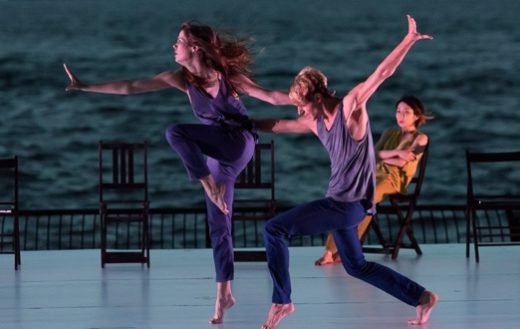
Dance photo: Steven Pisano
Social media handles
To learn more about Jennifer Muller/The Works, follow them via the below links and visit the website.
Twitter: @MullerWorks
Facebook: https://www.facebook.com/JenniferMullerTheWorks
Instagram: JenniferMuller_TheWorks
Vimeo: https://vimeo.com/jennifermullertheworks