

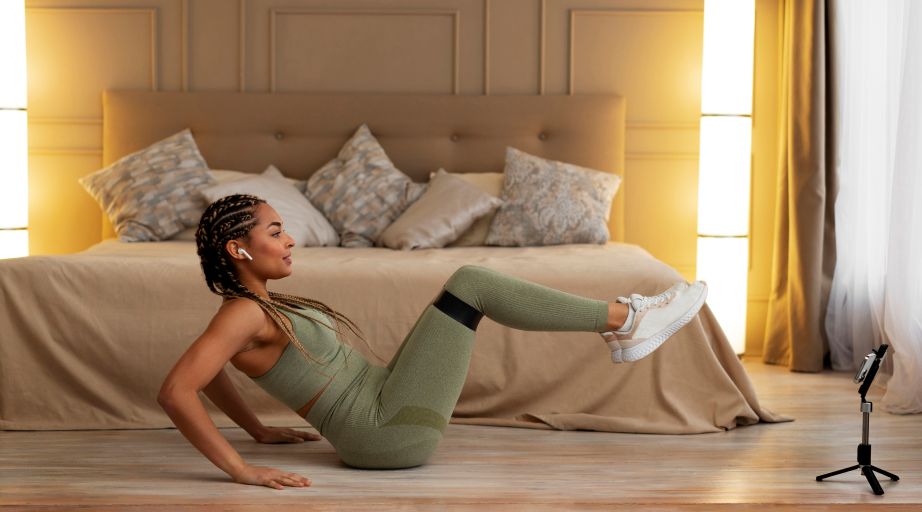
You finally find time to exercise in the evening, but you worry that it may stop you from sleeping well later. Everyone has an opinion, and much of the advice you hear is based on rules without real proof. Because of this, you either skip your workout or lie in bed wondering if you made the wrong choice.
A large sleep study from Monash University finally tests this rule using real numbers. It followed more than 14,000 people for a full year and compared each workout with that night’s sleep. Its findings are more useful than the old warning because they depend on how hard you exercise and when you finish.
Keep reading to learn what the study found about late workouts and how you can use these findings to sleep better tonight.
1. Evening Exercise Is Not Always Bad for Sleep
Let’s begin with the biggest surprise in the study, as it changes how you think about late workouts. Exercise before bed did not turn out to be the sleep problem many people expect. Researchers studied 4,084,354 nights of sleep from 14,689 people who wore WHOOP trackers throughout the year.
Because the data came from real workouts rather than lab tests, the findings better reflect everyday life. Researchers did not find that every evening workout harms sleep. Instead, they found that its effect depends on the type of exercise.
This means the old gym rule is too general to be helpful. A short walk and a hard sprint session may both happen at night, but they affect your body in very different ways. You can keep your evening workout, as long as you plan it carefully.
2. Workout Intensity Matters More Than the Time on the Clock
The biggest difference comes from how hard you exercise, because the study measured both workout intensity and finish time. Together, these details gave a clearer picture than simply saying it was evening. This explains why two nighttime workouts can affect sleep differently.
Consider an easy workout close to bedtime, which reduced sleep by about 15 minutes on average. A very hard workout during that same period reduced sleep by nearly 45 minutes. That is three times as much lost sleep, even though both workouts ended close to bedtime.
So, think about how hard you plan to exercise before checking the clock. A relaxed walk or an easy swim is very different from a tough interval session. When you focus on effort first, planning your evening workout becomes much easier.
3. Finishing Four Hours Before Bed Removes the Sleep Penalty
Effort is only part of the story, because timing also matters. The most useful number in the study is the four-hour gap between finishing your workout and going to bed. Workouts that ended four or more hours before bedtime showed almost no connection with poor sleep.
This was true even for the hardest workouts in the study. When the gap was shorter than four hours, workout intensity began to matter, especially as bedtime came closer. This makes the four-hour mark a useful guide for planning any type of training.
You can use this rule to plan your weekly routine. If you go to bed at 11 p.m., finishing your workout by 7 p.m. keeps you within this time limit. This gives you a clear target instead of vague advice about avoiding exercise before bed.
4. Hard Late Workouts Keep the Body Alert After Lights-Out
Timing is important because your body doesn’t immediately go back to normal once you stop exercising. The study monitored changes not only in the hours people slept, but also during the night. After hard, late workouts, the resting heart rate stayed higher throughout the night.
The heart rate variability was also below normal on these nights. This measure helps show how well your nervous system is relaxing, and a lower reading can mean your body is less relaxed. Researchers describe this as a state in which the body remains active after exercise.
Simply put, your body could be reeling from the exercise you did while you’re attempting to fall asleep. That is one of the reasons why a heavy workout near bedtime may shorten your sleep time. Understanding this is a good reason to complete your most difficult sessions earlier in the evening.
5. Gentle Movement Near Bedtime Barely Affects Sleep
Of course, there will be days when you cannot leave four hours between exercise and bedtime. On those days, you do not need to cancel your workout. The study found that light exercise close to bedtime had only a small effect on sleep.
A slow walk, an easy swim, or gentle stretching are good examples of light exercise. How hard you work mattered more than simply moving your body. This means reducing the intensity can be a better choice than skipping your workout altogether.
If you exercise hard late in the day, give your body time to calm down. The researchers suggested slow breathing, a short stretch, or reading a few pages of a book. These small habits can help your heart rate settle before you try to sleep.
Conclusion
Evening workouts and good sleep can fit into the same day when you understand what the research really shows. The study replaces a general warning with clear findings that you can try with your own schedule.
Start with one small change after your next evening workout, such as finishing earlier or exercising at a gentler pace. Then notice how you sleep that night and adjust your routine as needed. With a little patience, you can keep up your exercise habit and protect your nightly rest, even on busy days.
Image by pikisuperstar on Magnific
Contributed posts are advertisements written by third parties who have paid Woman Around Town for publication.