I grew up in an Irish-Catholic, predominantly white Brooklyn neighborhood during the 1960’s and 70s. Because I hadn’t had close contact with other cultures and races, boy did I have a lot to learn about the subject. In my twenties, the daily subway commutes to Manhattan were an eye-opener. I know that during those years as I moved along with fellow travelers, and worked besides colleagues in a multi-cultural, diverse population, I’ve said my share of things I wish I could take back. While there was no malice intended, it stemmed from an ignorance of the greater world I lived in.
The new book, How to Have Anti-Racist Conversations, authored by Roxy Manning, Ph.D., provides guidance I wish was around all those years ago. Chapter after chapter, I see this as such an important book for today, in the post-George Floyd era, where many — no matter their race, ethnicity, or religion — wish to “do better” in conversations and relationships.

What struck me first were the terms that Dr. Manning included, that collectively come under the framework of “nonviolent communication.” For instance, right at the get-go, she explains how she uses the term “antiracist,” as it “speaks to our current efforts to name and dismantle the racism that permeates societies throughout the world.” Another is the phrase, “authentic dialogue,” described here as “an exchange in which we seek to understand someone’s true experience — how they feel, what’s important to them, and what they need – as well as to make our own experience known to them.” An honest and compassionate give-and-take.
I’ll just mention three others that Dr. Manning uses to minimize conflict and that can assist in dissecting a conversation. For example, so as not to judge, the author uses the term “actor,” or people who do racist acts; “receiver,” the people who experience racist acts; and “bystander,” those who witness racist acts. She seeks to avoid using “perpetrator” and “victim,” which, she says, are laden with “judgments and values.”
When asked how this book has been received since its release, Dr. Manning is very enthusiastic. She’s heard lots of positive feedback from a variety of sources. Some who said they were encouraged to slow down in their conversations, realize that they don’t have to engage in a discussion, and others who are speaking up more in the workplace. When addressing college students at campus events, she finds the kids already know many of the terms used because of social media. “However,” she says, “social media can also be very divisive,” and counsels her audience to not be quick to judge.
In the first chapter, Dr. Manning recounts her own chilling experience while riding in a car, next to her friend who was driving, and her brother who was asleep in the rear. A police car began to follow them, and the driver pulled off to the side of the road. The officer asked the driver to get out and to follow him a few steps away from the car. After a short conversation, the friend returned, and the officer drove away. After much prodding, the driver finally explained that the officer saw the driver – a white man – and a black person in the passenger seat. “He wanted to make sure I wasn’t being kidnapped.” She writes that her anger rose, “hot and overwhelming.” But the three remained silent for the rest of the drive.
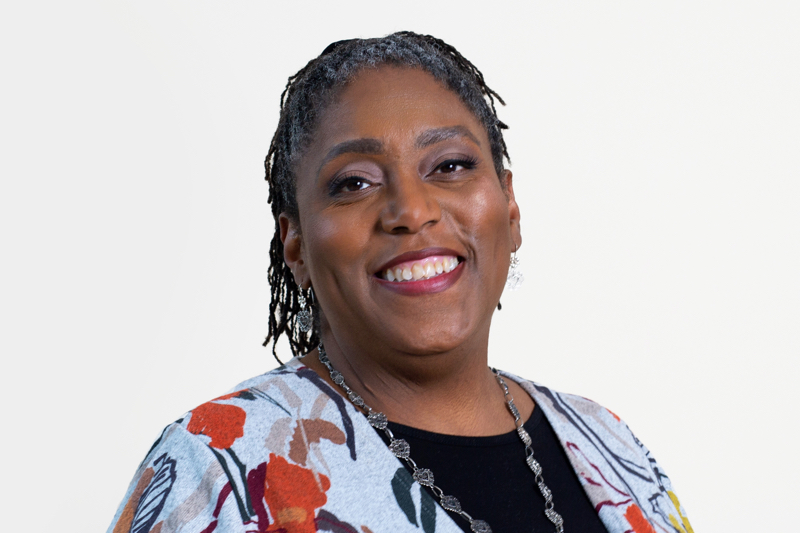
Having received her Doctorate in clinical psychology, Dr. Manning is a certified trainer at the Center for Nonviolent Communication (CNVC), a non-profit peacemaking organization that shares nonviolent communication around the world. She has spoken before lawyers, judges, doctors, teacher, corporate executives here in the U.S., and around the world. “We’re in a moment,” she says, “where we are open to learn.”
Ok, I asked Dr. Manning, what if someone is in a discussion with a person from a different race, ethnicity, religion, etc., and says something stupid in mid-conversation? Dr. Manning immediately responded with “It’s okay to make mistakes. This work takes practice. Admit you made a mistake, that what you said is not your values, and ask to start over.” It’s more powerful than simply apologizing. She admits to having to work at it herself, and cited an example when she was conversing with someone who was gender neural and misused the pronoun. And she will say that she needs to do better.
Other terms used include:
Global Majority: term used by educator and leadership speaker Rosemary Campbell-Stephens to describe, “those people who identify as Black, African, Asian, Brown, Arab and mixed heritage, are indigenous to the global south and/or have been racialized as ‘ethnic minorities.’” (2021)
Beloved Community: popularized by Martin Luther King, Jr. as “one in which resources are shared by all to enable our individual and collective thriving.” (1957)
Microaggressions: defined by Dr. Derald Wing Sue, a pioneer in the field of multicultural psychology, as “brief and commonplace daily verbal, behavioral, or environmental indignities, whether intentional or unintentional, that communicate hostile, derogatory, or negative racial slights and insults toward people of color.” (1970’s)
For more information go to the website for The Center for Nonviolent Communication and Roxanne Manning.
Photo credit: Matt Wong