
What Lies Ahead—and What It May Mean For Your Portfolio

As the stock market has recovered from its February 11 low (and posted a modest gain), many of us wonder what lies ahead. Given the Federal Reserve’s recent decision not to hike interest rates now, low-risk investors are looking elsewhere for return, and many are questioning whether the stock market is their only option.

At a recent economic forecast presentation hosted by Denver-based AMG National Trust Bank, insights were offered that could be a guideline. Themed, “growth with a speed bump”, the speakers were careful to point out both the positives and negatives that may be in store. On the plus side, consumer spending, which accounts for around 67% of our country’s Gross Domestic Product (GDP), looks to be running in the range of 3%. Add to that figures for rising home prices, low energy costs, an improved labor market, and expectations for GDP growth ranging from 1.5% to 3.2%. (Although that figure may be a tad optimistic: Other analysts put it at 2%-2.5%).

On the other side of the ledger is declining business investment, particularly capital spending in the energy industry, which has seen sharp declines. A few other risks could cloud the picture: high domestic inventories, an increase in foreign imports, and weakening credit standards. High inventories mean that businesses won’t produce goods while they are drawing down inventories. Increased foreign imports mean we are buying more from other countries than from our own US manufacturing base. Deteriorating credit standards are reflected in troubled real estate and construction loans, which may compress banks’ interest income and margins. These things combined make for a somewhat murky outlook.

The credit picture is further complicated by high-yield debt, currently yielding around 7%. Although improved from the higher rates seen in December and January (primarily because of an improving picture for oil prices that caused those bonds to rally), the spread between these rates and the risk-free rate of the US 10-Year Treasury remains fairly wide compared to a couple of years ago.

investment 2016

So what does this mean for investors? First, valuations for stocks are high: A current price/earnings ratio of 17 (versus the long-term average of 15) for our stock market suggests that it may be tough for the market to have a significant rise. According to another analyst, Vinny Catalano, President of Blue Marble Research, either interest rates need to drop or earnings have to accelerate for stocks to rise much more. Interest rates can’t drop much (they are already low: just .50%), and first quarter earnings for 2016 are expected to decline by more than -7% over last year, and fall another -2% for the second quarter versus a year ago, before turning positive for the third and fourth quarters. These forecasts amount to a projected overall increase of a mere 1.49% for the year. Not exactly a rosy scenario.

But the outlook for European stocks may be better, given their lower market valuations. The European Central Bank (ECB) also recently expanded (and extended) its quantitative easing program, by which it will purchase more bonds, thereby putting more money in circulation. The ECB also introduced negative interest rates (that encourage savers to spend), and the Eurozone is enjoying a strengthening currency.

The outlook for oil is not clear. Although its price peaked at $41 per barrel before retreating slightly to around $39, it still represents around a 50% increase from the $26-per-barrel low reached in February. As a commodity, oil prices are determined by supply and demand, and several factors have affected both sides of the equation. Demand from emerging markets (China, among others), has contracted, and at the same time, we have more supply from US oil producers. As low prices prompted domestic producers to cut back production, Saudi Arabia and other global producers continued to pump to preserve their market share. In addition, now that we have an agreement with them to remove sanctions in return for their adopting a more acceptable nuclear policy, Iran is now a factor, and is expected to add substantially to the supply. Given these facts, oil may trade between $40 and $60 per barrel—higher than the rock-bottom low we saw earlier this year, but still a far cry from the $82-per- barrel-price of 2014.

For the time being, talk of recession seems muted, given the improving economic data and how well the stock market is performing. But economists do draw some interesting parallels. According to their findings, recessions that occurred during a bear market (defined as a drop of 20% or more), typically lasted 500 days. Contrast that scenario with historical trends for recessions that occur outside a bear market lasting around 136 days.

So how can we use this data to our advantage? Most professional investors view market timing to be a fool’s game, because it demands making two correct decisions: when to sell out, and when to buy back in. A more prudent stance is to have a well-diversified portfolio that is in line with your comfort level with risk. In the short term, it is tough to get meaningful return in bonds, as the US 10-Year Treasury yields under 2%, and once interest rates begin to rise, capital will be risk (as bonds with higher rates are more attractive to an investor). That reality has spawned much ink in the financial press about how standard equity/fixed income asset allocations for conservative investors and retirees may be passé´. It has also pushed many investors to invest in the stock market without adequately understanding, much less being comfortable with, the added risk.

Risk has many connotations, among which are the degree to which you can “sleep at night”; the likelihood that your portfolio will lose value; and the possibility that you may need to make withdrawals to cover retirement living expenses at a time when the market is in decline. Depending on the severity of the decline, you may have insufficient time for your portfolio to recover, meaning your assets could be substantially depleted while you still need income. That degree of equity exposure may be uncharted territory for you, and you should understand the risk. One study showed disastrous results for a portfolio that was invested entirely in stocks for the 15-year period 2000-2015.

Building a portfolio with a mix of different types of equities, including those in international developed countries, along with some exposure to bonds for stability, may be a more acceptable strategy. Stocks with dividends are one option, as typically—but not always—dividend-paying stocks do not suffer as much during a market selloff. Another option is to select a balanced fund with a mix of both equities and bonds. Although investors generally purchase bonds for their income characteristics, fixed income investments also stabilize a portfolio, as the underlying capital is a loan to the corporate issuer. An issuer with solid credit is unlikely to default on the obligation. Having bonds in your portfolio will help preserve your capital should the market suffer a decline.

You also should realize that in an election year, fiscal policy and market behavior can have an impact on how your portfolio performs. When election campaign rhetoric is leading the charge, the outcome may be beyond your control. But you can control how you react, and having a properly diversified portfolio is one way to counter the chaos.

Share This Post:

Bluesky Icon Bluesky
Facebook

Sometimes you can stay local and feel as though you have travelled far and wide! We recently visited the pristine and beautiful Greenwood Gardens located in Short Hills, New Jersey.

Kraków managed to escape much of the destruction rained on other Polish cities during World War II. Krakow’s Old Town, the historic part of  the city, was declared a UNESCO World Heritage Site in 1978,…

If you’re considering a solo vacation or need to take a long-distance business trip on your own, then Caryl E. Doling’s “A Woman’s Guide to World Travel” is the perfect guide.

With more than two decades of culinary experience and a lifelong passion for hospitality, RubenRuelas serves as Executive Chef at Hilton Cancun, an All-Inclusive Resort (Hilton Cancun).

Spa Castle, with its bright white and blue façade, made me feel I’d landed somewhere in the Mediterranean, yet I was adjacent to the Whitestone Expressway, and a stone’s throw away from the bridge.

Grounds for Sculpture (GFS), the 42-acre grand sculpture garden founded by Seward Johnson, is offering art lovers and many more a new reason to visit! 

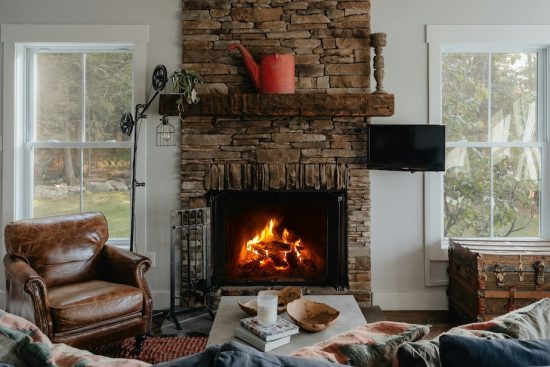
What a Real Fire Gives a Home That the Thermostat Never Could

Modern homes are remarkably good at maintaining temperature. Thermostats can keep rooms within a narrow comfort range, heating systems operate with impressive efficiency, and smart controls allow homeowners to adjust settings from almost anywhere. Yet despite all of this technological progress, many people still find themselves drawn to something far older: a real fire. This attraction is not simply about heat. If warmth were the only goal, central heating would have solved the problem long

read more

How Cooling Sheets Regulate Body Temperature for Better Sleep

Sleep depends on a small drop in core temperature before the brain settles into stable rest. Bedding can either support that shift or interfere with it by trapping heat and dampness near the skin. Cooling sheets matter because they influence airflow, surface feel, and sweat evaporation across several hours. For people who wake flushed, sticky, or restless, fabric choice can affect sleep continuity more than many expect. Heat Balance A healthy sleep cycle begins as

read more

Understanding the Difference Between Tax Funding and Traditional Business Loans

Access to business finance has never been more important for UK companies. Rising operating costs, changing market conditions, and increasing tax obligations mean that even profitable businesses can experience periods of cash flow pressure. As a result, many SMEs now rely on external funding solutions, including business loans, overdrafts, invoice finance, and VAT loans, to maintain liquidity, meet financial commitments, and support ongoing growth. Cash flow remains a common challenge for many UK SMEs, particularly when

read more

How to Stay Healthy for Retired Women

As women enter retirement, focusing on health and well-being should be a top priority. This time can offer both leisure and new health challenges. It’s important to maintain a balanced lifestyle that combines physical health, mental wellness, and social connections. With the right strategies, these years can be vibrant and fulfilling, offering opportunities for exploration and growth. Staying healthy in retirement is not just a goal; it’s a lifestyle choice that brings new experiences and

read more

How Online Learning Has Changed the Way Students Prepare for Graduate Exams

Preparing for graduate entrance examinations such as the GAMSAT exam has always required dedication and access to quality study resources. In the past, students relied on classroom coaching, printed study materials, and limited interaction with instructors. While these methods have helped and are still helping many candidates succeed, they also pose challenges, including rigid schedules, geographic limitations, and limited access to expert guidance. The rapid growth of online learning has changed the conventional methods of

read more

Transitioning Your Wardrobe Between Seasons Made Easy

Anyone who has lived in the UK for more than a week knows the challenge: you leave the house in sunshine, arrive at lunch in a downpour, and by late afternoon the temperature has dropped three degrees for no obvious reason. Dressing for British seasons is a practical exercise. However, a few considered habits can make your wardrobe work harder all year round without requiring a complete overhaul every time the forecast changes. Layering is

read more
You've loaded all available articles in this category

What a Real Fire Gives a Home That the Thermostat Never Could

Modern homes are remarkably good at maintaining temperature. Thermostats can keep rooms within a narrow comfort range, heating systems operate with impressive efficiency, and smart controls allow homeowners to adjust settings from almost anywhere. Yet despite all of this technological progress, many people still find themselves drawn to something far older: a real fire. This attraction is not simply about heat. If warmth were the only goal, central heating would have solved the problem long

read more

How Cooling Sheets Regulate Body Temperature for Better Sleep

Sleep depends on a small drop in core temperature before the brain settles into stable rest. Bedding can either support that shift or interfere with it by trapping heat and dampness near the skin. Cooling sheets matter because they influence airflow, surface feel, and sweat evaporation across several hours. For people who wake flushed, sticky, or restless, fabric choice can affect sleep continuity more than many expect. Heat Balance A healthy sleep cycle begins as

read more

Understanding the Difference Between Tax Funding and Traditional Business Loans

Access to business finance has never been more important for UK companies. Rising operating costs, changing market conditions, and increasing tax obligations mean that even profitable businesses can experience periods of cash flow pressure. As a result, many SMEs now rely on external funding solutions, including business loans, overdrafts, invoice finance, and VAT loans, to maintain liquidity, meet financial commitments, and support ongoing growth. Cash flow remains a common challenge for many UK SMEs, particularly when

read more

How to Stay Healthy for Retired Women

As women enter retirement, focusing on health and well-being should be a top priority. This time can offer both leisure and new health challenges. It’s important to maintain a balanced lifestyle that combines physical health, mental wellness, and social connections. With the right strategies, these years can be vibrant and fulfilling, offering opportunities for exploration and growth. Staying healthy in retirement is not just a goal; it’s a lifestyle choice that brings new experiences and

read more

How Online Learning Has Changed the Way Students Prepare for Graduate Exams

Preparing for graduate entrance examinations such as the GAMSAT exam has always required dedication and access to quality study resources. In the past, students relied on classroom coaching, printed study materials, and limited interaction with instructors. While these methods have helped and are still helping many candidates succeed, they also pose challenges, including rigid schedules, geographic limitations, and limited access to expert guidance. The rapid growth of online learning has changed the conventional methods of

read more

Transitioning Your Wardrobe Between Seasons Made Easy

Anyone who has lived in the UK for more than a week knows the challenge: you leave the house in sunshine, arrive at lunch in a downpour, and by late afternoon the temperature has dropped three degrees for no obvious reason. Dressing for British seasons is a practical exercise. However, a few considered habits can make your wardrobe work harder all year round without requiring a complete overhaul every time the forecast changes. Layering is

read more
You've loaded all available articles in this category