When I mentioned to someone that I was traveling to Poland, he said, “Everyone wants to go to Poland these days.” It’s easy to see why. Unlike other European countries that are awash in tourists, and actually have begun to discourage visitors, Poland welcomes them. The country is less expensive than Italy, France, and Spain, and yet offers a plethora of sights and sounds, enough to keep singles, couples, and families busy for many days.
A good place to start is Kraków. The city boasts an enviable lineup of museums. The National Museum houses more than a million exhibits and priceless works of art. Access is easy with 11 branches around the city. For those who saw Steven Spielberg’s film about a courageous industrialist who saved the lives of hundreds of jews, Schindler’s Factory should be on the list. Two museums for families include the Polish Aviation Museum and the Kraków Pinball Museum. For an unusual experience, explore the city’s mysterious past with a visit to the Rynek Underground.
A modern vibe can be felt, with young people dominating the social environment. Kraków is home to Jagiellonian University, one of the oldest universities in the world and considered Poland’s best academic institution of higher learning. Because of the students and young professionals, Kraków could give New York City competition as a city that never sleeps. After midnight, many restaurants and clubs are still going strong, with patrons enjoying music. And while Poland doesn’t have much of a wine business, it does produce ample quantities of beer and vodka, enough to keep celebrations going well into the night.
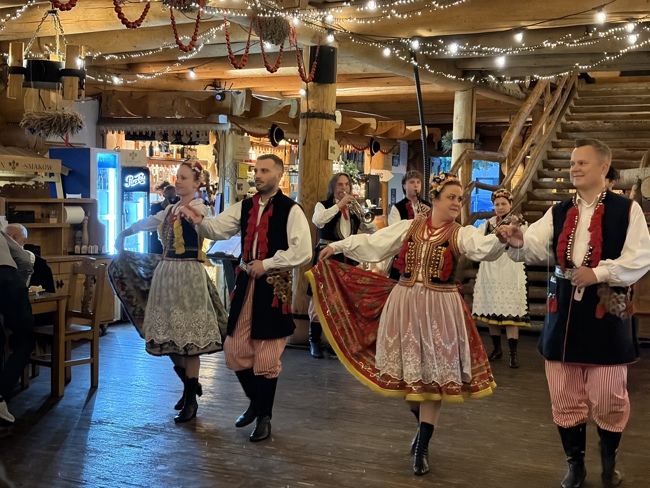
The Polish people are fiercely proud of their heritage and eager to share what they love with visitors. Popular foods include pierogies, steamed dumplings filled with meat and potatoes, obwarzanek, a Polish bagel sold at the airport and on street corners, and golabkis, cabbage rolls stuffed with cabbage and meat. Traditional Polish dances are often performed in restaurants so you can enjoy entertainment while you dine. Don’t be surprised, however, if you might be invited to join in. While there are plenty of casual places to indulge, Kraków also entices diners with higher priced restaurants. Make sure to ask at your hotel for recommendations.
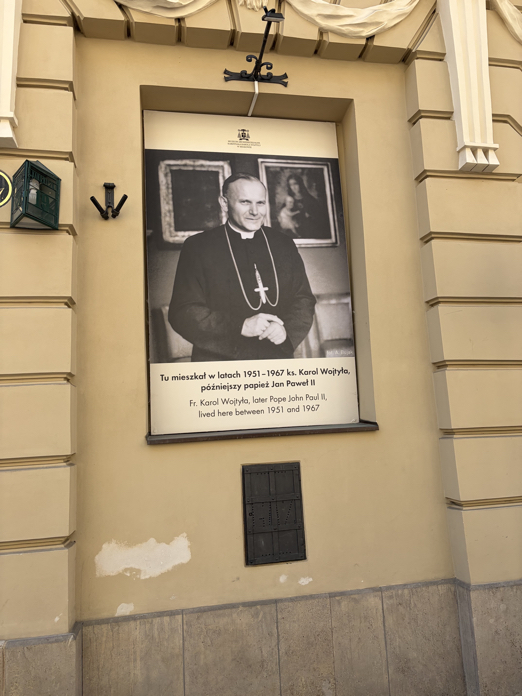
Poland’s population is 88 percent Roman Catholic. The airport is named after Karol Wojtyla, the archbishop of Kraków who became John Paul II, the first Polish pope.

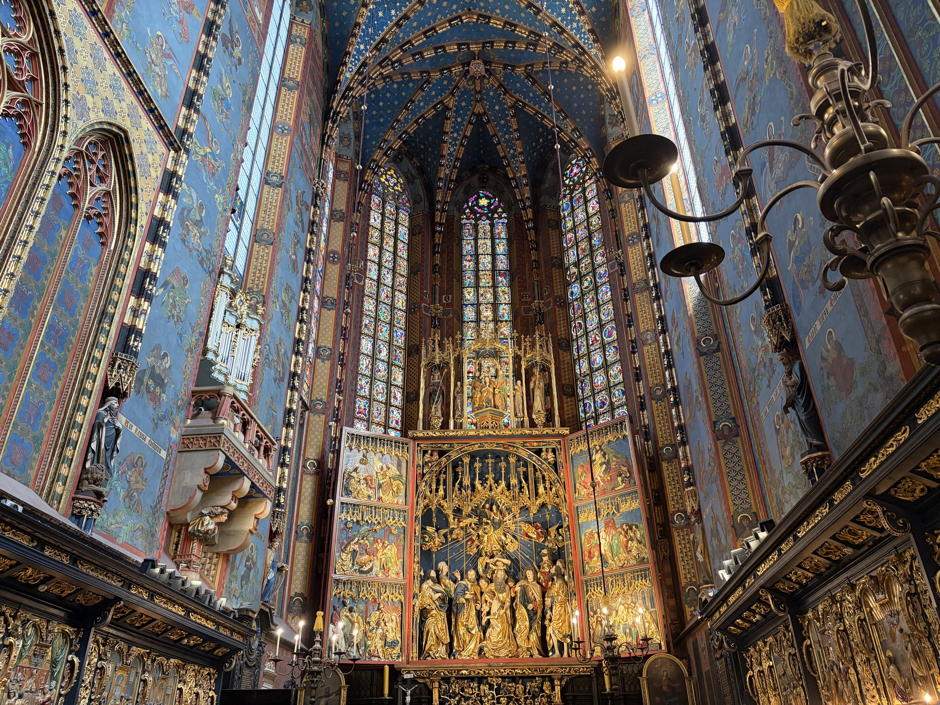
Kraków has more than 120 historic Romans Catholic churches. St. Mary’s Basilico (top, and above) is considered the most important church in Kraków, bested only by the Wawel Cathedral.
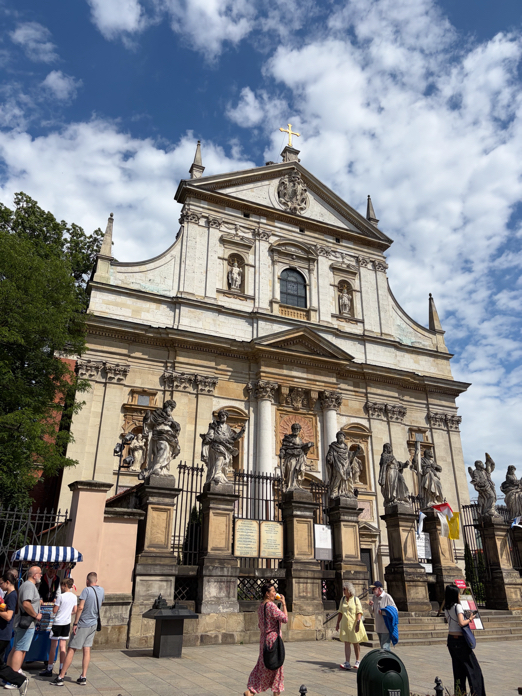
Another one not to miss: The Church of Saints Apostles Peter and Paul, an historic Roman Catholic Polish church in the baroque style.
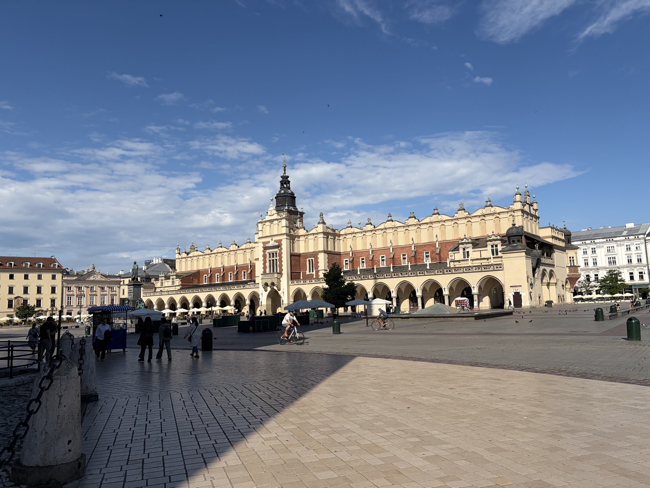
Old Market Square, in the center of the city, is the largest medieval square in all of Europe. Cafes and restaurants line the perimeter, serving breakfast, lunch and dinner to tourists and locals. There are many shops and stalls selling souvenirs and handmade items. Popular items include carved wooden boxes, tools and children’s toys, and amber jewelry in various shades of yellow, orange, and red.
The Vistula River, Poland’s longest, runs 650 miles to the Baltic Sea. When the weather cooperates, the banks are filled with people having picnics, playing games, or just hanging out. Bike paths above the river offer scenic views while boat rides allow visitors to relax while listening to the river’s history.
There are about 40 parks in Kraków, including dozens of gardens and forests, and they are well used. In fact, flying into Kraków it’s hard not to notice that the land below is greener than Ireland, thanks to all those well maintained areas that create an urban oasis. It’s easy for a New Yorker to fall in love with a city that prioritizes its green spaces.
Poland shares borders with seven of its European neighbors – Germany to the west, the Czech Republic and Slovakia to the south, Lithuania and and Russia to the northeast, and Belarus and Ukraine to the northeast. Because of this proximity to other countries, Poland’s immigrant population has grown. In the 2002 census, only 0.25% of respondents living in the city declared a non-Polish nationality primarily. But in 2019, it was estimated that foreigners accounted for as much as 10% of the city’s population, according to Wikipedia. Many of these new arrivals have come from Ukraine fleeing the war begun by Putin.
Photos by Woman Around Town