During COVID’s lockdown, I spent some time scanning family photos. Black and white ones from my childhood, then modern ones from vacations, of my kids, their graduations and so on. I believed digitizing them onto my computer would lead to their lasting forever. But having just read Lost in Time by Jack R. Bialik, I’ve had to rethink how I should save these precious photos, and crucial documents.
Bialik has been in the field of technology for decades, including 25 years at Motorola, running his own technology researching business, and consulting with the White House on expanding its critical digital infrastructure. In his book, he raises an alarm worthy of our attention.
While the book’s main title may not give the subject away, the subtitle will: “Our Forgotten and Vanishing Knowledge.” In the early chapters, he sheds light on history and the brilliant technology that came to pass long, long ago. Cataract surgery, for example, was performed over 200 years ago and the first battery dates to the ancient region of Mesopotamia. It took him over ten years of rigorous research to uncover the brilliant discoveries of the past. Some are lost forever. From this, he reminds us “the fragile nature of human knowledge” can disappear by war, natural disasters or a change in priority.
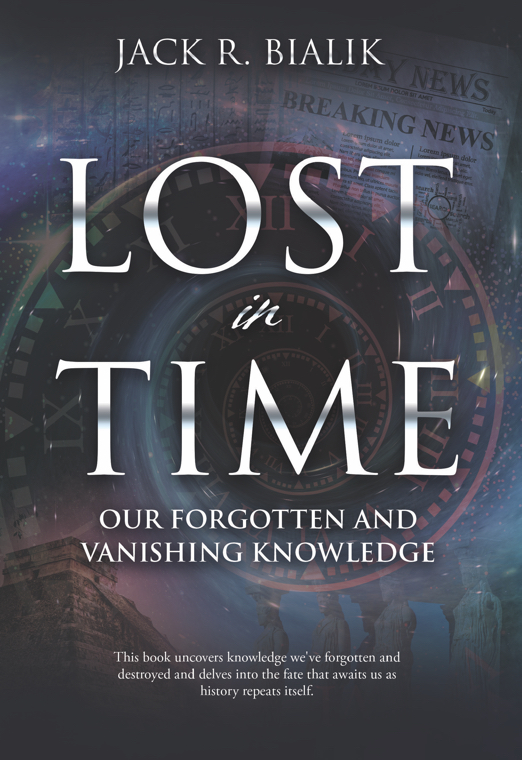
His intent is for readers to consider “the steps needed to safeguard knowledge for generations to come.” And, for all of us to consider how much of our documents, photos, books, maps, and the like are stored either on discs, CD’s, DVD’s, thumb drives. Will these devices be readable in years to come, will future computers have the software to read all we’ve saved? Vint Cerf, former VP of Google, and considered one of the fathers of the Internet, quoted in the book in words taken from a BBC article, of his worry that “all the images and documents saved on computers will eventually be lost.”
Bialik makes a compelling case for rethinking how we should preserve everything from family photos to government documents, to corporate inventions, and on and on. “We have examples,” he writes, “of whole civilizations that have disappeared with no record of what they knew.” The ancient city of Alexandria tried compiling a library of all human knowledge, however portions of it went up in flames, and other sections were destroyed under subsequent rulers.
It must be a combined effort, he says, where those in the fields of technology and renewable products can put aside egos, and work together for the common good. He says that some ideas include building time capsules, or specialized long-term repositories like the one sent up to the International Space Station which included a list of some of humanity’s most outstanding achievements and personal messages from Earth. There’s the Rosetta Project in progress where global language specialists are working to create a library of all human languages.

Jack R. Bialik (Photo courtesy of the author)
With an easy-going writing style, and down-to-earth explanations of sometimes technical terms, Bialik has done a masterful job of making his case for why we need to create ways to preserve history for the long term. Fans of history will enjoy the bite-size nuggets of human accomplishments and inventions from long-ago civilizations, and photos of artifacts uncovered and how they endured over the years. It’s as much a history book as it is wise counsel and a call to action to have our own history appropriately preserved for years to come.
While that is all fine and good for the world, what of our own personal mementoes, ones we want to save for future generations? WAT asked Bialik, and here’s his answer:
First, determine what you want to save. Think long, think about the past and into the future, about who or what the artifact(s) will be needed for.
Think widely, consider the people around you and those you want to share theinformation with. Who will need to access it? Could others outside of themneed this information? Be humble, be open to new ideas and ways that the information could be saved and accessed.
Now armed with these thoughts, think about your options based on what needsto be saved. Certainly not everything on your phone needs to be treated with the same amount of permanance.
Here are a couple of options to consider. Redundancy is an option for keeping information for long periods. Information saved in multiple places helps to ensure access in the future.The cloud can be used and an external storage device, or even multiple storage devices.
An even more permanent way is to print the information or image. TheComputer History Museum does just that with computer programs that were originally saved on floppy disks.They print the information on paper.
Is that going backwards? It seems like it, but a good paper, especially archival quality paper, will last much longer than DVD, CD or electronic storage mediums. Paper also gives the added advantage of being easier for others to find in the future. One caution, when using the cloud, make sure others will be able to access your cloud storage in the future.”
Log on to Jack R. Bialik’s website for information on his book, and podcast.
Top Bigstock photo by italianestro