The seed for Carnegie Hill Village was planted when Gilda Wray, current president of CHV, and Chris Robinson, board member, read in a book group, Atul Gawande’s Being Mortal: Medicine and What Matters in the End. They decided that they should start a village in Carnegie Hill and were able to build a board over the next year of about 10 men and women from the neighborhood which met monthly in the basement of the Church of the Heavenly Rest. The group developed a survey/questionnaire to see whether there was interest in the neighborhood for a village and what respondents really wanted. They were able to insert the questionnaire in a Carnegie Hill Neighbors newsletter and had nearly 5,000 responses.
The group did not have to start from scratch as did the Beacon Hill Village, which launched in 2001 and learned from its early missteps. After the non-profit was featured in a New York Times article, Beacon Hill Village created a manual to help other communities follow suit. While that manual was a starting point, every village is different based on what local residents need and want.
“We knew we couldn’t start anything without knowing what people wanted,” said Roberta Krakoff, one of the founding board members. “It would have been foolish to start something that people weren’t going to use.”
“We thought helping people get to medical appointments would be at the top of the list,” said Roberta. “Instead, the majority wanted activities and events organized by and for members.” Basically, people wanted socialization and continued intellectual stimulation.
With that mandate, the board went to work incorporating, creating a website, and began to solicit ideas for activities. Initially, Carnegie Hill Village took in the area of Manhattan from 86th Street to 98th Street, between Fifth and Third Avenues, a community not served by any of the existing village communities in New York City. In 2022, the membership area was enlarged to include the area between 79th and 98th Streets, from Fifth to East End Avenues.
“Some organizations take everybody, regardless of where they live,” Roberta said. “We decided to have a geographic area.” Since the end of the pandemic, membership has continued to grow.
The organization depends on volunteers and has created a diverse board that includes people experienced in law, the arts, public relations, finance and non-profit management.

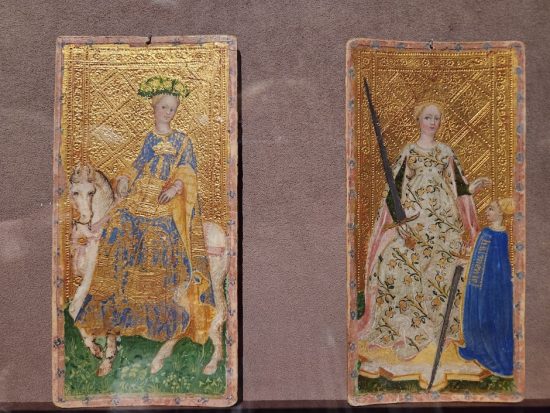
Roberta Krakoff, who chairs the arts committee, during a tour in a museum.
Members bring their ideas about activities to the board. Roberta chairs the arts committee. “I got to know women who were active in the art world, including people connected with museums,” she said. The arts committee meets four times a year and considers events that would be appropriate and possible. “We try to have at least one event a month, two a month during winter,” she said.
Lectures on the arts and literature, health and wellness, and other topics of special relevance to seniors populate the calendar. They have had individuals from law enforcement talk to the group about staying safe and avoiding online or phone scams. So called, “shared interest” groups, meet on a regular basis to take in subjects as diverse as short stories, exercise, Ted Talks, knitting, history, and Mindfulness Meditation. There are twice a week walks in Central Park which started during Covid as a way to socialize safely outdoors.
“We also have informal lunches and dinners,” Roberta said. “Three or four times a month, someone will host a lunch or dinner at a local restaurant. The person who organizes it finds a restaurant that can accommodate six or eight of us, and everyone pays their own bill. People really like that. In the summer, we sometimes have picnics in the park.”
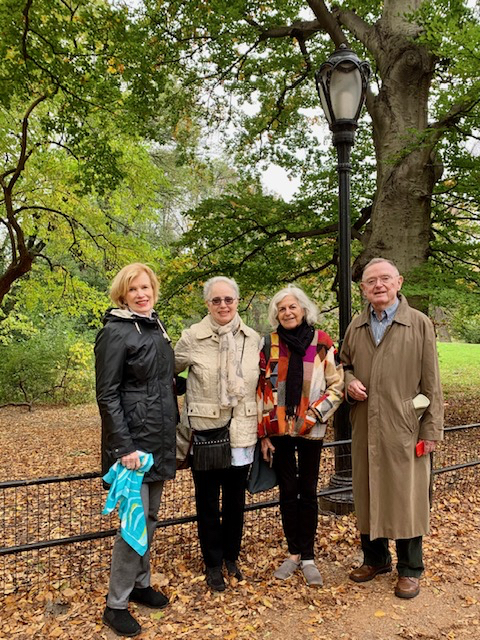
Members of Carnegie Hill Village on a walk in the park.
Roberta said she often sees members who didn’t know each other before joining Carnegie Hill Village in the neighborhood, perhaps having lunch or just taking a walk. Knowing that the organization is helping elderly people forge these connections inspires her and other board members to keep going.
Since Carnegie Hill Village does not have its own space, the group often has to count on its members to find a church or other location where they can get together for a lecture or other event. And with the membership skewing older, there is an ongoing effort to attract new members.
Despite the group’s success, there are challenges ahead, Roberta said. “The concern, frankly, is where we go from here,” she said. “We’re getting older, and we’re getting bigger. How much bigger can we get with no staff?”
The website helps to publicize the group and what it does. Word of mouth, one member encouraging others to join, is perhaps the most effective recruiting method. And with every new member who joins, new ideas pop up about what the group might offer to help seniors do what Dr. Gawande stressed: “having as good a life as possible all the way to the very end.”
For more information go to the website for Carnegie Hill Village: www.carnegievillage.org.
Photo Credit: Maria Cox