

There is something deeply satisfying about picking up a handmade item and finding a small, precise mark on its surface that tells you exactly who made it. Not a sticker. Not a stamp that smudged in the rain. An actual engraved signature, pressed into wood, leather, or metal with intention and permanence. Across craft markets, Etsy shops, and hobbyist studios, more makers are ditching the trusty marker in favor of something that lasts a whole lot longer. And the reasons why are worth paying attention to.
Markers Have Always Fallen Short
For years, markers were the go-to solution for personalizing handmade goods. They are cheap, widely available, and require zero learning curve. But any maker who has sold or gifted their work knows the heartbreak: a beautifully crafted wooden cutting board with a sharpie signature that fades after the third wash, or a leather wallet where the ink cracks and peels within months.
The problem is not effort. The problem is impermanence. Markers sit on top of a surface rather than becoming part of it. Heat, moisture, friction, and time all conspire to erase what took skill and care to create. For artisans who take their craft seriously, that is a frustrating contradiction. The work lasts. The signature should too.
Personal Branding in the Handmade Space
Something has shifted in how buyers think about handmade goods. People are not just buying a product. They are buying a story, a relationship with the person who made it, and a small piece of something real. That shift has made branding more important than ever, even at the individual maker level.
Artisans who once thought of themselves as too small to need a logo are now discovering that a consistent mark, a recognizable signature, is what transforms a hobby into a recognizable brand. And the most durable way to deliver that mark is through engraving.
This is where tools designed specifically for makers come into their own. Resparked tools for crafting have become a popular choice among hobbyists and small business owners who want professional-looking results without the complexity of professional-level tools. The ability to engrave a logo, initials, or custom design onto finished pieces changes the entire feel of a product, and the learning curve is far gentler than most people expect.
What Engraving Actually Opens Up
One of the biggest misconceptions about engraving is that it requires expensive equipment or specialist knowledge. The modern engraving pen has changed that entirely. These compact, handheld tools work on a wide range of materials, including wood, leather, glass, metal, and certain plastics, making them genuinely versatile for makers who work across different mediums.
Think about the range of items that benefit from a personal mark. Jewelry makers can sign the back of a pendant. Woodworkers can engrave a small logo onto furniture joints or the undersides of bowls. Leatherworkers can add initials to wallets, belts, and bags. Even ceramicists and glass artists have found ways to incorporate engraving into their finishing process.
For those just starting out, the beginner-friendly nature of today’s engraving pens means there is no need to practice for weeks before getting a usable result. The tools are designed to be intuitive, responsive, and forgiving enough for someone who has never engraved a single surface in their life.
Consistency Is the Real Business Advantage
Here is something worth considering for anyone who sells their work: consistency builds trust. A buyer who receives a piece with a clean, engraved logo feels like they are dealing with a real brand, even if that brand is one person working out of a spare bedroom.
Markers are inherently inconsistent. Pen pressure, ink flow, and surface absorbency all affect the final result. Two pieces signed on the same day can look noticeably different. Engraving removes most of those variables. Once a maker learns the speed and pressure that works for their tool and material, the results are remarkably repeatable.
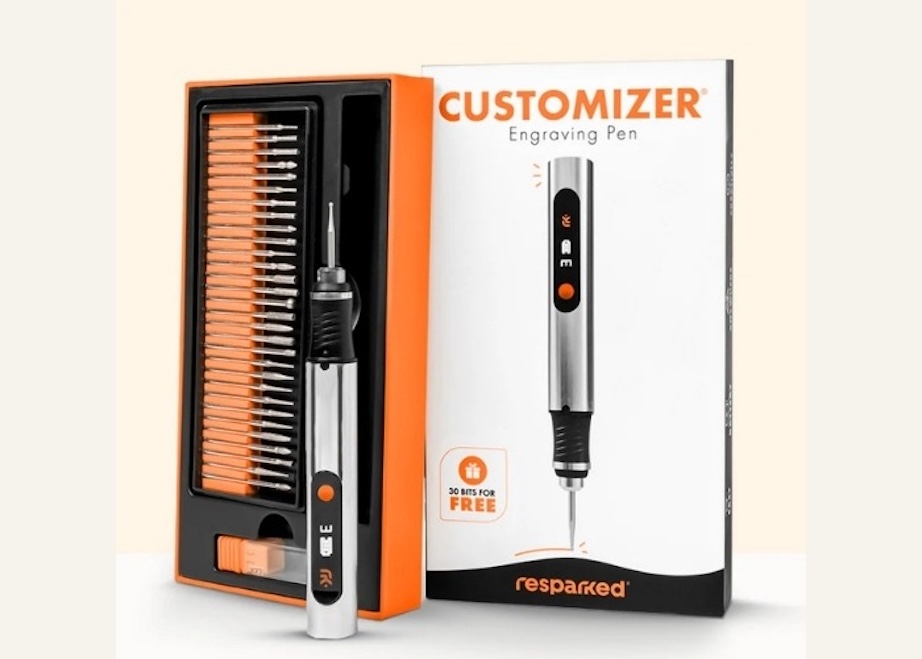
Resparked’s flagship Customizer Engraving Pen has found its way into the hands of more than 650,000 people, and with over 2,400 customer reviews earning an “Excellent” rating, it is clear the tool is delivering on its promise for a wide range of skill levels and creative applications. That kind of community trust does not happen by accident. It reflects a product that genuinely works for real makers in real-world conditions.
Making the Switch: Practical First Steps
For any artisan thinking about moving away from markers, the transition is simpler than it might seem. A few practical starting points:
Start with scrap material. Before engraving a finished piece, practice on offcuts of the same material. This allows a maker to dial in speed, pressure, and depth without risking a completed item.
Keep designs simple at first. Clean lines and simple initials are easier to engrave accurately than complex illustrations. A well-executed simple logo looks far better than a rushed complex one.
Think about placement before you start. On a leather wallet, the inside back panel is a classic spot. On a wooden board, the underside or a corner of the back face works well. Deciding in advance avoids hesitation mid-engrave.
Clean the surface first. Dust, oils, and residue can all affect how the engraving tool interacts with a material. A quick wipe-down before starting makes a noticeable difference in the final result.
Document the settings that work. Once a maker finds the right approach for a particular material, writing it down saves a lot of trial and error next time around.
Conclusion
There is a reason why craftspeople throughout history have marked their work. A signature is not vanity. It is accountability, pride, and a quiet form of permanence. In an era of mass production, a hand-engraved mark on a handmade object is one of the clearest signals that something real and human went into its creation.
Swapping a marker for an engraving pen is a small change with outsized impact. It affects how buyers perceive a product, how long the branding lasts, and how seriously a maker’s work is taken in the marketplace. For anyone who puts genuine care into what they make, that feels like a worthwhile trade. The marker had a good run. But some things deserve to be written in something more lasting.
Photo courtesy of Resparked
Contributed posts are advertisements written by third parties who have paid Woman Around Town for publication.