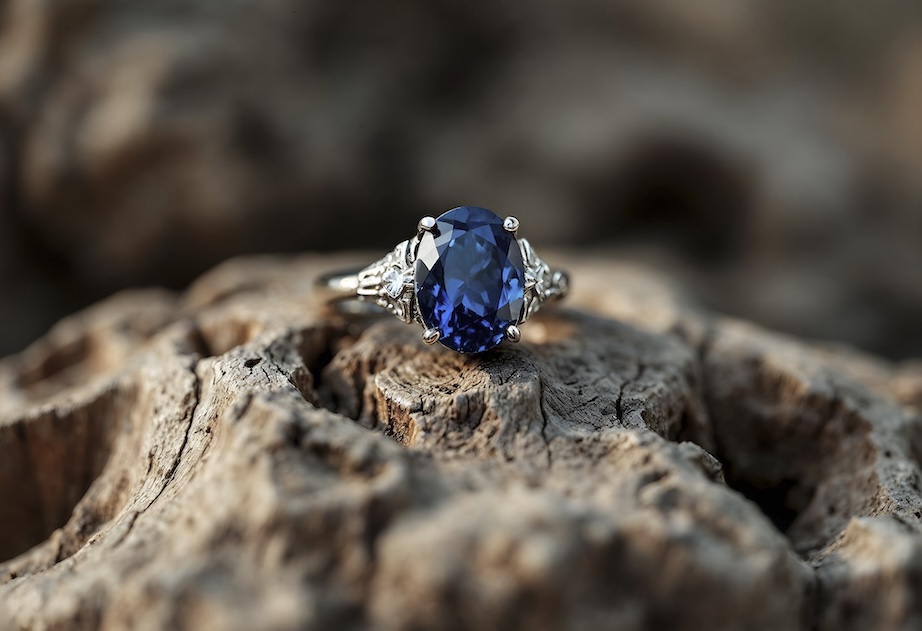
There are more women buying themselves a gemstone ring as a symbol of financial independence, a later marriage and a change in the significance of jewelry has taken the ring from a wait for gift to a personal purchase. Industry information has shown self-purchase as one of the fastest growing sectors of the fine jewelry business, with women buying rings to celebrate promotions milestones recover from them, or just because they wanted one. The ring no longer meant signaling a relationship, but signaling a self.
This is not a rejection of the engagement ring or of partners; both these elements comfortably coexist. A woman may have three or four gemstone rings purchased by herself but still seek an engagement ring later because they both provide answers to different questions. One is saying ‘someone has chosen me’; the other is saying ‘I have chosen this’ and I increasingly want to be able to say the latter in my own words.
What’s actually driving the self-purchase trend?
Money is the clanking engine, but not quite as simply “women make more now”. Women are after all wielding a huge and growing proportion of our household and discretionary spend, and they are also getting married later and later (or not at all), discouraging that youthful, anticipatory equivalent of saying yes to the ring in your early twenties. When the if-only keeps on shifting, putting in the order ceases to be premature and becomes just plain sensible. We also see a generational difference in how jewelry is framed.
In the older era of marketing, fine jewelry was almost entirely a gift from a man; in the younger era of buying, it is becoming a purchase you take on researching selecting, and purchasing it yourself. Social media has helped speed this along by turning self-gifting into something to be seen, rather than kept quiet about, so a woman posting a selfie with a ring she bought for herself doesn’t read as sad and alone; it reads as strong.
Common themes emerge in the reasons cited by women for purchasing a ring: autonomy and meaning. Using a ring as a bought-tangible remembrance, perhaps of a job accomplished or lost, a divorce, a healing, a birthday, or simply a long, hard spell for which the wearer survived-imbitsowith a narrativethe wearer shapes.
How does buying for yourself change what you choose?
With no compromise to someone else’s ideas of style or price point, self-buying women tend to select differently, and this is most evident in gemstones. Self-buying women are not limited by their partner’s assumption of their tastes, or the conventionalities of a traditional engagement ring, Because of this they are more willing to select non-traditional cuts, contemporary design with more color, and as the data bears out, this is where colored stones, unique shapes, and more modern design outperform all others. She can buy the emerald she really wants, rather than that safe solitaire picked for her; the budget is different as well.
Lacking the general expectation of a certain multiple of a person’s salary, like the “engagement ring” do-it-yourself purchasers often begin by identifying a readily affordable number and a style and shape they can live with. This is one reason why colored stones slot so nicely into this style: a bold sapphire, aquamarine, or tourmaline brings maximum bling for hundreds, not thousands, of dollars, and then there’s usually more money to work with to upgrade cut and craftsmanship rather than size.
What should a first-time self-buyer actually look for?
Keep in mind how that ring will act on your hand. A self bought gemstone ring is intended in almost all cases to be worn every day, not preserved in a velvet-lined box. Hardness is a good indicator of use possibilities; sapphires and rubies are diamond-hard, 9 on Mohs, and will stand up to an active daily life; emeralds and opals might be high-quality stones but are a lot softer and more susceptible to breaks and scratches, while other highly included gems are more likely to get chipped or cracked if treated harshly.
Between a stone you cherish and one you can wear comfortably is the way to happiness. Quality checks are the same discipline while you are buying a ring for yourself, as when a person delivers you a ring so never forget to ask for proof. If a colored or any other large stone is bought, then ask about treatment (heat-treated is normal while anything else is too heavily treated and lessens the price) and if you be buying for yourself a report from an acknowledged lab assures you get what you expect to receive.
Where you buy shapes the experience as much as what you buy. Independent and specialist jewelers often suit self-purchasers better than big chains, because the focus on craft and individuality matches why she’s buying in the first place, and pieces like Handmade Rings carry a character and a story that mass-produced inventory can’t match. A maker who can talk you through stone choice, sizing, and design gives you the kind of considered purchase that makes a self-bought ring feel earned rather than impulsive.
Is a self-purchased ring a good financial decision?
It may even be a wise buy, but the honest approach to framing is identical to buying any other top-quality jewelry: buy it to keep it, not to get your money back. The secondhand market for jewelry is cutthroat; most rings sell for a very small proportion of what they cost secondhand, and buying a ring aiming to increase in value usually results in disappointment.
What increases in value is the intrinsic value of what your ring is made of; a good stone and a solid precious-metal band, and not the design. Having said that, a handful of categories outperform the rest over time.
Good quality, naturally colored stones with traceable provenance, properly cut diamonds, and objects crafted in platinum or thick gold all maintain their intrinsic value more reliably than jewelry heavily designed for whimsy or branded names, where you essentially buy the label. If longevity is paramount, it is best to devote funds to stone quality and 24kt gold rather than all the dressings. The practical measures that are taken to safeguard a self-purchase are: appraisal and insurance. The same as any other kind of ring.
Contributed posts are advertisements written by third parties who have paid Woman Around Town for publication.