Why did the story of what happened to Ferro become an obsession for the narrator in Mario Fortunato’s The Imaginary Life of a Laurel Tree? He is, after all, a writer looking for a topic for a new book. Like Marco, he’s gay. He also is curious about how his good friend, Federica, came to be involved with the professor’s life.
Mario Fortunato is a talented storyteller. (The book is translated by Michael F. Moore.) The way the story unfolds, we learn a great deal about all the characters in this very Italian drama. Ferro’s loyalty and interest in his students, and one in particular, ultimately leads to his downfall.
The narrator is from Calabria and returns home during the summer to stay with his sister. He’s surprised to see Frederica, a friend from college, who tells him about the death of Ferro, a university colleague. Her explanation of what happened is cut short, and he hopes to learn more when he sees her again.
Until that happens, his sister fills in some of the blanks. The student, Yussef, is from Tunisia, in a family ruled over by a strict father. Perhaps because the father senses his son is gay, punishment, not love, is often doled out. Yussef’s sister hates her brother and does anything she can to get him into trouble, whether at home or at school. Their mother, partly because she, too, was intimated by her husband, does little to help her son.
No surprise that Yussef finds safe harbor with his professor, Ferro. One day, Yussef follows Ferro home, rings the bell, and is allowed to enter, even though the professor is confused, even wary, about having the student in his home. Ferro tries to maintain a teacher-student relationship with Yussef. But one day when Yussef visits, he approaches Ferro and kisses him. Alarmed, Ferro asks him to leave and never return. The young man, however, is persistent, hurt, and angry. Lashing out, he tells his parents that Ferro sexually assaulted him. Since Ferro is gay, many are quick to believe that he would seduce a vulnerable young man who is confused about his own sexuality.
When the case gets to court, Frederica, over the objection of her husband, Lino, agrees to testify for her friend and colleague. It doesn’t help: Ferro’s reputation and career are ruined and Frederica’s marriage destroyed.
While he’s never met Ferro or Yussef, the narrator becomes fixated on the scandal and the obsession begins to slop over into his own life. His meetings with Frederica, and then her son, Piero, an artist, become more frequent and complicated. When Piero kisses him, an interaction witnessed by Frederica and her other children, he must leave, not knowing whether he will ever hear from any of them again.
He begins an affair with a Spanish youth, Sergio. He also begins to imagine how the relationship between Ferro and Yussef played out. He visualizes how Ferro might have given the boy a few chores around his apartment, arranging his books, for example. On one occasion, he might have given Yussef a copy of Twenty Thousand Leagues Under the Sea, sparking the youth’s interest in the deep sea, submarines, and giant ocean creatures.
In between writing some travel books about London and Calabria, he decides to write about Ferro and Yussef, disguising their names and some of the locations. The proposal is quickly snapped up by a publisher. Although he’s pleased with the final manuscript, the book doesn’t sell well. One person, however, does read it with a shocking result.
Why a laurel tree? You’ll have to read the book to find out.
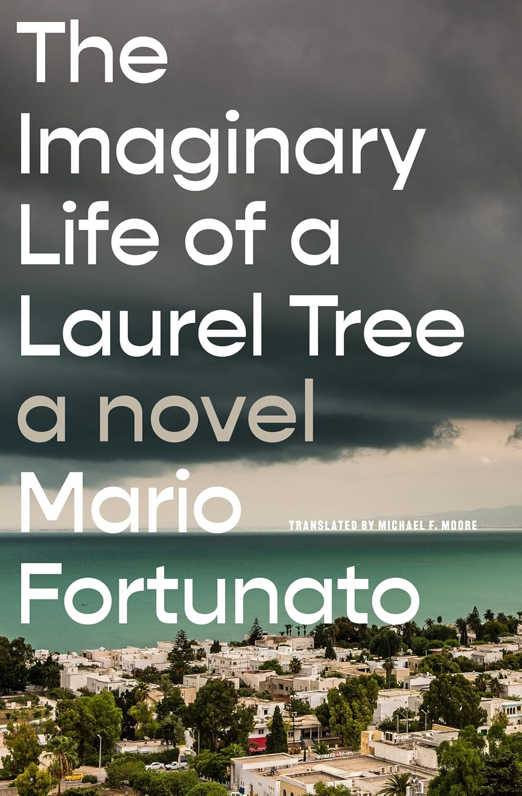
The Imaginary Life of a Laurel Tree
Mario Fortunato
Translated by Michael F. Moore
Our editors love to read and independently recommend these books. As an Amazon Affiliate, Woman Around Town may receive a small commission from the sale of any book. Thank you for supporting Woman Around Town
Top Bigstock photo by Rostovdriver