Many of our readers know of John A. Roebling, the German born American civil engineer who designed and built wire rope suspension bridges. New Yorkers and guests of the city are particularly impressed by the majestic Brooklyn Bridge that is a National Historic Landmark. But Roebling’s experience as a brilliant engineer extends well beyond the iconic New York landmark. If you’re going leaf-peeping, why not explore the northern Delaware River area where you can visit another one of the famed engineer’s crowning achievements.
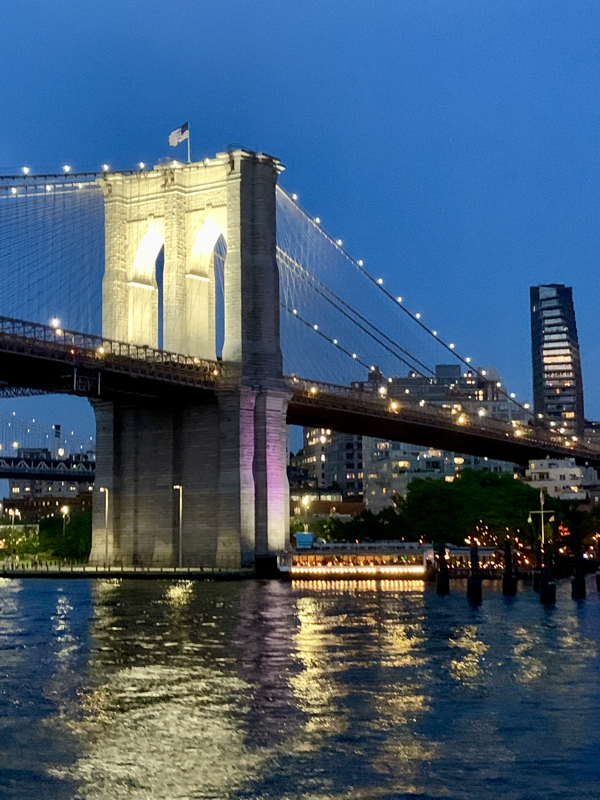
The Brooklyn Bridge
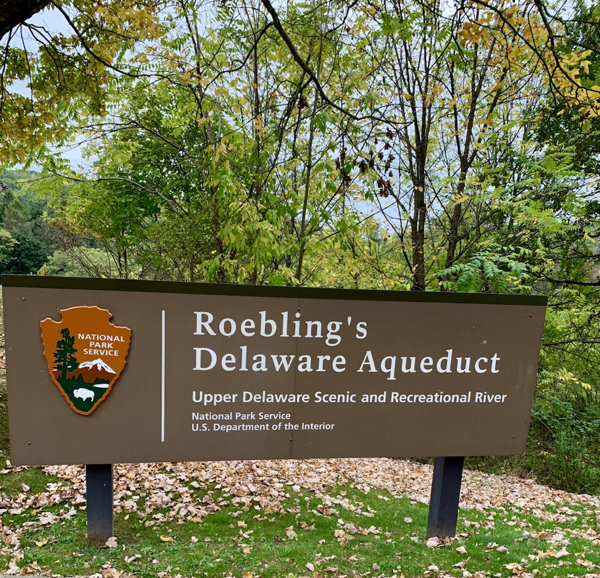
The Upper Delaware Scenic and Recreational River showcases the oldest wire suspension bridge that exists in the United States, the Delaware Aqueduct or as it is currently known, the Roebling Bridge. We visited the site in Lackawaxen, Pennsylvania where there was convenient parking for guests who want to explore the area. Construction of the Roebling Bridge began in 1847 as one of four suspension aqueducts on the Delaware and Hudson Canal (D&H).
The D&H Canal and Gravity Railroad operated from 1828 to 1898 serving as transportation between coal fields of northeastern Pennsylvania and the busy markets on the Hudson River. Roebling’s suspension design allowed more room for ice floes and the busy river traffic.
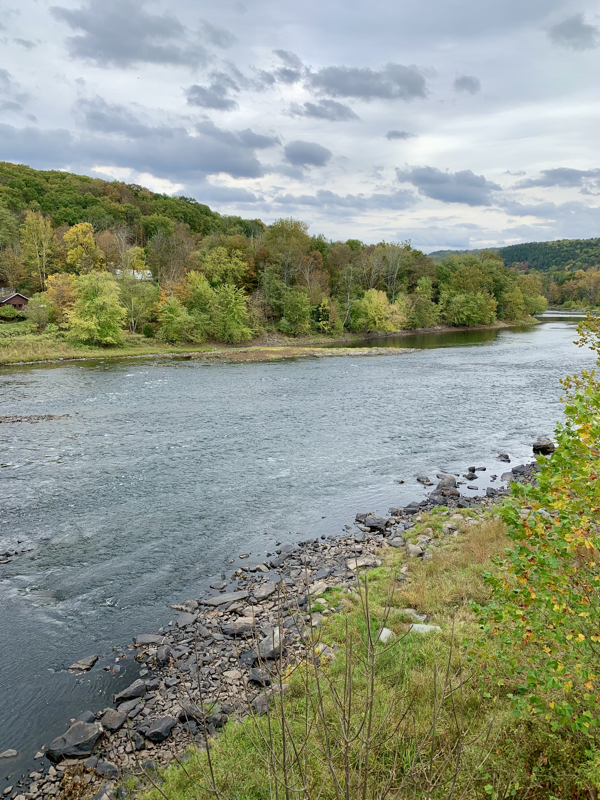
Portions of the D & H Canal, including the Delaware Aqueduct, were designated a National Historic Landmark in 1968. The aqueduct’s existing ironwork includes the same cables, saddles, and suspenders installed when the structure was built over 175 years ago, a testimony to its design and construction.
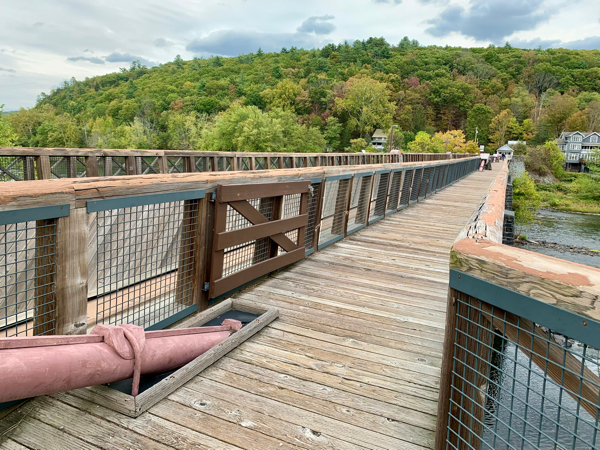
The Delaware Aqueduct is also designated a National Civil Engineering Landmark. It is a piece of history that will surely captivate. Today, you may walk across the former aqueduct, following the path taken by the canalers and their mules. Where the canal boats once slowly floated, modern vehicles now cross the expansive area of the Delaware River effortlessly.
Want to know more? Visit the National Park Service website: Roebling’s Delaware Aqueduct – Upper Delaware Scenic & Recreational River (U.S. National Park Service).
Photo Credit: Marina Kennedy