Back in April, when New York City was still one of the hotspots of COVID-19 cases, I was in a small pharmacy in my Brooklyn neighborhood. My attention was drawn to the supplement aisle, where I noticed a large space on the shelf where the vitamin C supplements should’ve been. Not a single bottle of the stuff was left. This was of no surprise – after all, we were encouraged to mega-dose vitamin C in an effort to strengthen our immune systems and minimize the damage of potential Covid exposure. But “boosting” the immune system is not as simple as chugging Emergen-C when you feel a cold coming on. (Actually, there is no solid scientific evidence that consuming mega-doses, 1000 mg or more, of vitamin C is protective against the incidence of colds. It might help reduce the severity and duration of cold symptoms.)
For those who may have a fuzzy definition of the immune system: It refers to the organs, cells, and other bodily secretions that react to pathogens (disease-causing organisms) that have entered the body. The immune system is complex, and as people with severe allergies and autoimmune diseases know, it can sometimes even do us harm. It’s development and effectiveness is affected by factors we can’t control, like genetics and age, but it is also, without a doubt, affected by our nutritional status. Plain and simple: What we eat matters. And there are a few dietary habits to consider when it comes to achieving optimal nutrition status:
Consistent Consumption of Nutrient-Rich Foods
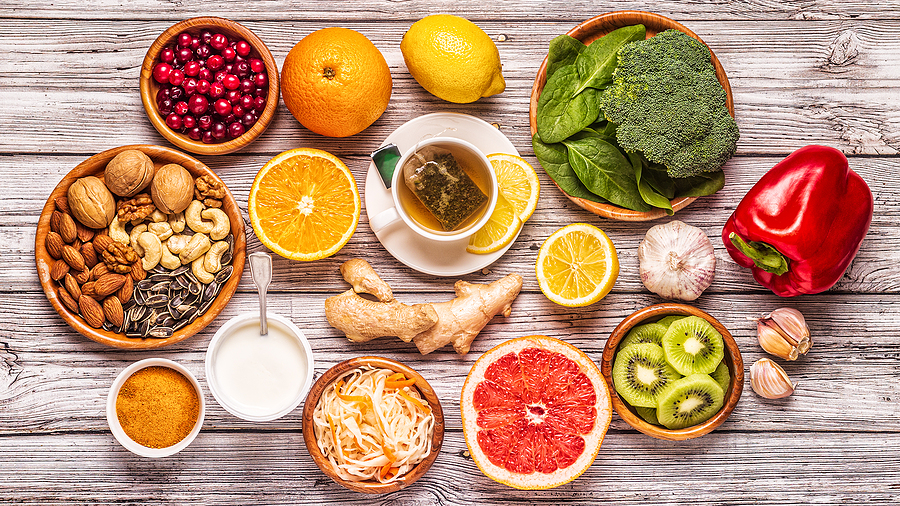
Vitamin C is the nutrient people most often associate with the immune system, but actually there are several micronutrients (ie, vitamins and minerals) that research has shown are critical to optimal functioning of the immune system, including vitamins A, B6 and E, zinc, copper and iron. Luckily for us, all of these nutrients are abundant in our food. Vitamins C and E are almost exclusively found in plant foods. Good sources of C are not limited to citrus fruits, but include cruciferous vegetables like broccoli and brussels sprouts, and Vitamin E is primarily found in nuts and vegetable oils. Sweet potatoes and carrots are excellent sources of vitamin A (think orange), while B6, iron, zinc and copper are present in beans, whole grains, and nuts/seeds. Animal products like meat and seafood are also great sources of zinc, copper, iron and vitamin B6.
Food provides us with ample amounts of the essential nutrients, so as long as we are consistently eating a variety of vegetables, fruits, legumes, whole grains and protein foods, we are most likely getting enough of what we need. Generally speaking, in the absence of an actual vitamin or mineral deficiency (which lab results will show), taking a vitamin or mineral supplement is neither advantageous nor necessary. In some cases, taking a supplement without consulting a health professional could even be harmful, due to the negative effects of some nutrient interactions (not to mention interactions between certain micronutrients and prescribed medications). So it’s always a good idea to enlist the help of a professional if you’re concerned about meeting your nutrient needs.
“Eat food. Not too much. Mostly Plants.”
The food author Michael Pollan could not have been more on the money with this quote. Just as not eating enough can negatively impact our nutritional status, eating more than what our bodies require may play a role in our ability to fight infections. We’ve seen some recent evidence of this during the pandemic: Americans who are considered obese are more likely to become severely ill after being infected with the coronavirus than “healthy” weight individuals. And if there’s one thing Americans are eating far too much of, it’s processed food. I’m talking about the chips, sodas, deli meats, frozen dinners, canned soups – basically everything you can find in the middle aisles of the supermarket. These heavily processed foods are usually highly caloric and full of sugar, saturated fat and/or sodium, but lacking in micronutrients. And while it’s not realistic to try to cut out all of these foods, they should not take the place of whole foods like fresh produce, whole grains, nuts/seeds and lean protein in our shopping carts.
Be Mindful of Alcohol Consumption
No one loves a daily glass of wine more than I do, but unfortunately, alcohol consumption has been shown to be disruptive to the immune system. Exactly how much alcohol is too much is unclear, but we do know that excessive booze consumption (ie, binge drinking) suppresses the immune system and interferes with recovery from infection and trauma. Having several drinks in one sitting can also disrupt sleep, which is essential for recovery. For these reasons, it’s best to steer clear of the bottle when you’re under the weather. And if you’re not confident about your ability to fight infections, monitoring your alcohol consumption might be a good idea.
As we all prepare for the upcoming flu season (and possibly a second wave of COVID infections) I suggest that we leave the vitamin supplements on the shelf and flock to the produce aisles…while maintaining six feet of distance, of course.
Top photo: Bigstock