Last December, a dear friend gifted me a copy of Moshin Hamid’s exquisite Exit West, a dystopian tale of two refugees who escape the chaos of their unnamed homeland and journey through a series of mysterious doors that drop them into unfamiliar worlds where they struggle to reconstruct their lives. My friend inscribed the book with a quote from the Indian poet Rabindranath Tagore: “If I can’t make it through one door, I’ll go through another door – or I’ll make a door. Something terrific will come no matter how dark the present.” At the time, I read the inscription as an inspirational salve, meant to soothe our shared despair at the unhinged state of our country. A mere six months later, his gift has turned prophetic.
As our quarantine extends indefinitely, the more it assumes the characteristics of a purgatory-like waiting room. Having been wrenched from a way of life we humans selfishly thought was rightfully ours, we wait, wondering, when the door opens, what will remain of the lives we knew? Phrases like ‘new normal’ and ‘reimagined future’ are bandied about but stop short of detailing the hard changes that will be required of us. Like the refugees in Exit West, we will have to struggle in profound ways and pass through multiple doors if we hope to restructure our lives in a meaningful and sustainable way.
The novelist Arundhati Roy captured the magnitude of what is at stake in an April article for the Financial Times. Referring to the pandemic as a portal she wrote, “We can choose to walk through it, dragging the carcasses of our prejudice and hatred, our avarice, our data banks and dead ideas, our dead rivers and smoky skies behind us. Or we can walk through lightly, with little luggage, ready to imagine another world. And ready to fight for it.”

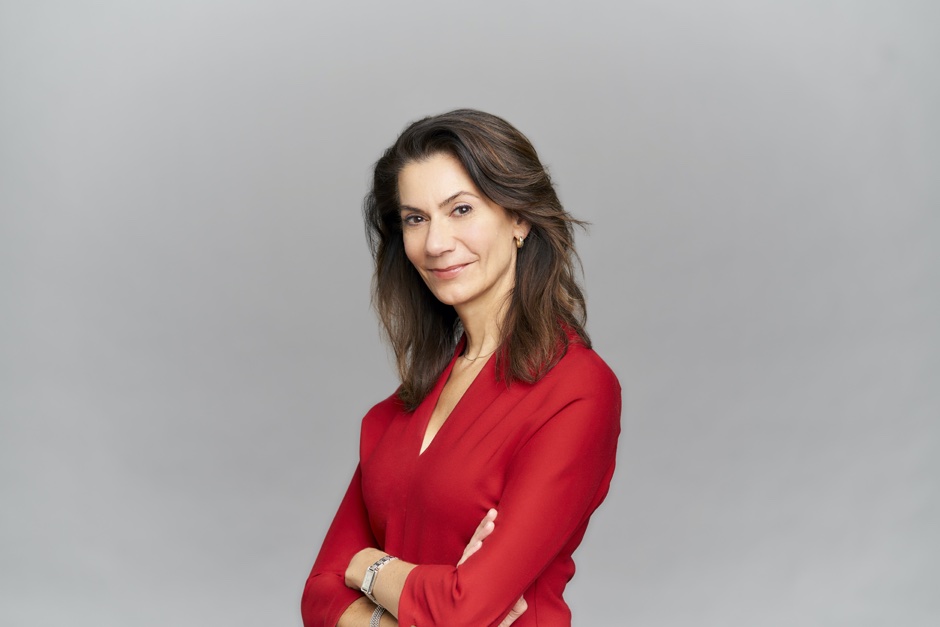
In the hopes of teasing out a deeper understanding of what awaits us, I decided to leapfrog past the rage-inducing mismanagement of the present and talk to someone whose focus and passion engages the long view. Luckily for me my cousin, Cecily Sommers, is considered one of the world’s top Futurists. Hailed by Fast Company as a “Fast 50 Reader’s Favorite,” her book Think Like a Futurist was cited as one of the most significant contributions to the field by the Professional Association of Futurists.
How do you understand this moment and the changes it portends?
The moment the pandemic is highlighting is the beginning of a period of really significant structural change in how we live which we have been moving towards for some time. The triple threats in such periods of transformation, as we are in now, are driven by a growing economic and political instability on the one hand, and the emergence of revolutionary technologies on the other. Today, the pressures of global immigration and economic disparity have met with a resurgent populism and nationalism. At the same time, breakthrough technologies such as artificial intelligence, biotechnology, and quantum computer are reshaping how we live, how long we live and how we work.
I believe we are headed for a long period of turbulence that will be both thrilling and scary as we work to sort out a new world order. Every generation is marked by a period of reorganization of power among nations. This is our generation’s period, for which the pandemic is a tipping point. Much of the turbulence in this next phase will come from both social movements and technological innovation. Crisis turns up the heat on both. We will see highly reactive lurches and swings because the safety net that the government is supposed to provide for its citizens – the security and stability of its people over time – is not equipped to handle this moment and we are being weakened. Instead, our weaknesses are being exposed and our resources drained.
We have the will, and we also have a wealth of technology and creativity that will be mobilized for experimentation in nearly every sector. History has its “clearing periods,” and we’re at the beginning of the beginning of ours. The good news is that we’ve been here before, and we will sort it out. The hard news is that we may not be prepared for how desperate things will get in the short-term.

In your book “Think Like a Futurist,” you identify four forces – Resources, Technology, Demographics and Government – that remain constant no matter what changes occur. But Government seems the most malleable. A source of great achievement and great failure. How do you see Government’s role going forward?
Governance is the last because it is the most reactive to changes in the first three forces. It sets the rules for how we cooperate together and, as such, becomes the container for human activity of all kinds. What’s interesting about governance is that it’s rooted in a conception of human nature. Every form of government, for instance, reflects a particular point of view on fundamental questions about how people, bound by a shared purpose, are to work and live together. It’s like the house rules in a family, but on a really large scale. And there’s nothing like a big crisis to test those rules! Historically, crises have also provoked governments to cast bigger safety nets. For instance, Presidents Roosevelt and Johnson made big investments in innovation and economic security following WWI and WWII respectively. Yet, as periods of prosperity follow, people prefer to limit government and taxation. This time, the pandemic is likely to force the pendulum to swing back again.
Historically, these times of reinvestment have given rise to Golden Ages. Chances are that’s what we’re heading for again. We’ll be transitioning our way in that direction gradually, and somewhat chaotically, for decades. Our learning should be that even the next Golden Age will, eventually, swing back too. Until the next generation meets its own clearing period. Extremity, reactivity, innovation, conflict, and rebirth are the stuff of change. And, as I said, right now we’re at the beginning of the beginning of this transition.
It feels like many of our leaders embrace ideologies rooted in old myths that are no longer relevant. For example, the Horatio Alger “pull yourself up by your bootstraps” narrative is often conveniently employed to absolve the government from offering citizens the support. How important do you think it is to update our narratives as we head into this new future?
We shape society largely from our own mythologies and narratives and the resources available to us. In America, one of the things that influenced the founders as they shaped the design of our new system of government were the ideas of the enlightenment which valued reason and individualism over entrenched traditions. What grew from that was the American belief in Manifest Destiny. That American expansion was justifiable and inevitable. It is more than the Horatio Alger narrative. It is the idea, baked into the thinking of the time, that man has the capacity to create his own path. That out of your own will and personal capabilities, you can invent your life.
The idea is deeply American. We’re skilled inventors, and passionate about possibility. The tragedy of American life is that everything that’s created eventually becomes obsolete. This is as true for economic and political periods as it is for technological innovation and personal triumphs. That’s what we’re seeing now. The old systems are breaking in part because we have ideologies that are unsustainable, meaning ideologies that believe the markets can do everything and the government doesn’t have to do much. The pandemic has revealed the very real deficits of that thinking.
If we make the right choices, or even some of the right ones, is a positive outcome really possible?
When we face a crisis on a personal level that craters our life as we knew it, we reconstitute and put our life back together in a new way drawing on new or different personal strengths and resources. The period we are entering is going to be similar to that—on a societal level. We want to remind ourselves that this is how American history works. Deep tensions are surfaced and, ultimately, the polarization is transcended in the birth of a new order. It will have its own strengths and weaknesses, with periods of stability until it too becomes obsolete and undergoes the process of reinvention. Again. It’s not just the American Way, it’s nature’s way.
Top photo credit: Armour Photography
Think Like a Futurist
Cecily Sommers