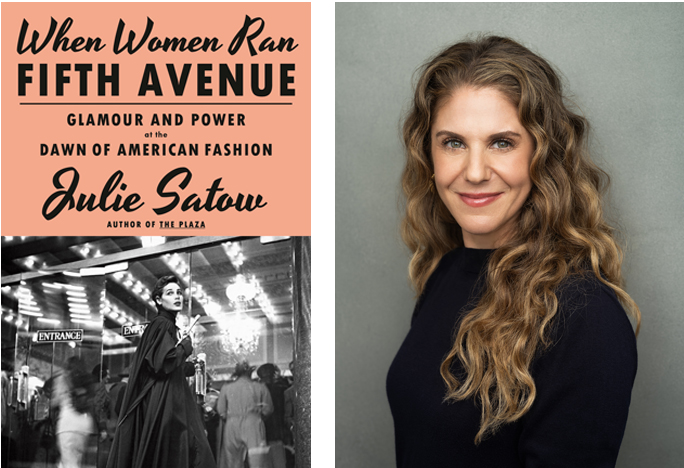
Many of us grew up in the era of department stores, not of their origin, but of thriving influence. Some like B. Altman, and still, Macy’s, strived to be one-stop shops. Others, like the three featured in Julie Satow’s entertaining book, not only catered (often solely) to women, but were eventually run by them. The author calls out Hortense Odlum of Bonwit Teller, Dorothy Shaver of Lord & Taylor, and Geraldine Stutz of Henri Bendel. Between their histories, there are bridging chapters about evolving retail culture, opportunities for women, window display, mannequins and other prominent department stores in which women played a large part.
Department stores began as unique female universes in which women felt freer than outside hallowed doors. Satow describes visual extravagance and fantastic events. Ground floors had soaring ceilings and grand staircases, one department offered exotic pets. Macy’s had the world’s largest rug collection and a pneumatic tube system shooting cash and sales slips from counter to office. A women could send a telegram, have high tea and park her children while shopping.
Bonwit Teller was successfully high end and exclusive until the Depression brought it down. Wall Street tycoon Floyd Odlum purchased the store with no retail experience. He sent his 41 year-old wife Hortense, at least a customer, to scope the place out. A year later, much to her own surprise, she was supervising 1,000 employees, directing a store with record breaking sales. At the same time, Dorothy Shaver, eye firmly on the prize, was working her way up the ranks at Lord & Taylor to become the highest paid woman executive in the country. At the end of Shaver’s tenure, 32 year-old fashion editor Geraldine Stutz took control of Henri Bendel, promoting cutting edge designers in an entirely new manner. She would eventually own part of her creation.

Hortense Odlum (Photo: Brian Odlum)
Hortense Odlum neither came from nor, for many married years, had any money to speak of. She was a Brooklyn housewife and mother until her husband amassed wealth. Conscripted to help with Bonwit’s to distract her from an as yet secret, ongoing affair, she agreed in order to participate in her husband’s new interest. The store had become shabby, salesgirls listless, stock unstylish. Without board support, eschewing cheaply made dresses, she had things manufactured in quality fabrics and started to renovate. The store was to be “high class, but not high hat.” In 1934, she became president.
The new executive established The 721 Club, an all male bastion where scotch was sipped and cigars smoked as models paraded. She put in air conditioning, introduced public presentations with fashion experts, and sponsored a Mademoiselle Magazine contest called Make the Most of Yourself – a publicity bonanza.
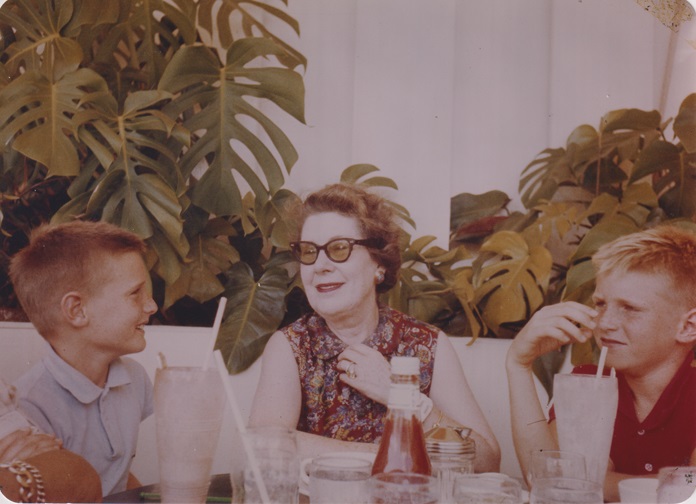
Hortense and her grandsons (Photo: Brian Odlum)
By 1938, her marriage in shreds, the former Mrs. Odlum changed course and began badmouthing women executives. She quit two years later at the top of her game. In 1956, Maxy Jarman bought Bonwit’s and turned it over to Mildred Gustin who discovered Calvin Klein, brought André Courrèges from France and opened Pierre Cardin’s Men’s Boutique.

Dorothy Shaver in her office (Photo: Sallie Moss)
Dorothy Shaver and her sister, Elsie, arrived in New York middle class Alabamans. She was 25. Her mother’s first cousin happened to own Lord & Taylor. At an introductory tea, conversation was awkward until Elsie brought out handmade dolls she’d been selling to pay rent. The store purchased a great many allowing the girls to go into business. Impressed with her management skills, Lord & Taylor hired Dorothy full time in 1924.
She began as head of Comparison Shopping, instituted a training program for sales’ help, established a department of fashion stylists (personal shoppers), and in due course became Fashion Director. When all apparel trends came from France, Dorothy championed American Designers opening the first in-store shop where designers had their own labels. She co-founded The Fashion Group spearheading such programs as Fashion Week. By 1945, Dorothy Shaver had assumed the post of the store’s first female president.

Dorothy Shavers (Photo: Sallie Moss)
Lord & Taylor catered to “the wives and daughters of successful men, upper middle class women.”Dorothy opened a college department and an area for petites. She streamlined advertising visuals, hired the young Andy Warhol to sketch, and conceived of the ubiquitous red rose. The store became a destination for fashion classics. In the 1950s, expansion occupied business hours. Proliferation of brands and discount stores precipitated decline. Dorothy retired to enjoy culture and her sister’s company. In 2019, Lord & Taylor was sold to WeWork at firesale price.
The diminutive powerhouse Geraldine Stutz was hired by Glamour Magazine at 23, based solely on personal style. Within seven years she became an influential editor. Investor Maxey Jarman then spirited her away to be coordinator of I. Miller. He gave her free reign and a huge budget. Energetic and ambitious, she rapidly became Vice President of Retail. In 1957, Jarman bought Bendel, a store once known for opulence that had fallen on hard times. He pestered Geraldine with continually upped ante finally getting her to agree to take it on.

Geraldine Stutz (Photo: Jill Kremetz)
At the suggestion of display director H. McKim Glazebrook, Bendel created a street of shops, a concept that would shape a generation of stores. “Our customer is big city aware, contemporary, from 18-60, and has a terrific small figure,” Geraldine declared. There were enough rich women to fit the bill.
Buyers were sent abroad to find new designers. They brought back Chloé and Krizia. Window designer Joel Schumacher, who was plucked from obscure freelance at other stores, introduced her to Giorgio Sant’ Angelo and Stephen Burrows. A Limited Editions shop was inaugurated. Geraldine set up a Pilates Studio. She brought in cosmetics.
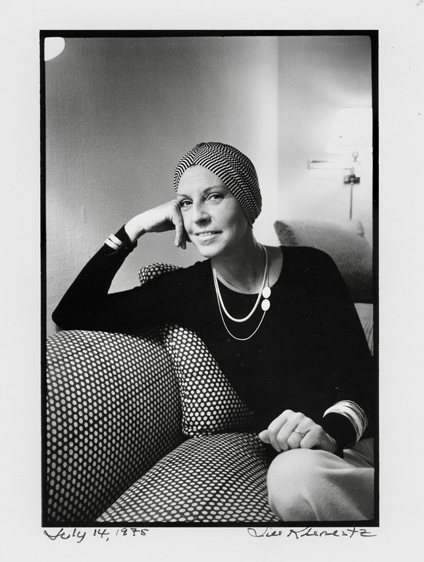
Geraldine Stutz (Photo: Jill Krementz)
By the time Bonwit’s was being demolished to make way for Trump Tower, Bergdorf Goodman was poaching exclusivity with European designers. Mall culture and online shopping siphoned business. Leslie Wexner purchased the store. Neither their tastes nor methodology were compatible. Geraldine bought out her contract. Bendel closed in 2019.
These are Cliff Notes. Julie Satow’s text is descriptive as well as illuminating. She chronicles her ladies’ characters while painting an overview. “Department stores were a brief idyll, a safe space where women who wanted a more dynamic life, who wished to explore their ambition without ridicule, could find reprieve and support.” Things have changed, of course, both in retail environment and women’s opportunities. Satow is optimistic about the latter. There’s much about the stores themselves to miss, however.
Cover Art and Photo of Julie Satow; All interior photos Courtesy of Doubleday
When Women Ran Fifth Avenue – Glamour and Power at the Dawn of American Fashion
By Julie Satow
Doubleday