Fast fashion has trained us to expect novelty on demand. New drops appear weekly, microtrends flare up and burn out in a month, and clothes are often treated less like possessions than passing content. So why, in that landscape, are medieval-inspired dresses finding such a devoted audience?
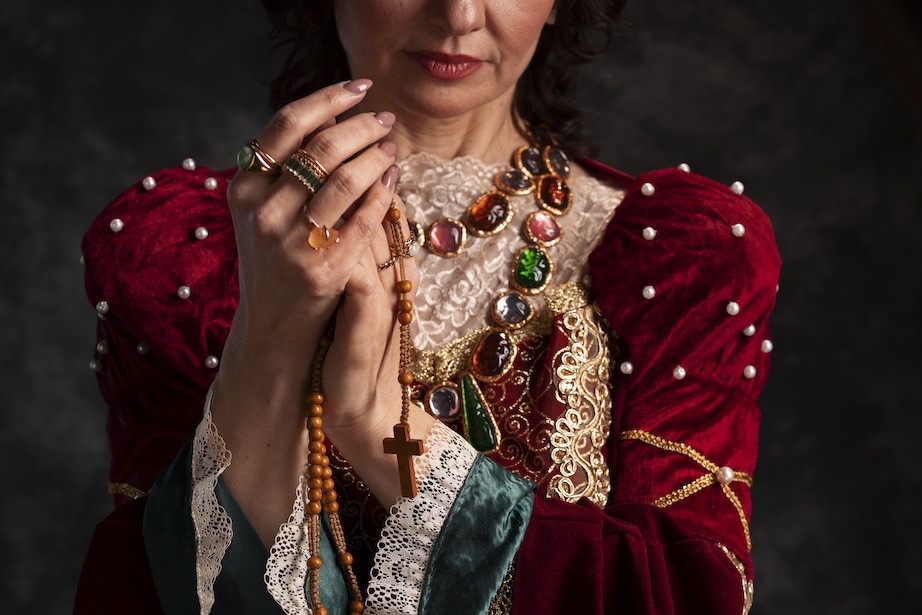
At first glance, it seems counterintuitive. These are silhouettes associated with another era entirely: flowing sleeves, laced bodices, generous skirts, rich fabrics, and shapes that suggest folklore, ritual, and craftsmanship rather than speed. Yet that contrast is exactly the point. Medieval-inspired fashion feels meaningful in a moment when so much clothing feels temporary.
What people are responding to is not simply nostalgia, or a desire to “dress up.” It is a deeper hunger for garments with presence.
The Appeal of Clothing That Feels Rooted
A silhouette with a story
Most trend-led clothing asks to be read quickly. You recognize the season, the influencer reference, the algorithmic mood board. Medieval-inspired dresses work differently. They carry historical echoes, even when adapted for modern wear, and that gives them narrative weight.
A square neckline or softly structured bodice does more than flatter. It suggests continuity with older ideas of dress: clothes as markers of identity, status, ceremony, or belonging. Even for people who know little about medieval clothing history, those visual cues register emotionally. They feel storied. They invite imagination.
That matters more than fashion insiders sometimes admit. People do not wear clothes only for utility or trend alignment. They wear them to create a mood, to anchor a sense of self, to step briefly outside the rush of everyday life. Medieval-inspired dresses offer that in a way a disposable trend piece rarely can.
An antidote to disposable trend cycles
Fast fashion thrives on compression: compressed production timelines, compressed trend lifespans, compressed attention spans. The result is a closet full of items that may have been cheap and accessible, but often feel interchangeable.
Medieval-inspired dresses resist that logic. They are usually chosen more deliberately. Even when bought for casual wear, festivals, or special occasions, they tend to be garments people remember. You recall when you found one, why you liked it, how it made you feel.
That kind of attachment is increasingly valuable. As shoppers grow weary of buying things that barely survive a season, there is renewed appreciation for clothes that feel distinct rather than replaceable. The appeal is aesthetic, yes, but also psychological. A dress that feels outside the churn of trends can offer relief from trend fatigue itself.
This is one reason historical references have remained surprisingly resilient in modern fashion. They provide a vocabulary of form that is not dictated by the latest feed refresh. For anyone trying to understand how that vocabulary is being reinterpreted now, this curated historical dress collection inspired by medieval fashion gives a useful sense of the recurring elements people continue to gravitate toward: drape, lacing, volume, and a romantic sense of movement.
More Than Costume: How Medieval Cues Translate to Modern Wardrobes
Texture, drape, and the return of tactility
Part of the appeal lies in physicality. Much fast fashion is designed to photograph well and sell quickly, but not necessarily to feel remarkable on the body. Medieval-inspired dresses, by contrast, often emphasize drape, weight, and texture. Sleeves move. Skirts sweep. Fabrics catch light in a more dimensional way.
That tactile quality matters because people are becoming more sensitive to how clothing feels, not just how it looks on screen. After years of shopping through tiny product thumbnails and social clips, there is a renewed desire for garments with sensory richness. You want to feel the fabric shift when you walk. You want structure where it matters and softness where it counts.
In that sense, medieval-inspired design aligns with a broader move toward material awareness. The same consumers exploring linen, natural fibers, visible mending, or slow-fashion labels are often drawn to historical silhouettes for similar reasons: they suggest care, intention, and embodied experience.
Modesty, comfort, and agency
There is also a quieter, more practical explanation. Medieval-inspired dresses often strike a balance that many contemporary shoppers find surprisingly hard to locate: coverage without dullness, femininity without rigidity, drama without discomfort.
A full skirt can be expressive and easy to wear. Long sleeves can feel elegant rather than severe. A laced waist can allow for adjustability that standard sizing sometimes lacks. These are not minor details. They speak to agency.
In a market that often swings between body-con exposure and aggressively casual basics, many people are looking for something in between. They want clothes that feel beautiful but not performative, romantic but still livable. Medieval-inspired dresses meet that need.
What This Says About Fashion Now
Consumers are seeking emotional durability
One of the clearest shifts in fashion culture is that people are starting to ask better questions before they buy. Not just “Is this in style?” but “Will I still care about this in a year?” “Does it reflect something real about my taste?” “Can I imagine wearing it beyond one event?”
That is where medieval-inspired dresses have an advantage. Their appeal tends to be deeper than novelty. Even when they are dramatic, they do not necessarily feel flimsy or ironic. They can become signature pieces rather than one-off purchases.
Emotional durability is not discussed enough, but it may be one of the strongest counters to overconsumption. When clothes inspire attachment, people keep them longer. They repair them, re-style them, and build outfits around them. A garment does not need to be plain to be practical; sometimes the pieces that endure are the ones with the strongest point of view.
The modern wardrobe is becoming more plural
Perhaps the biggest lesson is this: people no longer want a wardrobe governed by one aesthetic rulebook. They want flexibility. They want denim and tailoring, yes, but also romance, escapism, softness, and references that stretch beyond the present moment.
Medieval-inspired dresses fit neatly into that more plural approach to personal style. Worn one way, they can feel theatrical and transportive. Styled differently, they can be understated, even everyday. A corset-inspired bodice with simple jewelry. A full-sleeved dress with boots and a plain coat. The historical reference remains, but it becomes part of a modern conversation rather than a costume exercise.
That is why these dresses resonate now. In an age defined by speed, they offer slowness. In a market flooded with sameness, they offer character. And in a fashion system that often encourages detachment, they offer the rare feeling that a piece of clothing might actually mean something.
Not every shopper will choose a medieval-inspired silhouette, of course. But their continued appeal tells us something important: people are hungry for clothes with memory, texture, and soul. Fast fashion may dominate the supply chain, but it does not fully satisfy the imagination. Medieval-inspired dresses do, and that may be why they feel so unexpectedly modern.
Contributed posts are advertisements written by third parties who have paid Woman Around Town for publication.