This is, without question, the most refreshing and stimulating book on opera I have read in a while. In fact, I had stopped reading books on opera for the very reason this one brings up: many were loaded with so much past commentary that it felt like you were walking into a gallery where neither the light of day nor a duster had entered in ages. Certain purists and their acolytes treat opera as a museum piece, worshipping original interpretations and commentary while dismissing attempts at novelty. To me this book symbolizes light. Not the glaring, in-your-face light, not the light in that overused “shedding light” expression, but the kind of light that reflects off crystals in rainbow colors, rainbow like the Wagnerian bridge of the author’s invitation to us to travel from our real world to Wagner’s Ring Cycle universe. William Berger brings home the point that each staging of the Ring and each piece of writing about it are steps in the evolution of our understanding and appreciation of this operatic tetralogy. Traffic on the Valhalla-esque bridge is never one way. As we bring our own distinct light of perception to Wagner’s epitome of art, the epitome itself transforms us, so that when we cross the bridge back into our everyday lives, we will never be the same.

The book is a collection of the author’s talks divided into five chapters, the first of which is an introduction, while the following four address each opera in the tetralogy, respectively: Das Rheingold, Die Walküre, Siegfried, and Götterdämmerung. This project’s raison d’étre was the revival of Robert Lepage’s production of The Ring of the Nibelung at the Metropolitan Opera in 2019 and the necessity for a pre-performance talk before each of the operas, a need that was as much educational as vital to attracting—and keeping—new and not-so-new-but-possibly-jaded audiences. At last, here is a writer and music commentator who decided that it’s high time to figure out how not to turn people away from attending Wagner’s seventeen-hour epic. The amount of materials written about the Ring is daunting, and the intellectual pressure to interact with (some of) it before tackling the live experience can suffocate that incipient burst of curiosity in a newcomer.

Berger wrote these talks with a wide audience in mind—from the expert to the fanatic to the newbie—and, for a blessed change from other critical approaches to Wagner, he also considered what people do not need to know before attending the performances. What inspires me most in Berger’s refined yet accessible writing style and approach to the topic—besides his invigorating sense of humor and impressive knowledge ranging from mythology and philosophy to astronomy and physics—is that he encourages an intellectual freedom that is often shackled by canons and encyclopedic erudition. This is not to dismiss what has been said in the past, but it gives audience members, regardless of their level of familiarity with the Ring, credit for their own abilities to form a distinct understanding of it, and for the validity of that understanding. After all, who decides what is “valid?” What was applicable for Wagner, audiences, and commentators in 1876 will not function as “canonic” today. In fact, canonizing certain interpretations of Wagner’s works, and of opera in general, impedes the progress of understanding.
Experiencing the same operatic production on different days raises a profoundly philosophical question. We are not the same from one day to the next, neither are the singers nor the instrumentalists nor anyone who works on the production. Subtle evolutions happen in the tiniest of microcosms. They accumulate into tremendous transformations in the span of two centuries, affected by varying factors that determine interpretations and our understanding of time, as Berger discusses so fascinatingly. We owe it to the Ring, we owe it to opera itself to embrace its evolution as we embrace our own, and take the time to consider the various stages of this evolution without letting the past overwhelm us or blur our vision. Berger inspires me to think that our unique opportunity then lies in perceiving not just the range of musical, philosophical, cosmological colors of the Ring Cycle universe but also the epic’s unflawed construction that—like crystal prisms—reflects back to us its subtlest nuances, colored in turn by our own intentionality and boldness in engaging with them.
Berger tells us that this epic is “a story about storytelling.” As each of the four operas represents “a different stage in the evolution of the world,” storytelling evolves, like our own inner narratives about ourselves and our pasts. And this is why everyone, even those inveterate Wagnerians or “Ringheads” as they are often called, are still experiencing the Ring for the first time, every time they see it, because no encounter with it is ever static—and neither are we. By weaving philosophical threads through contextual material and musical clues as he leads us through each opera of the Ring Cycle, Berger has created a book that provides more than educational and informational resources. He has offered us a catalyst to contemplation of what transformation and evolution mean, not only in encountering a work of art but in our own lives and relationships to history, memory, culture, and time. And he has accomplished this kaleidoscopic writerly feat without heaviness or pedantry.
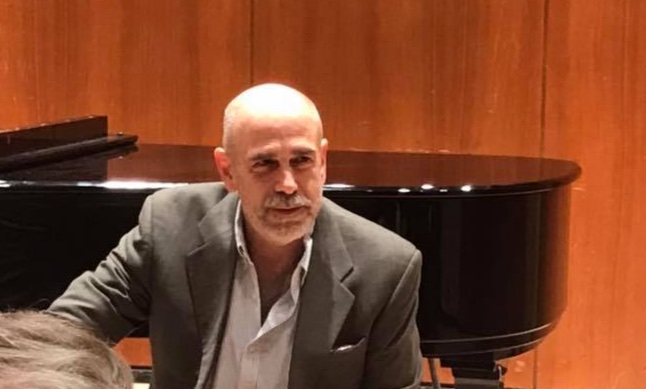
Top photo: Speaking about Wagner at List Hall at the Metropolitan Opera
Available on Amazon and Academica Press.
Photo credit: William Berger