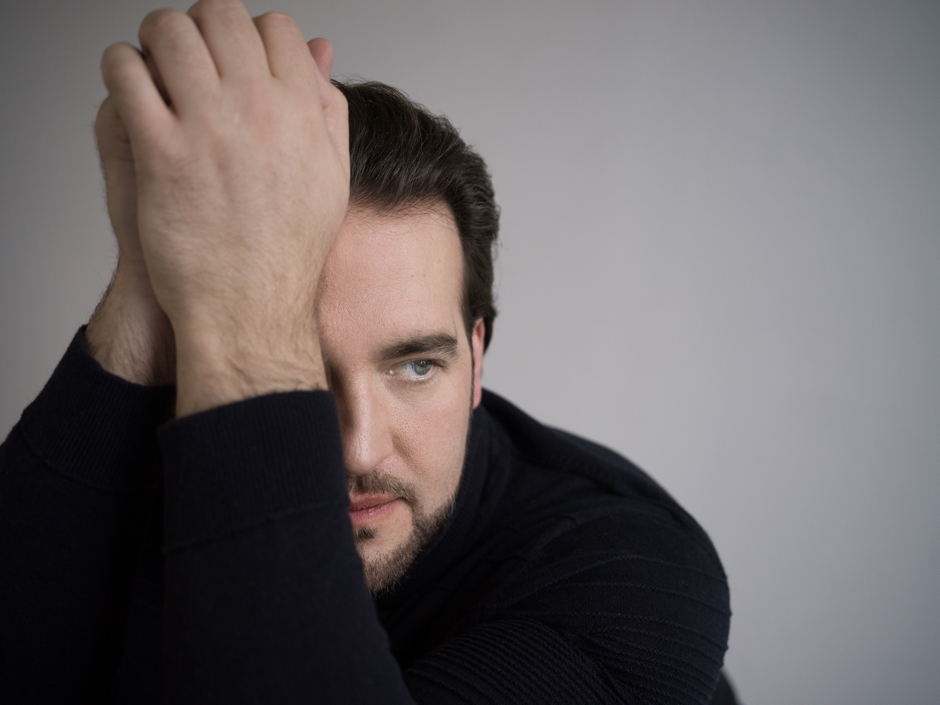
Internationally acclaimed American tenor Brian Jagde is enjoying a glorious 2025-26 operatic season that includes a few firsts. After overcoming an arduous health challenge, he opened the season for Teatro Real in Madrid with his greatly anticipated debut in the title role of Verdi’s Otello. This month he is making his debut at the Teatro Maggio Musicale Fiorentino as Canio in Leoncavallo’s Pagliacci, and in April, his first Wagnerian title role debut, as Lohengrin at Teatro La Fenice. New York audiences will have the chance to see Brian Jagde on the stage of The Metropolitan Opera in May as Calaf in Puccini’s Turandot, singing for the first time in the beloved Zeffirelli production. This is but a glimpse into Jagde’s intense and thrilling schedule, continuing his brilliant rise to prominence of the past years, a splendid journey of resounding successes in the world’s major opera houses. For a detailed bio and additional information about Brian Jagde, please click on the links at the end of this interview.
You have two exciting debuts coming up: a house debut at the Maggio Musicale in Florence as Canio in Pagliacci, and a role debut as Lohengrin at La Fenice. Tell us about each.
Making my debut in Florence is something I’ve wanted for a really long time, and I haven’t had the opportunity, so it’s really great to do it with a role I know in a production I actually know really well, because I premiered the Cavalleria Rusticana part of that production and saw both operas. It’s a Pag/Cav [Pagliacci/Cavalleria] in this order, by Robert Carsen, one of the greatest directors. I’m looking forward to it.
Then, Lohengrin is something that’s been coming for a long while. You know, I’ve put off Wagner for years and years. I’ve only done a small role in Das Rheingold, Froh, which is a beautiful part. I’ve been asked to do Siegmund since I was 33 and I could have sung it. But in this day and age, if I’d started to sing Wagner at 33, they wouldn’t have hired me for Tosca anymore. Here, I find that they like to put us in boxes: the Wagner singer or the Italian singer. Whereas someone like Jonas Kauffmann could go back and forth between Wagner and Tosca every other day in Europe.
But now as an established singer, if you sing Wagner, you can still continue in the Italian repertoire…
Of course. And I’m singing the really heavy Italian repertoire now: everything from Puccini’s heaviest, like Turandot, Manon Lescaut, and I’ll be doing La fanciulla del West. Forza and Otello are going to be my go-to Verdi roles. I don’t really do much other Verdi. I mean, if six companies wanted to co-produce with me singing the entire time a few seasons of Stiffelio, I would totally do it because it would be worth the financial risk. When you do a role, you want to know that you’re going to perform it multiple times, not just once. With something like Stiffelio, which isn’t done very often, it makes it much harder to cover the cost of learning it, like all the coachings and lessons, if you’re not going to at least get a couple of productions out of it. Financially, that’s very hard to justify nowadays, whereas back in the day, I feel like singers could just take on a project because it was in their heart and the opera companies supported them if they were stars. In fact, you may have seen the relatively recent article about Alagna in which he told us what it was like when he was coming up and Pavarotti was singing. He said that opera houses administrations worried about whether you were even coming to rehearsal let alone sing a performance; they cared about singers. That part of the industry has gone by the wayside a lot.
So, how is it to sing Lohengrin?
I love it! It’s very different. It’s hard for me to switch into this style.
Why?
Because it’s so up and down more than linear. I feel like you have to do a lot more with text in this way because you have to say every ending. It’s German, and I don’t sing a lot in German. So, you have to remember the very closed oh’s or very closed e’s, many details like that. But also, the style is very different; it’s all about chord structure. When you’re learning Verdi, there’s the basic underpinning under the voice, and then the lines make musical sense to you. With Lohengrin, almost every time I’m singing, I’m changing the key. I’m starting in a new key or I’m about to change the key with my line. You have to know the chord structure to understand that really well, and I’ve never been a chord structure kind of guy! I don’t look at the music and say: ‘Oh, that’s a C chord or that’s a C-sharp minor chord.’ It takes a little longer for me to get it into my brain and my voice. But it’s coming along really beautifully. It’s a great starter for a leading tenor in a Wagner role because it still sits pretty high compared to all the other roles that I’ll do someday like Tannhäuser, Tristan…
And Parsifal…
Yes, Parsifal. The funny thing about Parsifal is that I could sing it… yesterday, because it’s super low and there’s nothing high in that role; you’re on stage for maybe 45 minutes but you’re only singing for about 25 minutes. You’re not really struggling as much as with maybe something like Tannhäuser where you’re onstage for four hours singing A-flat after A-flat or A natural after A natural over and over again; it’s hounding.
Plus, Lohengrin is melodious…
It’s more Italianate. It’s probably the most Italian of his operas, even if it’s not really anything like an Italian opera. I love it and I’m enjoying it! The words are coming much quicker than I assumed they would. But when the style is different, sometimes that sticks in my head better and I remember it easier.
You opened the 2025-26 season at the Teatro Real in Madrid with Otello, a dream role. How was that experience?
Otello is now my favorite role ever! It’s incredible! You have a composer who is the librettist—Arrigo Boito—so his libretto to Verdi’s music is perfection. He has a very different style than Verdi’s other librettists. The music is so amazing that there are numerous parts of it I wish I were singing right now every day, all day. It’s one of those roles that they say you should do once or twice or maybe three times tops a year, but for some reason, it just felt right for me; it was a natural fit. I was lucky, after only having had a short period of time to put it into my body and my voice.
And it’s not just the singing; you live the character.
The drama allows you to do that. You have to think about the character a lot, and the text is derived directly from Shakespeare. There are times when, in Italian, Boito used the structure of iambic pentameter or the same sentence directly translated from English. It’s fascinating. I have a major Otello opening next season for a very important opera house in Europe; I can’t share it for now because they haven’t announced it yet.
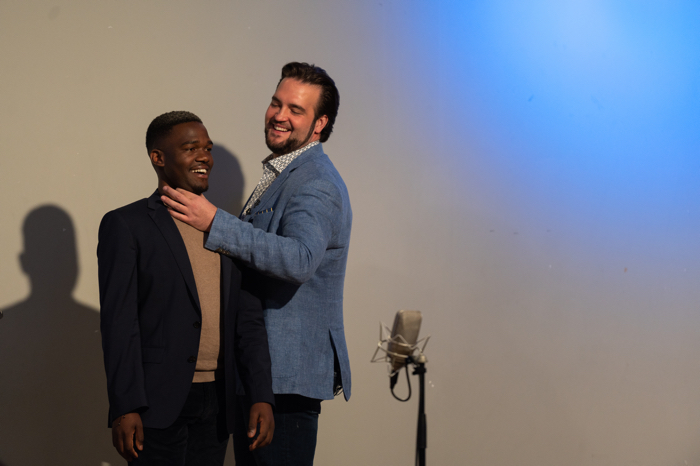
Brian Jagde with Opera for Peace 2023 Academy participant Lulama Taifasi – Photo: Fabrizio Sansoni
You are very active with the organization called Opera for Peace. Tell us about it.
I’m an ambassador for them. Sometimes I help with finding the diamonds in the rough among singers that are out there in places where they don’t have access to great voice teachers. There are a lot of places in the world where there aren’t any performance opportunities or even schools, especially for opera. Opera for Peace organizes these academies for two weeks or ten days, and they find places that will sponsor to host it, so they can do it for a low fee or no fee. They bring people from all over the world and train them with singers like me and others. So, I’ll do a master class, or maybe some voice lessons, or sing with them a little bit. And they also learn from people on the administrative side of the industry, like casting directors.
It’s still in the beginning stages because they opened during covid. The initiative was twofold. First, it is to help find the singers who got left behind because they weren’t the popular kids in the young artist programs of opera companies, yet they may actually be the ones who have a career, as opposed to the ones who were given careers and may not last. We found a lot of great voices out there who are having some success now. Opera for Peace will also hire them out for small gigs and performances that they do to promote Opera for Peace or co-collaborations with other arts or peace organizations.
Second, there is the plan that being an ambassador for Opera for Peace would eventually give me and other singers the opportunity to promote peace in the world. We’re looking to get to that stage, but it’s still very early. So, right now, it’s mostly about supporting the next generation of singers. I’m very proud to be involved. Now more than ever, young artists need all the help they can get. They’re spending all their money trying to get auditions, let alone getting a gig that’s going to pay them enough to cover their rent. Everything costs more and singers are paid about the same as years ago. That’s a real hardship for people coming up in the business. I have jobs booked out for the next five years so I can pay my bills doing just my job.
You have to love being a singer enough to know that you might not be enriched financially, but at least you’ll be enriched in your life. Also, it’s challenging to take on another job to pay the bills because singing requires full dedication. My therapist, who is of Italian heritage, told me an old Italian saying that translates to “You can’t sit between two chairs” if you want to be excellent, because you’re going to fall through. Both chairs might be okay, but neither is going to get you to the highest level. If you want to be at the highest level of something, you have to focus solely on that. I worry for the next generation.
Last year you went through a very difficult health challenge, and the peak of the crisis happened when you were in Greece about to sing with the Greek National Opera. Tell us about it.
I had diverticulitis which is a colon disease. In August 2024, I was diagnosed with diverticulosis which meant that I was going to have diverticulitis and it could happen anytime. I didn’t have any flare-ups where I was in bed for five days until March 2025. But I watched this documentary about the opening of La Scala in December 2024 which I happened to be in because I was there doing it. And I realized how inflamed I was; my whole body was puffy. When you see yourself in the mirror every day, you don’t think about it, but I looked back at myself at the time and I was like: Who is that? So, I was already sick; I just didn’t know. Then, in March 2025, I had to cancel an Aida matinée at the Met because I couldn’t get out of bed. I had excruciating pain. We use our stomach muscles for everything not just for singing, but also for standing and walking; it’s our core. So, getting out of bed, I couldn’t move without pain; it was awful. I knew what to do because my mom had suffered from it too at the same age. I had to avoid certain things and stay away from certain foods, which I did.
I was under a lot of stress at the time because I was also trying to debut a new role at the Met, which didn’t work out, and I was still singing performances of Aida sick. My voice was okay, but my body was tortured by this pain going on in my stomach while trying to breathe into the abdomen. Luckily, my teacher has done an amazing job in teaching me how to sing, so I can get away with actually performing at a pretty high level while suffering tremendously on the inside. Then, I had three flare-ups in four weeks, each one progressively worse than the other, and the third one happened once I got to Greece. I was about to do Turandot, and I got there and did the final dress rehearsal. The next day, I felt ill. Ironically, a week earlier, I’d had a flare-up in New York and almost went to the hospital then. But in Greece I had a perforation in my colon so I was septic, and I could have died. I mean the odds of it are slim based on the kind of septic I was, but I look back at it and I think… wow!
So, I walked into the general hospital there with help from the Greek National Opera staff because they couldn’t get a carrier out to me. Before that, I had been to an emergency hospital because it was close to where I was staying. I paid for some tests, and they offered me a €20,000 surgery which was only going to be a partial surgery anyway. But the Greek National Opera people called the Health Minister of Greece who recommended a public hospital where there were no costs. The doctors in the public hospital were amazing and they said: “Based on the fact that you walked in here septic, we’re going to put you on very strong antibiotics for two days and if you respond, we won’t do the surgery, we’ll just keep you on the antibiotics.” That’s what they did for 14 days.
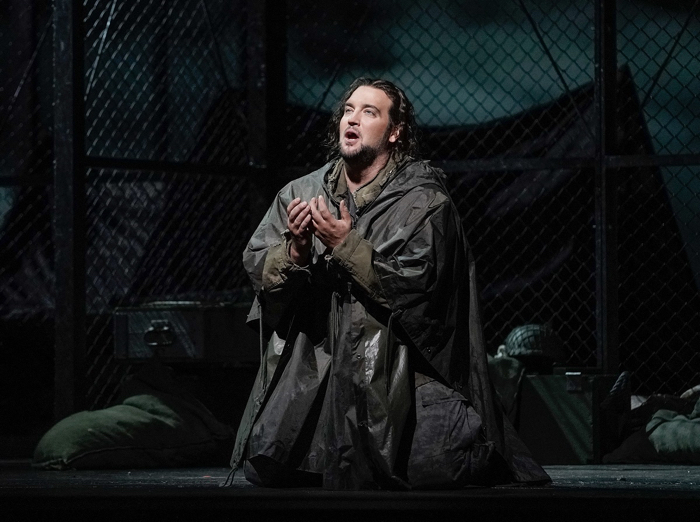
Brian Jagde as Alvaro in Verdi’s La forza del destino at the Metropolitan Opera – Photo Karen Almond / Met Opera
Then, I flew home to New York where I waited for two weeks and had surgery still inflamed, which meant that my recovery took more than twice as long as it needed to be. But I needed to get the surgery if I wanted to do Otello. This was all happening during the summer and Otello was in September. I had my wife bring my Otello score to the hospital, and I couldn’t read the music. I was getting fed through an IV and had double vision and no energy. I would look at the score and couldn’t focus on the notes or the words without straining. So, when I got out of the hospital, I went right into lessons with my voice teacher, Michael. We worked every day for 17 days straight. I was weak, my stomach muscles were weak. I had to remember how to use my body the right way and I forced myself to work even harder than before because I didn’t have the extra weight to hold everything down. I had lost 46 lbs. since I hadn’t had any solid food in months and also, they cut out a third of my colon.
Between the hard work and every other person who helped me get on that stage, I showed up to Otello rehearsals, and they knew what I’d been through, obviously. I hadn’t been able to memorize the whole role, and they allowed me to do it in the process that I needed. The conductor, Nicola Luisotti, worked with me five days a week on music. Luisotti is my go-to Italian conductor, especially if I’m premiering a role. I’ve debuted most of my Italian roles with him and I trust him immensely. Everyone on staff at Teatro Real in Madrid was super helpful and awesome. And I was going in for extra hours, staging myself into the opera with a video since the staging had been done before; I was memorizing as much as possible so I wouldn’t hold everyone back. Sometimes I put in 12-hour days.
When you actually stepped on the stage and sang, it must have been a stunning moment of victory…
Oh, it felt like a huge triumph!
Was it nerve-racking to go onstage right after this huge challenge?
I’ve really come to a place in my career where I don’t worry, even if it’s a really stressful challenge. I was doing meditation and my mindfulness practices that I do on a regular basis. I had people there to support me. If it wasn’t for my wife, my teacher, my coaches, the director of the opera, everyone, Otello wouldn’t have happened. At the theater they knew that Otello is a beast to sing and they wanted to support their Otello. It was amazing to see that kind of care for a singer; it’s not something you still find very often in this industry, only here and there. I’m lucky enough now in my career that I can choose who I want to work for. I’ll have multiple options in a certain period and if I know that they don’t treat singers well, I won’t work there. I just made that decision about an opera house recently because they pulled some shenanigans that were really not right.
It’s a very different industry than it used to be and I’m not sure how some of these people look at casting anymore or what’s in their minds when it comes to singers, like even what combination of singers belong with each other in a certain cast. A lot of opera intendants don’t even know how the voice is produced; they don’t understand what it takes to sing opera. I wish everybody involved in the art form had to take voice lessons. The best conductors I know understand singing; they know how to sing and breathe with you. Stage directors should learn how to sing.
We are increasingly hearing sad news about opera companies suffering and making cuts, including the major ones. If you managed an opera company, how would you go about protecting the future of opera?
There are a lot of ideas I have about opera. I think there are many ways to make things more affordable that don’t cut down on quality. First of all, I would be hunting for singers more often and hiring the singers that people want onstage. At the height of opera when Pavarotti was here at the Met, people would come to the same production several times, not just once to hear him, because it was him no matter what he was singing. He could have been singing the phone book, and they would have come for nine performances of that, just for him. Why don’t we have that today?
Because there’s no “star system” anymore…
That’s right! They don’t create stars, or the ones that they promote sometimes aren’t ready yet. They want to thrust certain people out into the spotlight before they’re even cooked. Then those people are faced with a lot of struggles. You have these young artists coming up who aren’t ready, not just for fame and stardom, but also for the pressure of being in that position, technically and sometimes mentally. They’re being offered huge opportunities but maybe not at the right time for them, and they feel the need to say yes sooner than they should. So, their careers are cut shorter because they accept roles that they shouldn’t take on yet. The houses end up burning through singers with five-year careers because also the intendants are making decisions to lure these singers into becoming fast stars. While that’s all very exciting, the best careers I’ve ever seen are slow and steady. They’re not the shoot-to-the-moon type of careers.
Also, the pressure on young singers has a lot with the visual aspect…
Of course. That’s another reason why I’m not putting 30 lbs. back on!
Well, that was a brutal diet that you were forced to be on, but do you feel that your weight loss was a silver lining?
Yes. I eat really well now, and I’m counting all my calories. I’m putting on tons of muscle and losing fat and have maintained the same weight for the last four months. Luckily, the disease is gone. Now I can eat everything and I’m really healthy, in the best shape of my life. I feel like I’m 25 again. I did put on nine lbs. of the weight I’d lost just because I was emaciated. But I’m never putting the rest of the weight back on. So, I hit the gym five-six days a week, I’m lifting weights, and I’m stronger than ever.
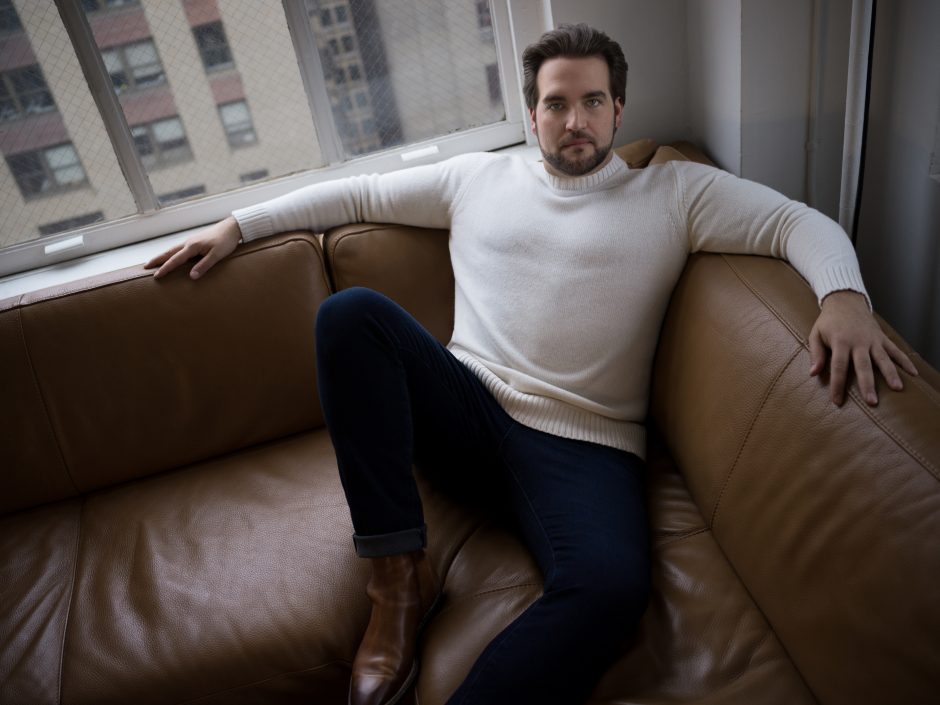
Brian Jagde (Photo: Chris Singer)
You have a son. Tell us about the experience of being a father. What has it brought to you as an artist?
First of all, there’s nothing I’ve wanted more in life. Yes, I wanted to be a singer, and I’ve achieved that, and I’m singing all over the world. I love my job! But there’s nothing I’ve wanted to do more than be a dad, and when my son came along, that changed everything, including my entire perspective on singing. I sing with more ease and freedom now because I don’t put the kind of pressure on myself that I used to. It freed me up because there’s nothing more important than him and my family. The freer I am on stage, the easier it is for me to convey the music and the art form. I do whatever the character and me and the feeling of the moment dictate now. Before, I was much more calculated and worried about what people thought or what the reaction would be, as opposed to just doing what I need to do to fulfill myself as an artist and fulfill the character onstage. Now I’m a better singer than I was a year ago because I have a child. It’s crazy how that can change your entire brain, but it opened up a whole new avenue of artistic freedom.
Kyllion is one year and one month old now. My wife and I gave him a unique name that suited him; it has Celtic origins, but we didn’t choose it for that reason, although we both have a little bit of Irish blood. We chose it because we thought it was a really cool name. His middle name is my name, but he was actually named after my wife Jenna’s father who passed away years ago; his name was Brian as well. We were blessed with this kid! We didn’t have any of the nightmares that people have gone through; he’s like the angel of children. We travel together as much as we possibly can. I don’t want to be apart from my family and miss out on any of the events. Now he’s starting to copy words, and he’s so cute! He’s also been listening to multiple languages. He was born in Tbilisi, Georgia, through a gestational mother, and we’ve had Georgian nannies so there’s that influence. I speak Italian with him and Jenna speaks Spanish with him, so he’s exposed to multiple languages. He’s starting to stand up now and will probably be walking by the end of the month. He’s a happy baby. To our credit, we’re very calm parents, we don’t do anything in front of him that would cause him any stress. I didn’t grow up in this type of environment; it was very different for me.
And you want to offer to your child what you didn’t have growing up…
Even more so! In fact, that’s probably one of the reasons why I wanted to be a dad. Unfortunately, I didn’t have a great dad. He was a tough cookie, and I wanted to correct that relationship between father and son. That’s probably my inner therapeutic reason for wanting to be a father so badly, but all I want to do is give this kid the best chance.
It’s also healing for you…
Yes. It’s healing me as well. And he’s a wonderful kid. We’re just over the moon!
New York audiences will have the chance to hear you as Calaf in Turandot at the Met in May. Any special message for them?
I’ve been dying to sing this Zeffirelli production since I learned Calaf; it is the greatest production of Turandot ever. My first one was actually the David Hockney production in San Francisco which is wonderful, very angular and artistic, and tells the story really well. I’ve had the luck of doing some great Turandot productions, and some awful ones as well. I’ve done one where Turandot was an octopus in space. It was insanity!
Zeffirelli’s production is timeless; the Met should never get rid of it. I always say, if you want to do something different in opera, you might actually get audiences to come twice if you did the same cast but with a different production, like do the old production and then do a new one. It would cost more money, though… I’m really looking forward to singing for our New York audiences again and can’t wait to do this Turandot. I love singing at the Met. Please keep coming to the opera and definitely come in May to hear me sing the most famous aria in all opera!
See Brian Jagde in Puccini’s Turandot at the Met – May 19 through June 4
Top photo of Brian Jagde by Chris Singer