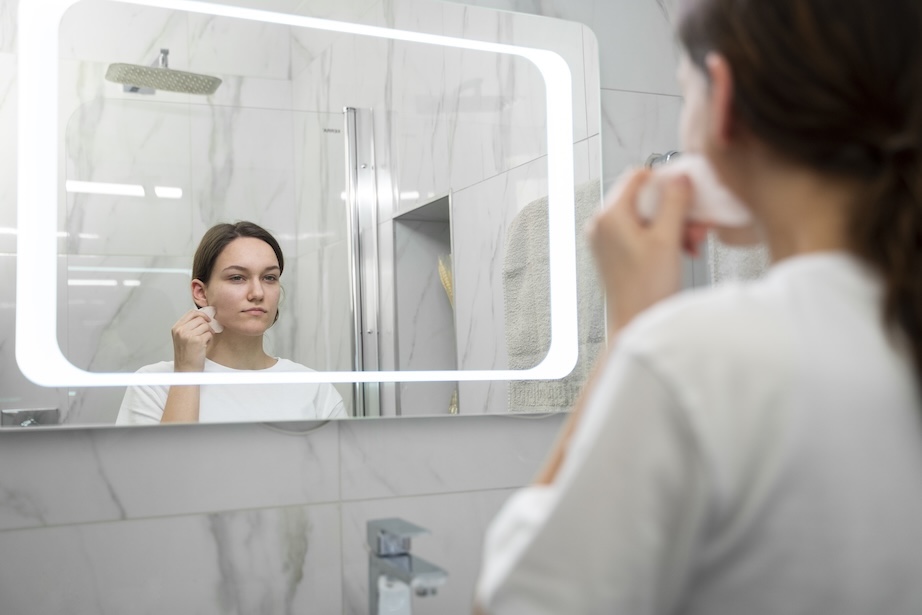
There was a time when the only feedback your bathroom mirror gave you was a reflection. Today, mirrors, apps and handheld gadgets promise far more: a score for your hydration, a map of your pores, a count of fine lines and personalised product suggestions, all within seconds. Beauty counters across the city now offer quick skin scans, and some smart mirrors aim to bring the same experience into your home.
It is an appealing idea. But how do these devices actually work, what can they really tell you, and where should you take their verdicts with a grain of salt?
From the Dermatologist’s Office to the Bathroom Mirror
Skin imaging is not new. Dermatology and aesthetic clinics have used dedicated complexion analysis systems, such as Canfield’s VISIA, for years to photograph the face under controlled lighting and track changes over time. What has changed is the size and cost of the technology. Cameras, lighting and processing power have shrunk enough to fit into countertop devices, compact mirrors and the phone in your pocket.
Big beauty brands have taken notice. L’Oréal, for example, acquired the augmented reality company ModiFace in 2018, and virtual try-ons and online skin assessments have since become a familiar part of shopping for skincare and make-up.
How a Mirror Learns to See
Behind the glass of a smart mirror or inside a handheld scanner sits a small camera paired with its own lighting and a processor. When it comes to reading texture and tone, image quality and consistency matter enormously, which is why device makers pay close attention to the hardware. Inside many of these gadgets, skin-imaging embedded vision cameras can capture consistent facial images that software uses to assess visible features such as texture or tone. Lighting is just as important as the lens. Some systems photograph the face under several types of light. Polarised light can reduce surface shine and make redness easier to see, while ultraviolet imaging can reveal pigmentation linked to sun exposure that is barely visible to the naked eye. Software compares these images against reference data to produce the scores and maps you see on screen.
What These Devices Look For
Different products measure different things, but most skin analysis tools focus on a similar set of features. Knowing what each one means can help you make sense of your results.
- Texture and pores: The camera picks up the surface of the skin in fine detail, highlighting enlarged pores or rough patches. Many apps turn this into a smoothness or texture score.
- Fine lines and wrinkles: Software detects creases around the eyes, forehead and mouth. Tracking these over months can show whether your routine is making a visible difference.
- Pigmentation and spots: Uneven tone, sun spots and dark patches are mapped across the face. Some devices use special lighting to show sun-related pigmentation that is not yet obvious in the mirror.
- Redness: Areas of flushing or irritation are highlighted. This can help you notice which products or habits seem to aggravate your skin.
- Hydration and oiliness: Some tools estimate moisture or shine levels, often in combination with small contact sensors. These readings can vary throughout the day, so they are best compared over time.
The most useful thing these tools offer is not a single score, but consistency. Taking images under the same conditions every few weeks gives you a clearer picture of how your skin is changing than a quick glance in the mirror ever could.
Where the Tech Falls Short
Lighting and Consistency
Results can change depending on the time of day, how recently you washed your face, the light in the room and even the angle of your head. Clinic systems control these factors carefully. Home devices and apps often cannot, which means a sudden drop in your “hydration score” might say more about your bathroom lighting than your skin.
Not Every Skin Tone Is Read Equally
Researchers and dermatologists have raised concerns that many skin image datasets used to train software underrepresent darker skin tones. That can affect how accurately some tools detect features like redness or pigmentation across different complexions. It is worth looking for brands that are transparent about how their technology was tested, and treating results as a guide rather than a final word.
Your Face, Your Data
Close-up photos of your face are personal data, and in some places they are treated as biometric information with specific legal protections. Before using a skin-scanning app or smart mirror, check how your images are stored, whether they are uploaded to the cloud and whether you can delete them. Reputable brands should explain this clearly in their privacy policies.
Getting the Most From Beauty Tech
Used wisely, skin analysis tools can be genuinely helpful. Scan at the same time of day, in the same spot and with a clean face to keep results comparable. Focus on trends over weeks and months rather than day-to-day changes. And remember that product recommendations from a brand’s own device are, unsurprisingly, likely to favour that brand.
Most importantly, these gadgets are cosmetic tools, not medical ones. They cannot diagnose skin conditions, and they are no substitute for a dermatologist. If you notice a new or changing mole, a persistent rash or anything that worries you, book an appointment with a professional rather than relying on an app.
Smart mirrors and skin scanners are still evolving, but they are already changing how many of us think about our skincare routines. Treated as a curious second opinion rather than an all-knowing judge, they can add a little science to the self-care ritual, and maybe help you figure out which serum is actually worth the money.
Contributed posts are advertisements written by third parties who have paid Woman Around Town for publication.