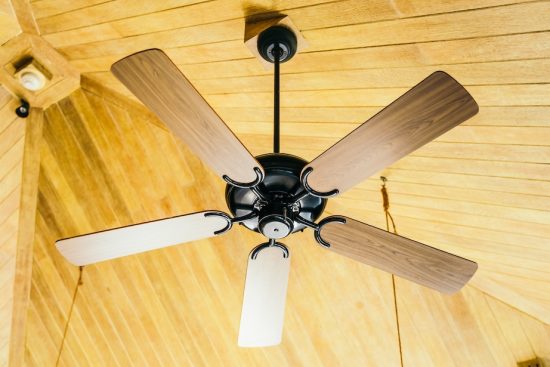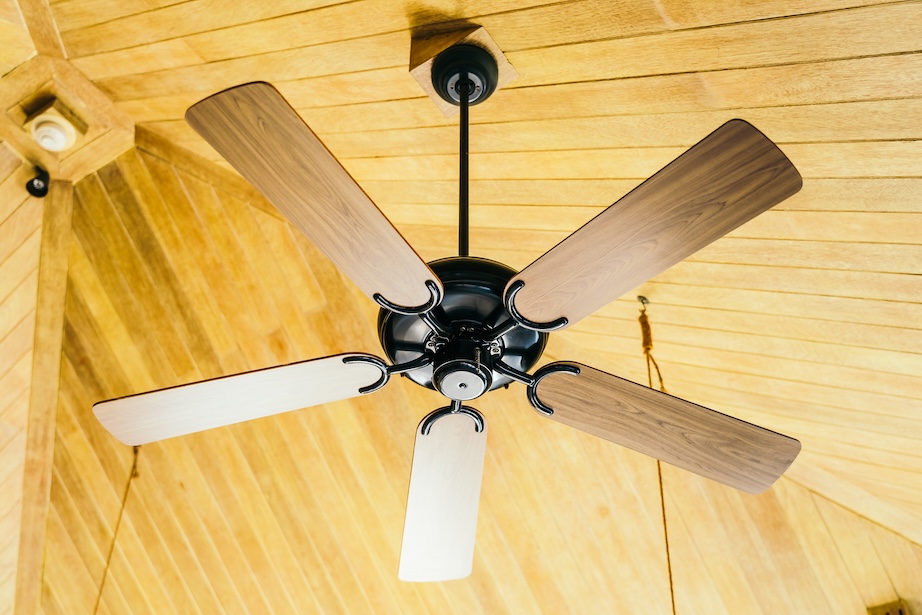
The features that distinguish a well-specified DC ceiling fan from a standard one aren’t the features that make the strongest impression in a showroom or on a product page. Instead, they are the visual ones: blade finish, light kit design, and motor housing profile. Those features are adequately assessed at the point of purchase by anyone who can see the product in front of them.
The features that determine whether the fan produces a genuinely different living experience are the ones that reveal themselves across weeks and months of actual use, across the range of conditions a full Australian summer produces, in the specific rooms where the fan runs the most. Those features are harder to evaluate at purchase and more consequential to the experience of living with the product.
Speed Range and the Precision at the Lower End
DC ceiling fans typically offer more speed settings than AC models. The value of that additional range concentrates at the lower end of the speed spectrum. It’s the lowest speed settings on a well-engineered DC fan that produce a perceptible air movement, a gentle circulation that maintains comfortable conditions in a room where the temperature is borderline, where the choice without the fan would be discomfort and with a standard fan at its lowest setting would be noise.
That lowest usable speed setting is the one a fan runs at for the largest proportion of its operating hours in a temperate climate or during the shoulder periods of an Australian summer. This is when the evening temperature has dropped enough that strong airflow isn’t needed, but still, the air is too warm for comfortable sleep. A fan whose lowest speed setting is still too fast for those conditions gets turned off, and the room temperature rises to the point where the fan gets turned back on at a speed that’s too high for genuine comfort. The fan with a lower usable floor runs continuously at the right speed and produces a genuinely different sleep environment across the months where that setting is the relevant one.
Reverse Function and Its Winter Utility
The reverse function on a DC ceiling fan, which changes the blade rotation direction to push warm air that’s accumulated at the ceiling level back down into the room’s occupied zone, is a feature that appears in the product specification and whose value only becomes apparent after experiencing what winter living without it looks like in a high-ceiling room. Warm air stratification in a room with a ceiling height above 2.7 metres is significant enough that the temperature difference between the ceiling zone and the floor zone can be several degrees, and a heater working to maintain comfort at floor level is working against a thermal environment where a significant portion of the heat it’s producing has risen out of the occupied zone.
Running the fan in reverse at the lowest speed setting recirculates that stratified warm air back into the occupied zone. It happens without creating the cooling air movement effect that forward rotation produces. The result is a room that reaches and maintains the target temperature at lower heater output than the same room without ceiling recirculation.
Remote Control Integration With the Actual Use Pattern
A DC fan with remote control is a different product in practice from one without it in the specific context of bedroom use, where the operational pattern involves adjusting the fan speed multiple times between getting into bed and falling asleep, and potentially adjusting it again during the night in response to temperature changes. Getting up to adjust a wall-mounted control or a pull chain interrupts sleep in a way that reaching for a bedside remote doesn’t, and the consequence of that friction is a fan that gets left at whatever speed it was at when the occupant got into bed rather than being adjusted to the speed that’s actually appropriate for the conditions across the night.
Noise Floor at Operating Speed
The noise floor of a DC ceiling fan at the speed settings used most consistently in actual operation is the feature that produces the most consistent feedback from people who’ve lived with a well-specified DC fan after previously living with a standard AC model. The motor noise that becomes background in an AC fan running at medium speed, present enough to be noticed when the room is otherwise quiet, is the noise that a quality DC motor at equivalent airflow output doesn’t produce.
Image by lifeforstock on Magnific
Contributed posts are advertisements written by third parties who have paid Woman Around Town for publication.