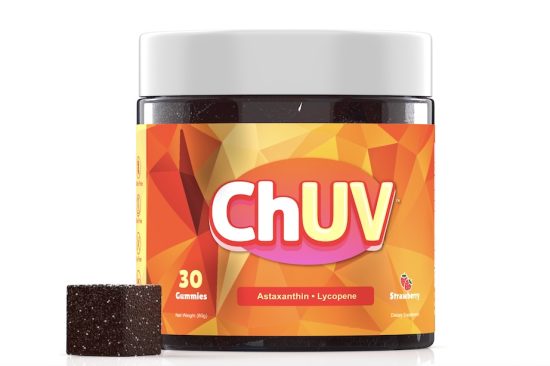

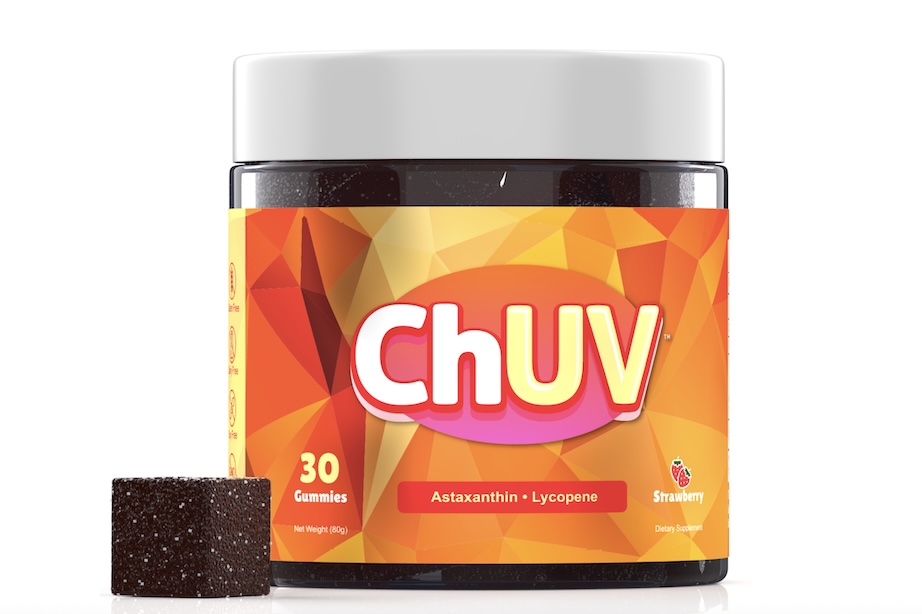
Scroll through any beauty feed this summer and you will meet the tanning gummy, a chewable promise of sun-kissed skin without the lounge chair. ChUV by CAYO Nutra is one example: a once-daily tanning gummy made with astaxanthin and lycopene and sold online. The category runs on big claims, so it helps to sort what the ingredients can do from what the marketing sometimes implies.
Here is the short version as of fall 2026: a gummy can add a subtle warmth, but it cannot replace sunscreen, shade or common sense. The product page at cayonutra.com/products/chuv-tanning-gummies describes a strawberry gummy that builds a natural tone from the inside, with no UV and no beta carotene, and that framing is a handy yardstick for everything below.
Do astaxanthin tanning gummies actually work?
In a modest, specific way, yes. Astaxanthin and lycopene are carotenoids, which are pigments, and with consistent daily use they can settle into the outer layers of skin and read as a faint warm glow. That is a cosmetic shift, not a dramatic one.
Think of it as a slow filter rather than a bronzer. Your starting skin tone, your diet and how consistently you take the gummy all change how visible the warmth looks. ChUV states on its website that the effect is subtle and that where you land depends on your own baseline, which is exactly how a supplement like this should be described.
Myth: a tanning gummy works like sunscreen
Fact: it does not. Carotenoids add color from the inside, but they do not create a barrier on your skin, so no gummy is sun protection. SPF 30+ and shade stay non-negotiable whether you take one or not.
The American Academy of Dermatology recommends sunscreen that is broad-spectrum, SPF 30 or higher and water resistant, and it notes that sunscreen alone cannot fully protect you. Read that second clause twice. If sunscreen needs shade as backup, a glowing shoulder is certainly no reason to skip either.
Is a glow from a gummy the same as a tan?
No, and the difference is worth knowing. A tan is your skin responding to UV exposure, whereas a carotenoid glow is pigment that builds up from the inside with no UV involved. Which is why the result of a gummy looks softer, closer to a warm undertone than to a beach bronze.
It also means the glow is not a reason to chase UV. Because the color comes from the pigment itself, you do not need extra sun exposure to see it, and extra exposure brings real downsides. A warm tone you built at your desk is a perfectly good summer look.
What are astaxanthin and lycopene, exactly?
They are carotenoids, natural pigments found in certain foods and microalgae. Astaxanthin comes from Haematococcus pluvialis microalgae, while lycopene is the pigment behind the red of ripe tomatoes. Both are fat-soluble, which is why they are usually taken with a meal.
In ChUV, each gummy carries 220 mg of Haematococcus pluvialis microalgae providing 11 mg of astaxanthin, and 55 mg of lycopene extract providing 5.5 mg of lycopene. Those are the only two carotenoids in the formula. There is no beta carotene, which matters because beta carotene, used in some other products, can cause an unnatural yellowish-orange discoloration.
How long does a glow routine take?
Plan on 4 to 8 weeks of consistent daily use before you judge the results. The product page says most people notice a warmer tone around week 3 or 4, with full results near week 8, because carotenoid buildup is gradual rather than overnight.
The routine itself is simple: one strawberry gummy a day, chewed with a meal that includes some fat. A jar holds 30 gummies, and each one is 10 calories. Consistency is the whole game, since the color fades as your body clears the pigment, and daily use keeps the tone steady.
Patience is the hardest part. Photograph your skin in the same light on day one, then again at week 4 and week 8, because slow changes are easy to miss in the mirror. If the shift is quiet, that is the nature of a carotenoid glow and not a sign that you did anything wrong.
Myth vs fact at a glance
Here is the quick scorecard for the claims you will see most often.
| Claim | Verdict | What is true |
| A gummy replaces sunscreen | Myth | It adds color only, so SPF 30+ and shade still apply |
| Results show up in days | Myth | Buildup takes 4 to 8 weeks of daily use |
| Carotenoids can add a gentle glow | Fact | The effect is subtle and varies by starting skin tone |
| Every glow supplement looks alike | Myth | Beta carotene can cause unnatural yellowish-orange discoloration |
Look for named carotenoids with the dose of each active stated plainly. A vague proprietary blend tells you very little.
Then read the claims. Be wary of any gummy that promises results in days, hints at built-in sun protection or talks about a deep bronze, because carotenoids simply do not work that way. A realistic timeline measured in weeks is a good sign.
How a gummy fits a sun-smart summer
Think of the gummy as the last step in a routine that starts with sun habits:
- Wear broad-spectrum, water resistant SPF 30+ sunscreen whenever you are outdoors.
- Seek shade when the sun is strongest, and add a hat and sunglasses.
- Take one gummy daily with food and give it the full eight weeks.
- Judge your glow in daylight against your own baseline, not a filter.
Notice that only one of those four habits involves the gummy. The rest are what actually look after your skin on a beach day, and they work the same way with or without a supplement.
It also helps to think about the season. Summer is when sun habits slip, between pool days, patio lunches and long evenings outside, so a routine with fixed anchors, sunscreen by the door and a hat in the bag, is easier to keep than good intentions. The gummy slots in beside your breakfast or lunch without adding a step to your skincare shelf.
Heading into 2027, the sensible way to read the tanning gummy trend is as a small cosmetic add-on to good sun habits. A carotenoid gummy like ChUV can offer a subtle, natural warmth over several weeks, and that is the whole job. SPF 30+ and shade still handle the sun, and patience handles the glow.
Opening photo: Official product photo courtesy of ChUV
Contributed posts are advertisements written by third parties who have paid Woman Around Town for publication.