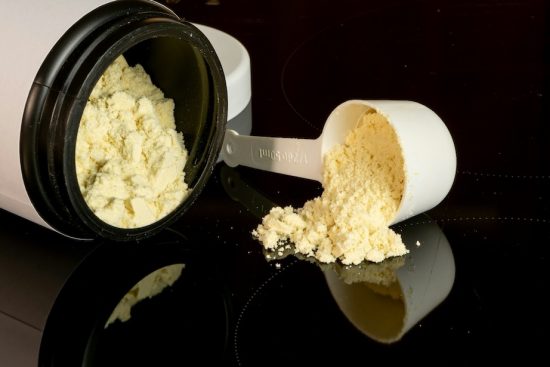


A step-by-step guide to reading a peptide supplement label: the Supplement Facts panel, product names and codes, source, amount per serving and form.
The word “peptide” used to live in biochemistry textbooks. Today it is printed on collagen tubs, protein powders and small boxes of specialty capsules with names that sound more like catalog entries than foods. The products have little in common beyond the word itself, which makes the label the only dependable way to know what you are holding.
This guide walks through a peptide supplement label one element at a time. It is about reading, not choosing. It takes no position on what any product does, and decisions about what to take belong in a conversation with your physician or pharmacist.
1. Find the Supplement Facts panel first
A peptide is simply a short chain of amino acids. That definition is broad enough to cover very different ingredients, so the front of the package tells you almost nothing. Turn it around and find the Supplement Facts panel.
The panel lists the serving size, the number of servings in the container, and each dietary ingredient with its amount per serving. Beneath the panel, a separate line headed “Other ingredients” lists everything else: the capsule shell, fillers, flow agents, sweeteners and flavorings. Read both. The panel tells you what the product is; the second line tells you what it comes packaged in.
2. Decode the name: generic, trade and code
Peptide products are named in three different ways, and one package may use all three.
Generic names describe the ingredient. “Collagen peptides” and “hydrolyzed collagen” are two generic names for the same thing: collagen that has been broken down into shorter chains.
Trade names are invented by the manufacturer. They identify a product, not a molecule, and they are not standardized between companies.
Catalog codes appear mainly on a group of products called peptide bioregulators, a category that comes out of a Russian research tradition associated with the gerontologist Vladimir Khavinson. Here a product may carry a trade name such as Endoluten or Cerluten together with a code such as A-8 or A-5. The code identifies the peptide complex inside; the trade name is how the product is sold.
Retail listings follow the same convention. In a catalog of Vita Stream peptide bioregulators, for example, each entry pairs a trade name with its code and a source description. Whatever retailer you use, those three items on the listing should match the three items on the package in your hand. If they do not, ask before you open it.
3. Check the source
Most peptide ingredients are made from something, and the label should say what.
Collagen peptides are usually labeled by animal source: bovine, marine (fish), chicken or eggshell membrane. Some labels add a collagen type, written as a Roman numeral.
Peptide bioregulators of the natural kind are named by tissue. The ingredient line typically reads as a peptide complex followed by the tissue it was derived from — pineal gland, cartilage, thymus and so on. The label or the manufacturer’s description should also name the animal species; if it does not, ask the seller.
Source matters for practical reasons that have nothing to do with effects. It determines whether a product fits a vegetarian, kosher or halal diet. It matters to anyone who avoids beef, pork or fish. Fish-derived ingredients should also appear in the allergen statement, which is normally printed just below the ingredient list.
4. Natural complex or synthesized short peptide?
Within peptide bioregulators, labels distinguish two kinds of ingredient, and the difference is worth understanding because the two are described differently on the panel.
A natural peptide complex is a mixture: a low-molecular-weight peptide fraction extracted from a single animal tissue. The label can name the tissue and give the weight of the complex, but it cannot list a single sequence, because there is not just one.
A synthesized short peptide is one defined chain, built from two to four amino acids. Here the label can be exact. It may spell out the amino acids — alanine, glutamic acid and aspartic acid, for instance — or abbreviate them with letters. This group is sold under the line name Cytogen, and a listing of Cytogen short peptides shows how such products are identified by a trade name on the front and by their amino acids in the ingredient line.
Neither description is a quality ranking. They are two different kinds of ingredient, and the label should make clear which one you have.
5. Amounts: what the milligrams refer to
Amounts are where labels are most often misread.
Start with the serving size. If a serving is two capsules, every number on the panel refers to two capsules, not one.
Next, check what the number is attached to. On a collagen tub, the figure is usually grams of collagen peptides per scoop. On a capsule of peptide complex, it is milligrams of the complex per capsule. These numbers describe different ingredients on different scales and cannot be compared with each other.
Watch for the phrase proprietary blend. A blend lists its ingredients under one name with one combined weight. You learn what is in it, but not how much of each item.
Finally, notice the % Daily Value column. For most peptide ingredients it is blank or marked with a symbol, because no Daily Value has been established. That is normal and is not an error on the label.
6. Form: capsules, powders and drops
The same ingredient can be sold in more than one form, and the form changes how the label reads. Powders give amounts per scoop and often include flavorings and sweeteners. Capsules give amounts per capsule and add a shell, commonly gelatin, to the “Other ingredients” line. Some short peptides are also sold as liquid drops intended to be held in the mouth, usually labeled “lingual” or “sublingual,” with amounts given per milliliter or per number of drops.
One boundary is worth knowing. A vial of powder marked “for research use only” is not a dietary supplement, carries no Supplement Facts panel and is outside the scope of this guide, even when the name on it resembles a name on a supplement box.
7. The manufacturer line
Every package should identify the company responsible for it, with an address or other contact information. Imported products often name both a manufacturer and a distributor. Look also for a lot or batch number and an expiration date. These details are what a pharmacist, or the company itself, will ask for if you ever have a question about a specific package.
8. What a label does not tell you
A label describes what is in the package. It is not evidence about what a product does, and it says nothing about whether the product makes sense alongside the medicines and supplements you already take. That is the part a label cannot do and a professional can.
Questions to bring to your pharmacist
- Here is the Supplement Facts panel. Is there anything on it I should know about, given my prescriptions?
- Does this overlap with anything else I already take?
- The source is animal-derived. Does that matter with my allergies or dietary restrictions?
- Should I mention this product before a procedure or a new prescription?
A one-minute checklist
Before a peptide product goes on your shelf, you should be able to answer six questions from the label alone: What is the ingredient called, generically and by trade name? Is there a code, and does it match the listing? What is the source? Is it a natural complex or a defined short peptide? How much is in one serving, and how many capsules or scoops make a serving? Who made it, and when does it expire?
If the label answers all six, you have what you need to describe the product accurately to anyone who asks — and that is the purpose of a label.
Photo by Alex Saks on Unsplash
Contributed posts are advertisements written by third parties who have paid Woman Around Town for publication.