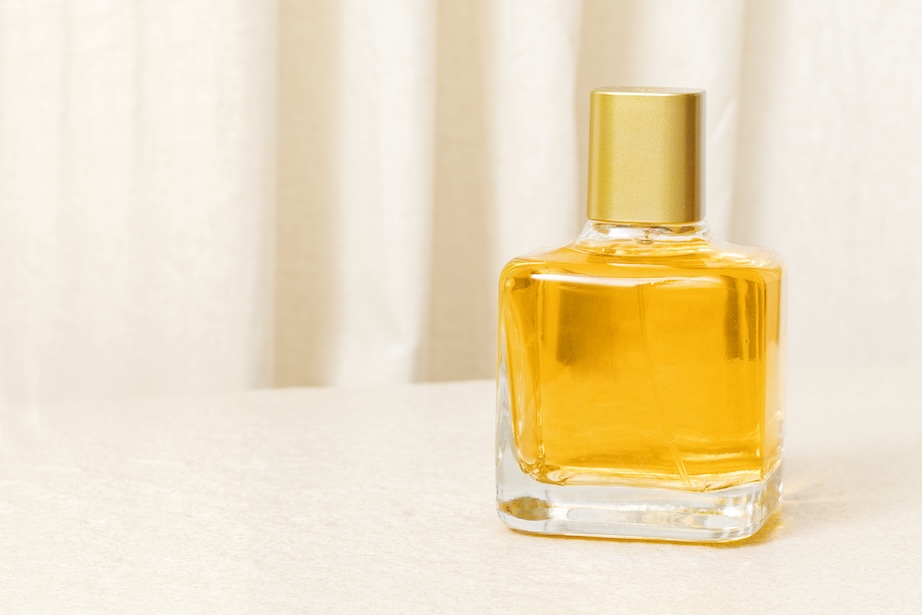
Most people who react to perfume blame their skin sensitivity and switch products randomly until something stops causing a problem. The reaction is almost never random; it traces back to one of a small number of specific ingredients found in most conventional fragrances.
| Ingredient | Common Reaction | Where It Hides |
| Synthetic Musks | Hormonal disruption, sensitization | Base notes, fixatives |
| Phthalates | Skin irritation, endocrine disruption | Carrier and fixative compounds |
| Oakmoss & Treemoss | Contact dermatitis, allergic reaction | Chypre and fougère fragrances |
| Benzyl Alcohol | Redness, itching, respiratory irritation | Floral and oriental blends |
Why Fragrance Reactions Are More Common Than Most People Realize
1. The scale of fragrance sensitivity and why it is growing
Fragrance is the most common cause of contact dermatitis from cosmetic products globally. The European Academy of Dermatology and Venereology estimates that fragrance allergy affects between 1% and 4% of the general population.
The numbers have grown alongside the volume of synthetic fragrance compounds introduced into mainstream products over the past 40 years. The human immune system encounters fragrance chemicals not just through perfume but through skincare, cleaning products, laundry detergents, and candles.
Sensitization is different from an allergy. An allergic reaction requires prior exposure to develop. Sensitization means the immune system has been exposed to a compound often enough that it begins treating it as a threat.
2. Why the ingredient list on most fragrances tells you very little
Conventional fragrance labeling allows manufacturers to list hundreds of individual chemical compounds under the single term “parfum” or “fragrance.” This is an industry-standard trade secret protection that has been in place for decades, the justification being that fragrance formulations are proprietary.
The practical consequence is that a consumer reacting to a fragrance has almost no way of identifying the specific compound responsible from the label alone. They know the product caused a reaction.
The EU has moved further than most markets in requiring disclosure. As of 2023, updated EU cosmetic regulations require disclosure of 56 fragrance allergens when present at or above specific thresholds.
1. Synthetic Musks
What synthetic musks are and why they are in almost every conventional fragrance
Synthetic musks are a class of compounds used as base notes and fixatives in fragrance formulations. Their function is to extend the wear time of a fragrance by slowing the evaporation of the more volatile compounds above them.
There are two main categories, nitromusks and polycyclic musks. Nitromusks were the first generation, and several have been restricted or banned in the EU following evidence of carcinogenicity and neurotoxicity. Polycyclic musks replaced them and are now the dominant type.
Galaxolide and Tonalide are the two most widely used polycyclic musks. Both have been detected in human blood, breast milk, and adipose tissue in multiple biomonitoring studies.
The skin reactions that synthetic musks cause, and who is most at risk
Skin reactions to synthetic musks range from mild sensitization, redness, and itching at the point of application to systemic reactions in highly sensitized individuals. Photosensitization is a specific risk associated with certain musk compounds, in which the reaction occurs or worsens under UV exposure.
The populations most at risk are people with existing skin barrier dysfunction, eczema, psoriasis, and rosacea, and those with high cumulative fragrance exposure across multiple product categories.
Identifying synthetic musks on an ingredient list is difficult because they are frequently sheltered under “parfum.” Products that disclose full ingredient lists will show them by name. Galaxolide (HHCB) and Tonalide (AHTN) are the most common. Their absence from a disclosed ingredient list is a meaningful positive signal.
2. Phthalates
What phthalates do in fragrance, and why they are still widely used
Phthalates are plasticizing compounds used in fragrance formulations primarily as solvents and fixatives. Diethyl phthalate (DEP) is the most commonly used fragrance phthalate. It improves the spreadability of the fragrance on skin, helps it adhere longer, and stabilizes volatile compounds.
The reason phthalates remain in widespread use despite documented concerns is cost and performance. They are inexpensive, effective, and deeply embedded in existing formulation infrastructure. Replacing them requires reformulation work and alternative ingredients that typically cost more.
The concern with phthalates centers on endocrine disruption. DEPs and related compounds interfere with hormonal signaling. In animal studies, phthalate exposure has produced measurable effects on reproductive development.
The skin and systemic reactions linked to phthalate exposure
Direct skin reactions to phthalates include irritation, redness, and contact dermatitis, particularly in people with existing sensitivity or compromised skin barrier function. These reactions are localized to application areas and typically develop within hours of exposure.
The more significant concern is systemic. Phthalates are absorbed through the skin and enter the bloodstream. Unlike compounds that sit on the skin surface, dermally absorbed phthalates interact with endocrine systems.
Children and pregnant women are considered the highest-risk groups for phthalate exposure effects. Several countries have restricted phthalates in children’s products specifically, the logic being that developing hormonal systems are more vulnerable to disruption than adult ones.
3. Oakmoss and Treemoss Extracts
Why oakmoss and treemoss are among the most potent fragrance allergens known
Oakmoss and treemoss are natural lichen extracts that have been used in perfumery for centuries. They produce a distinctive, earthy, forest-like quality that is central to the classic chypre and fougère fragrance families; think of the foundational structure of many iconic masculine fragrances and classic French perfumes.
The primary allergenic compounds in oakmoss and treemoss are atranol and chloroatranol. These molecules sensitize the immune system at exceptionally low concentrations, lower than almost any other fragrance allergen.
The EU has progressively tightened restrictions on oakmoss and treemoss since 2003, with the most recent regulatory updates moving toward full prohibition. Fragrances reformulated for the EU market have replaced or significantly reduced the use of these ingredients.
Who reacts to oakmoss, and what the reaction looks like
Oak moss and tree moss reactions typically present as allergic contact dermatitis, a red, itchy, sometimes blistering rash at the site of fragrance application. In previously sensitized individuals, reactions can extend beyond the application site as the immune response amplifies with repeated exposure.
The reaction can be delayed by 24 to 72 hours after exposure, making it difficult to identify the trigger without patch testing. Many people with oakmoss sensitivity have been reacting to fragrance for years without knowing the specific compound responsible.
Patch testing for fragrance allergens, conducted by a dermatologist, is the most reliable way to identify specific sensitivities. The standard fragrance mix used in patch testing includes atranol and chloroatranol.
4. Benzyl Alcohol
What benzyl alcohol is and how it ends up in both natural and synthetic fragrances
Benzyl alcohol is an aromatic alcohol that occurs naturally in a number of botanical extracts used in perfumery; jasmine absolute, ylang ylang, and Peru balsam all contain it as a natural constituent. It is also used as a synthetic preservative and solvent in fragrance formulations.
As a preservative, benzyl alcohol inhibits microbial growth and extends product shelf life, functions that make it genuinely useful in formulation. As a fragrance compound, it contributes a faintly sweet, floral background note.
The EU requires disclosure of benzyl alcohol when present above 0.001% in leave-on products and 0.01% in rinse-off products. This disclosure requirement has made it easier to identify on EU-compliant product labels.
The reactions benzyl alcohol causes and the populations most affected
Benzyl alcohol reactions include contact dermatitis, localized redness and itching, and, with higher exposure or inhalation, respiratory irritation. Occupational exposure studies, particularly in fragrance industry workers with high daily exposure have documented systemic reactions, including headache, nausea, and central nervous system effects at elevated concentrations.
For general consumers wearing fragrance at normal usage levels, the primary concern is skin sensitization with repeated exposure. A person who applies a benzyl alcohol-containing fragrance daily for several years can develop a sensitivity that wasn’t present initially, which is why reactions that develop after years of using the same product are often attributed to formulation changes when the actual mechanism is cumulative sensitization.
People with respiratory sensitivities, asthma, or multiple chemical sensitivity conditions are advised to approach benzyl alcohol-containing fragrances with particular caution.
How to Find Fragrances That Don’t Contain These Ingredients
What to look for on an ingredient list and what to avoid
Reading a fragrance ingredient list effectively requires knowing what you are looking for rather than expecting the label to flag concerns for you. Search specifically for the four ingredient categories covered here: musk compounds listed by name (Galaxolide, Tonalide, and Habanolide), phthalates (diethyl phthalate, or DEP), oakmoss or treemoss extract, and benzyl alcohol.
The presence of “parfum” or “fragrance” without further disclosure means the formulation is not fully transparent, and any of these compounds could be present.
Certifications provide a useful shortcut for consumers who don’t want to read ingredient lists for every product. COSMOS certification requires full ingredient disclosure and restricts the use of synthetic fragrance compounds. EWG Verified status in the US applies similar criteria.
Why is clean fragrance the most practical solution for reactive skin
The term “clean fragrance” is used inconsistently across the industry; some brands use it to mean natural, others to mean free from a specific restricted list, and others to mean a marketing term with no defined standard.
A genuinely clean fragrance, formulated without synthetic musks, phthalates, or undisclosed allergens, and with full ingredient transparency, directly addresses the four problem ingredients covered in this post.
This philosophy should extend beyond the skin and into your living environment; opting for all natural room sprays for your daily use at home ensures that you aren’t inadvertently inhaling or settling synthetic fixatives onto your skin, which is a common but overlooked source of cumulative sensitization.
Frequently Asked Questions
How do I know which perfume ingredient is causing my skin reaction?
Patch testing conducted by a dermatologist is the most reliable method. The standard fragrance allergen patch test covers the most common sensitizers, including oakmoss, treemoss, benzyl alcohol, and fragrance mix compounds.
Can natural fragrance ingredients also cause reactions?
Yes, oakmoss and treemoss are natural extracts and among the most potent fragrance allergens known. Benzyl alcohol occurs naturally in several botanical extracts. Natural origin does not mean hypoallergenic. The advantage of natural botanical fragrance is not the absence of all possible allergens.
Why do I react to a fragrance I have worn for years without problems? Sensitization develops with repeated exposure over time. The immune system can tolerate a compound for years of exposure before reaching a threshold at which it begins treating it as a threat. Once that threshold is crossed, reactions typically worsen with each subsequent exposure.
Image by KamranAydinov on Magnific
Contributed posts are advertisements written by third parties who have paid Woman Around Town for publication.