How to Plan Your Education for a Career in Dentistry

The following curated article is provided by our advertisers. Contributed articles help our readers in categories beyond our main Woman Around Town topics such as legal matters, personal issues, home improvement, and more. While we don’t endorse any of the products mentioned or linked to in these articles, we only publish articles that we hope our readers will find helpful. We often receive compliments about these articles and enjoy them ourselves. We hope you enjoy them as well!

Becoming a dentist takes years of focused education, practical training and careful planning. It is not a career path that can be approached casually, especially because the requirements begin long before dental school itself. Students need to think about college courses, admissions tests, clinical exposure and the financial side of professional school well in advance.

The good news is that the process becomes much easier to manage when you understand what is required at each stage. Instead of treating dental school as one distant goal, it helps to break the journey into smaller decisions that build on one another.

Understand What a Career in Dentistry Involves

Dentistry combines science, technical skill and direct patient care. Dentists diagnose oral health problems, treat issues involving the teeth and gums and help patients prevent future problems through regular care.

The work can be demanding. Dentists need strong attention to detail, steady hands and the ability to communicate clearly with people who may be nervous or uncomfortable. Some work as general dentists, while others pursue specialties such as orthodontics, periodontics or pediatric dentistry.

Before planning your education, spend time learning what the profession actually looks like day to day. The more you understand the work itself, the easier it becomes to decide whether the long training process makes sense for you.

Build the Right Undergraduate Foundation

Most students begin by completing a bachelor’s degree, but there is no single undergraduate major required for every future dentist. Biology and chemistry are common choices because they overlap with many dental school prerequisites, but students can major in other subjects as long as they complete the necessary science courses.

Those prerequisites often include biology, general chemistry, organic chemistry, physics and English. Some programs may require additional science classes, so it is important to check individual dental schools early.

This is also the right time to think about the cost of the full educational path. Dental school can involve tuition, equipment, living expenses and other fees over several years. Students may need to compare scholarships, grants, savings and dental school student loans as part of a broader funding plan. Looking at these costs before applying can help you avoid choosing a program based only on reputation without considering whether the overall expense is realistic.

Develop Strong Study Habits

The science courses required for dental school can be challenging, and the workload usually becomes heavier once professional training begins. Strong study habits developed during college can make that transition much smoother.

Consistency matters more than last-minute studying. Keeping up with lectures, reviewing material regularly and asking for help when a topic becomes difficult can prevent small gaps in knowledge from becoming larger problems.

Time management is equally important. Dental students often balance coursework, labs and later, clinical responsibilities. Learning how to manage several demanding tasks at once is useful preparation.

Get Real Experience in Dentistry

Academic preparation is only part of the process. Dental schools also want applicants who understand what the profession involves.

Shadowing a dentist is one of the best ways to gain that perspective. It allows you to observe patient interactions, office routines and different types of procedures. If possible, spend time in more than one practice so you can see how work environments differ.

Volunteer experience can also help. Community health programs, nonprofits and other service settings can strengthen communication skills while exposing you to people from different backgrounds.

Research opportunities may be valuable as well, especially for students interested in academic dentistry or programs with a strong scientific focus.

Prepare for the Dental Admission Test

The Dental Admission Test is an important part of the application process for many students. Preparing for it should not be left until the last minute.

A good study plan usually begins months before the test date. You will need time to review science concepts, practice reading comprehension and become familiar with perceptual ability questions.

It is also important to choose your test date carefully. Taking the exam during a particularly heavy academic term can make preparation more difficult, so try to create a schedule that gives you enough time to study without neglecting your college courses.

Understand the Application Process

Applying to dental school involves several parts, and each one deserves attention. Schools may review transcripts, test scores, recommendation letters, personal statements and evidence of dental or volunteer experience.

Start collecting materials early. Professors and dentists may need time to prepare thoughtful recommendation letters, while personal statements often improve after several rounds of revision.

Interviews are another important stage. They give schools a chance to learn how you communicate, why you are interested in dentistry and whether you understand the responsibilities that come with the profession.

Research Dental Schools Carefully

It can be tempting to focus heavily on rankings, but they should not be the only factor in your decision.

Look at the curriculum, clinical training, location, class size, cost and student support. You should also pay attention to accreditation because attending an appropriately accredited program is important for future licensing.

Clinical experience deserves special attention. Find out when students begin treating patients and how much supervised practice the program provides. Strong hands-on training can make a major difference in how prepared you feel after graduation.

Know What Dental School Will Be Like

Dental school usually combines classroom instruction, laboratory work and clinical training.

Early coursework often focuses on areas such as anatomy, physiology, oral biology, pathology and dental materials. As students move through the program, more time is spent working with patients under supervision.

This shift can be demanding but rewarding. It is where theoretical knowledge becomes practical skill.

Students who are interested in specialties may also begin exploring areas such as orthodontics, endodontics or oral surgery. Many specialties require additional education or residency training after dental school.

Plan for Licensing and the Next Step

Graduating from dental school does not automatically mean you can begin practicing independently. Dentists must meet licensing requirements in the state or region where they intend to work.

These requirements may involve examinations and other professional standards. Because rules can differ by location, it makes sense to research them before graduation rather than waiting until the last moment.

Create a Timeline You Can Follow

A strong plan should begin during college and continue through dental school. Early on, focus on science prerequisites, strong grades and opportunities to observe dentists. Later, shift your attention toward admissions testing, applications and interviews.

Once you enter dental school, the priorities change again. Coursework, clinical experience and licensing preparation become the main focus.

The path is long, but it is easier to manage when each stage has a clear purpose. If you plan your education around the kind of dentist you want to become, you can make better decisions about courses, schools, costs and training along the way.

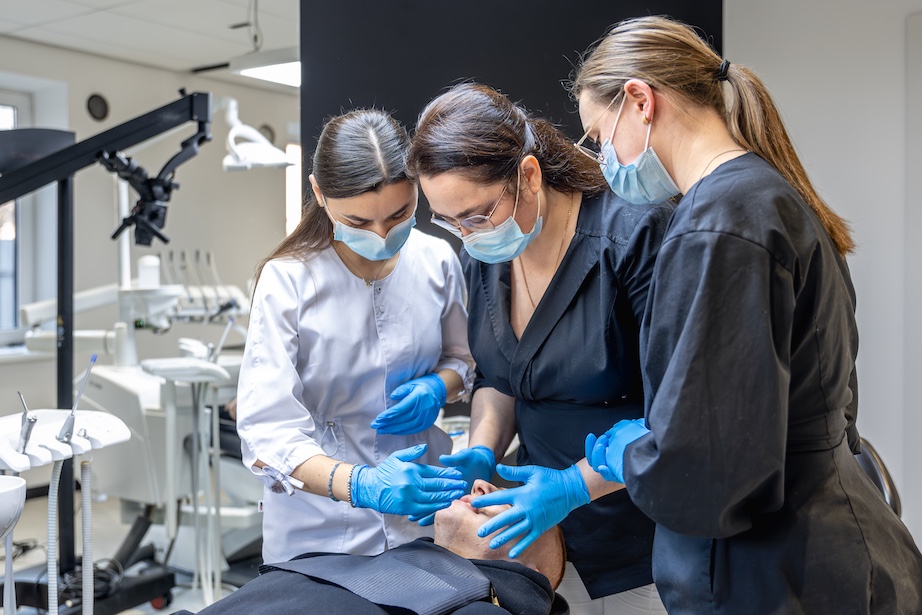
Image by pvproductions on Magnific

Contributed posts are advertisements written by third parties who have paid Woman Around Town for publication.


Share This Post:

Bluesky Icon Bluesky
Facebook

There is a big difference between wanting to change a face and wanting it to look a little more rested. For many people considering cosmetic treatment, the goal isn’t a dramatically different appearance. It’s softening…

Eating disorders can impair nutrition, heart function, bone health, concentration, and emotional stability during adolescence. Symptoms may remain hidden, even when a teenager appears healthy or maintains an average body size. Early assessment gives families…

According to data reported by the Federal Bureau of Investigation in February 2026, more than 11,000 domestic violence victims were killed, and an additional 1.1 million people were victims of domestic violence. From this number,…

There is a strange moment after a complicated birth when hospital life ends and ordinary life is supposed to begin. The bags come home. Family members ask when they can visit. Someone has probably bought…

When we think of investing in our appearance and preserving our youth, most of us immediately think of expensive face creams, advanced dermatological facials, or intricate skincare routines. We invest time, energy, and resources into…

Most people think they’re doing their part by tossing bottles in the blue bin, but recycling represents just a fraction of what sustainable living actually means. Real home sustainability goes deeper than sorting plastics from…

The Art of Looking Refreshed Without Looking Different

There is a big difference between wanting to change a face and wanting it to look a little more rested. For many people considering cosmetic treatment, the goal isn’t a dramatically different appearance. It’s softening certain lines while keeping the expressions and features that still make the face recognizable. That preference has helped make subtlety an important part of conversations about injectable treatments. Facial movement, anatomy, treatment area, and individual goals all matter. What looks

read more

What Parents Should Know About Eating Disorder Therapy for Teens

Eating disorders can impair nutrition, heart function, bone health, concentration, and emotional stability during adolescence. Symptoms may remain hidden, even when a teenager appears healthy or maintains an average body size. Early assessment gives families an opportunity to address harmful behaviors before physical complications become severe. Effective care usually combines psychotherapy, nutritional rehabilitation, medical monitoring, and caregiver involvement. Treatment should respect developmental needs while helping each young person regain physical safety, emotional balance, and confidence

read more

Defending Against Assault Allegations Involving a Woman

According to data reported by the Federal Bureau of Investigation in February 2026, more than 11,000 domestic violence victims were killed, and an additional 1.1 million people were victims of domestic violence. From this number, nearly 75% of the reported victims were women. A criminal action, such as assault, can have severe repercussions for any party involved. The process of raising a defense in assault cases is usually similar, regardless of whether the victim is

read more

When a Difficult Birth Follows You Home

There is a strange moment after a complicated birth when hospital life ends and ordinary life is supposed to begin. The bags come home. Family members ask when they can visit. Someone has probably bought far too many newborn clothes. Yet instead of settling into the version of early parenthood everyone imagined, the calendar is already filling with follow-up appointments. Maybe the baby spent time in the NICU. Perhaps feeding has been difficult. There may

read more

How to Plan Your Education for a Career in Dentistry

Becoming a dentist takes years of focused education, practical training and careful planning. It is not a career path that can be approached casually, especially because the requirements begin long before dental school itself. Students need to think about college courses, admissions tests, clinical exposure and the financial side of professional school well in advance. The good news is that the process becomes much easier to manage when you understand what is required at each

read more
You've loaded all available articles in this category

The Art of Looking Refreshed Without Looking Different

There is a big difference between wanting to change a face and wanting it to look a little more rested. For many people considering cosmetic treatment, the goal isn’t a dramatically different appearance. It’s softening certain lines while keeping the expressions and features that still make the face recognizable. That preference has helped make subtlety an important part of conversations about injectable treatments. Facial movement, anatomy, treatment area, and individual goals all matter. What looks

read more

What Parents Should Know About Eating Disorder Therapy for Teens

Eating disorders can impair nutrition, heart function, bone health, concentration, and emotional stability during adolescence. Symptoms may remain hidden, even when a teenager appears healthy or maintains an average body size. Early assessment gives families an opportunity to address harmful behaviors before physical complications become severe. Effective care usually combines psychotherapy, nutritional rehabilitation, medical monitoring, and caregiver involvement. Treatment should respect developmental needs while helping each young person regain physical safety, emotional balance, and confidence

read more

Defending Against Assault Allegations Involving a Woman

According to data reported by the Federal Bureau of Investigation in February 2026, more than 11,000 domestic violence victims were killed, and an additional 1.1 million people were victims of domestic violence. From this number, nearly 75% of the reported victims were women. A criminal action, such as assault, can have severe repercussions for any party involved. The process of raising a defense in assault cases is usually similar, regardless of whether the victim is

read more

When a Difficult Birth Follows You Home

There is a strange moment after a complicated birth when hospital life ends and ordinary life is supposed to begin. The bags come home. Family members ask when they can visit. Someone has probably bought far too many newborn clothes. Yet instead of settling into the version of early parenthood everyone imagined, the calendar is already filling with follow-up appointments. Maybe the baby spent time in the NICU. Perhaps feeding has been difficult. There may

read more

How to Plan Your Education for a Career in Dentistry

Becoming a dentist takes years of focused education, practical training and careful planning. It is not a career path that can be approached casually, especially because the requirements begin long before dental school itself. Students need to think about college courses, admissions tests, clinical exposure and the financial side of professional school well in advance. The good news is that the process becomes much easier to manage when you understand what is required at each

read more
You've loaded all available articles in this category