Christopher Altieri never intended to become a journalist. Yet, listening to him talk—precise in language, generous with detail, and always attentive to the deeper meaning in events—it seems inevitable that he would become a writer. A lifelong practicing Catholic, he made the Catholic Church both his subject and his professional habitat for more than two decades.
Altieri’s first byline came almost by chance. While studying at the Pontifical Gregorian University in Rome, he found himself present at a moment of extraordinary historical significance: the death of Pope John Paul II. He reached out to his hometown newspaper, The Stamford Advocate, offering to report from the scene. The editor accepted, and Altieri was suddenly sending dispatches from the center of the Catholic world at a moment when the eyes of the globe were turned toward St. Peter’s Square.
“That was nearly twenty years ago,” he says, with the slight bemusement of someone surprised by the turn his life took. Shortly afterward, an opening arose at Vatican Radio. In the summer of 2005, after Cardinal Joseph Ratzinger became Pope Benedict XVI, Altieri accepted the position—more, he admits, out of the desire to support a new marriage and growing family than any ambition to become a professional reporter. “I stumbled into journalism entirely,” he says. “In hindsight, it was all quite providential.”
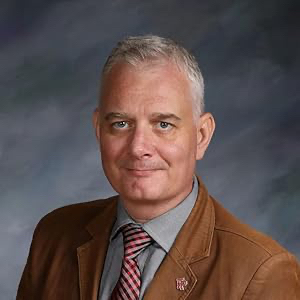
Christopher R. Altieri
Besides writing for numerous Catholic publications, Altieri has written four books, the latest Leo XIV – The New Pope and Catholic Reform, was published a mere six months after Robert Francis Prevost became the first American to become head of the worldwide Catholic Church. Altieri’s deep understanding of the Vatican, the mountains of research he has amassed during his time in Rome, is evident in every page of the book. For the reader, the experience is like being inside the corridors of power depicted in Conclave, the Oscar nominated film. But what Altieri writes about is based on his many years as a reporter.
Altieri found himself deeply compelled by the human drama embedded within the 2,000-year-old religious institution. “The Catholic Church is a fascinating historical, cultural, and social reality and an inexhaustible source of all too human stories,” he says. Having trained in political philosophy, Altieri jokes that he was fortunate to have read Machiavelli “in the Florentine original” to understand how power truly functions.
Working at Vatican Radio, Altieri had a front row seat to observe Pope Benedict XVI. “I can say that he was a kind and gentle man of soaring erudition and a keen sense — perhaps too keen — of his own shortcomings, especially as a governor and administrator,” he says, noting that Benedict himself made that observation in his autobiography, Milestones.
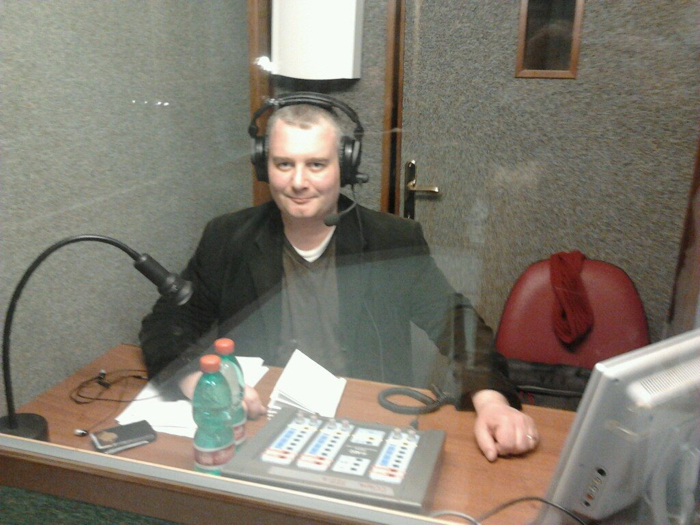
Christopher R. Altieri at Vatican Radio, 2014
In 2006, Benedict visited Vatican Radio to mark the 75th anniversary of the station’s founding. “He toured all four floors, stopping not only in the newsrooms but in the offices, and production suites,” Altieri recalls. “He even visited broadcast studios, spending time with each language group he met, even though he was not by nature a fellow who mingled or made small talk with ease. He did not like to be the center of attention, which made some of the requirements of the office a real trial for him.”
Benedict XVI never really wanted to be pope and actually tried to retire from the leadership of the Congregation for the Doctrine of the Faith several times. “When he resigned, it shook the Church and the world,” Altieri says. “His record of leadership is as amenable to criticism as any other fellow’s, but I think it fair to say he thought of himself as a teaching pope. The problem, if I may put it that way, turned out to be that the Church needed a governor. Everything unfolds under providence, but God gives us humans a great deal of leeway.”
After leaving Vatican Radio, Altieri developed a reputation as one of the Vatican’s leading investigative journalists. His inside knowledge of how the machinery actually operates became the foundation of his reporting on finances, governance, and scandal. “My conviction in the watchdog function of journalism is very strong,” he says. “Where there is power, there will be abuse of it.”
Altieri does not hold back when accessing the leadership of Pope Francis, who replaced Pope Benedict XVI. “Francis was very charismatic and he did a lot of things, especially for people in the church who wanted to see the church open up a little bit,” he says. “They found that appealing. But was he dealing with the actual nitty gritty things that were needed to keep the church running well? I would say he was not. People are going to make their own judgments, and history is going to have plenty to say about his pontificate, I’m quite sure. But I just tried to make sure that people knew what he did, and how he went about it. I report, you decide.”
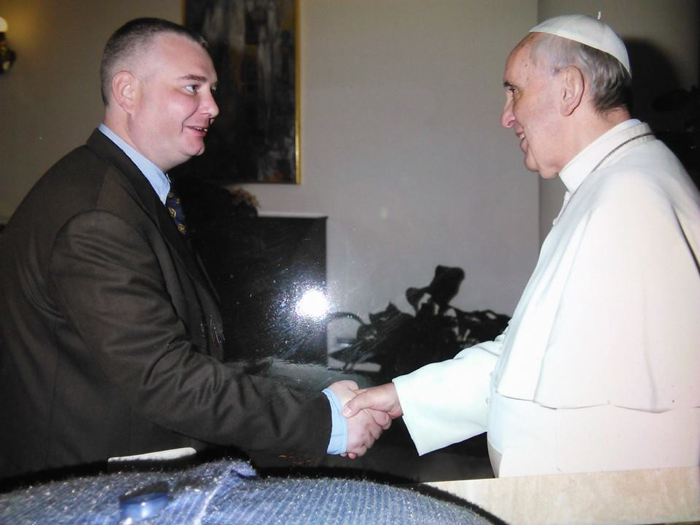
Christopher R. Altieri and Pope Francis, 2013
He does admit that Pope Francis was “a master of the grand gesture and that’s an important skill to have when you’re a leader on a global stage. I don’t want to take anything away from it.” On one occasion, Pope Francis embraced a man who was terribly disfigured as a result of a genetic disorder. “You could name dozens of really powerful, moving images throughout his pontificate,” Altieri says. “That’s not nothing at all, right? But that’s not governance.”
Altieri met the woman who would become his wife shortly after arriving in Rome. They stayed for nearly 20 years, raising their family in Italy. He was back in the U.S. during the conclave that elected Pope Leo XIV. His recent book analyzes the process with rare clarity. Like many observers, he believed Cardinal Matteo Zuppi of Bologna fit the most logical profile for the job: pastoral experience, diplomatic exposure, and institutional understanding without being part of the Roman bureaucracy.
Instead, the cardinals elected Robert Francis Prevost – now Pope Leo XIV – long thought impossible due to the superpower burden that an American identity carries. “I hadn’t given him a first thought,” Altieri admits. “The prevailing wisdom was that no American would be elected until the United States had entered permanent political decline.” Pope Leo XIV’s election may reflect a pragmatic reality: the Vatican’s largest financial support comes from the United States and Germany. And Pope Leo XIV brings organizational leadership experience from his time heading the Augustinian order, including handling finances in crisis.
Altieri describes Pope Leo XIV’s worldview as shaped by the spirituality of St. Augustine—honest about human brokenness but not cynical. It is a perspective that may define his papacy. “He understands the greatness and the woundedness of human nature,” Altieri explains. “He sees the world without rose-colored glasses, but he doesn’t despair. That balance matters.”
When Pope Leo XIV stepped onto the balcony of St. Peter’s as the newly elected pope, his first words were: “Peace be with you.” Altieri believes the choice was deliberate and deeply significant—a mission statement for a polarized church and world. “He has set out to bring peace—to the world, and to a Church struggling to live together.”
Less than a year into his papacy, Leo XIV, who was born and raised in Chicago where ICE agents have carried out aggressive, often violent raids, has spoken out about the plight of immigrants. And he weighed in when the U.S. bishops criticized raids by the Trump administration. “When people are living good lives, and many of them for 10, 15, 20 years, to treat them in a way that is extremely disrespectful, to say the least – and there’s been some violence, unfortunately. I think that the bishops have been very clear in what they said,” he added.
Pope Leo XIV immediately signaled a shift from his predecessor. Where Pope Francis rejected the formal trappings of the office but wielded power unapologetically, Leo XIV has embraced the symbols while appearing to govern more cautiously. He has resumed the traditional papal escape to Castel Gandolfo, a choice warmly greeted by Romans who gather to watch for his arrival on Tuesday evenings.
“Francis eschewed the trappings but used the power. Leo embraces the trappings and uses the power more reservedly,” Altieri observes. “They’re almost photographic negatives of one another.”
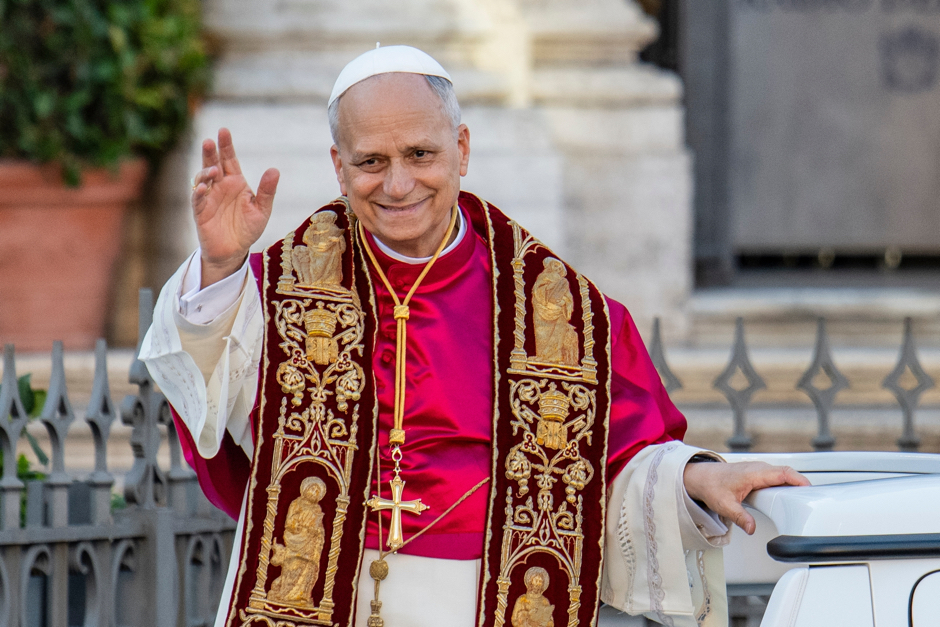
Francis typically wore white, beginning with his first appearance as pope. When Pope Leo XIV first appeared on the loggia above St. Peter’s Basilica, he was dressed in the red mozzetta and burgundy stole with intricate gold embroidery. “He understands that he has come into an office and that he embodies the office, so his decision is to dress like a pope, right?” Altieri says. He describes that gesture as “a conscious and deliberate one to say, `I understand that the office is bigger than me, and that I have a responsibility to the office.’”
Pope Leo XIV is a polyglot. He speaks, besides English, many languages including Italian, Spanish, French, and German. Altieri says this brings to mind the apostles preaching the good news of salvation. When the people from all over the world gathered in Jerusalem, they heard the disciples in their own native tongue. “That’s a fascinating episode, isn’t it?” Altieri says. “I love the fact that the pope is sort of that way that, I mean, we’re hearing him speak English, but he’s also speaking Italian and Spanish and whatever.”
“Catholic Reform” is in the title of Altieri’s book because he believes the Church needs reform. While the Church is often seen as wealthy, it faces financial challenges as it continues to deal with lawsuits filed by abuse victims. Altieri is direct about the unfinished reckoning facing the Church. “Abuse did not involve only children. It involved adults. And until leadership culture changes, we will not move forward.”
Two reforms are crucial, he argues: transparency in the Church’s justice system and a real expectation that bishops must know what occurs under their authority. “The question isn’t only ‘What did you know?’ but ‘What should you have known?’” Leo, a canon lawyer and experienced tribunal judge, may be uniquely positioned to attempt that reform, he says.
Reflecting on the overall health of the Church, Altieri says: “Catholic faith tells us that the Barque of Peter will come safely to port. Faith tells us little, however, about the state in which the Barque will be when she finally does call to port, nor does faith guarantee that she will always be captained by enlightened and capable helmsmen. All we know is that she will not founder. For the rest, all bets are off.”
Today Altieri teaches history and theology at Fairfield Prep in Connecticut, while serving as senior editor for news and affairs at Crux. He continues to write, investigate, and illuminate the workings of an institution that shapes lives all over the world.
And he will soon return to New York. Altieri has accepted an invitation to speak at the Church of St. Thomas More on Manhattan’s Upper East Side on Thursday, February 12. A book signing is also planned.
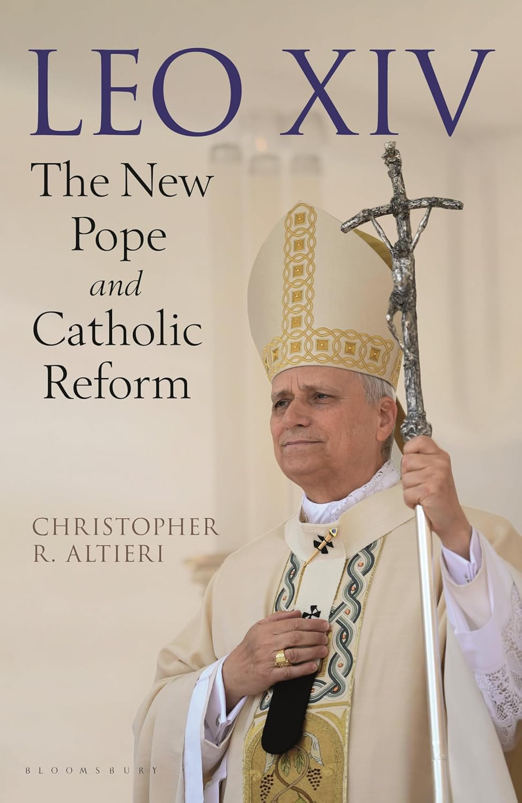
Leo XIV – The New Pope and Catholic Reform
Christopher R. Altieri
Top photo: Rome, Italy May 25, 2025: Pope Leo XIV, Robert Francis Prevost at the Basilica di Santa Maria Maggiore. Credit: Shutterstock Rocco Pettini
Our editors love to read and independently recommend these books. As an Amazon Affiliate, Woman Around Town may receive a small commission from the sale of any book. Thank you for supporting Woman Around Town.