What is “your why?” Raise your hands if you’ve been asked this question recently or heard it during a motivational lecture. OK, hands down.
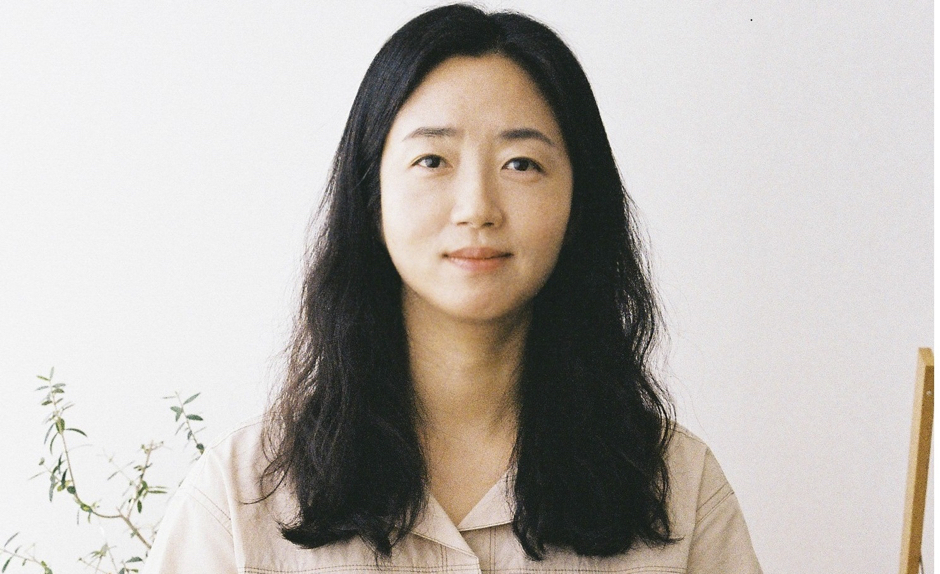
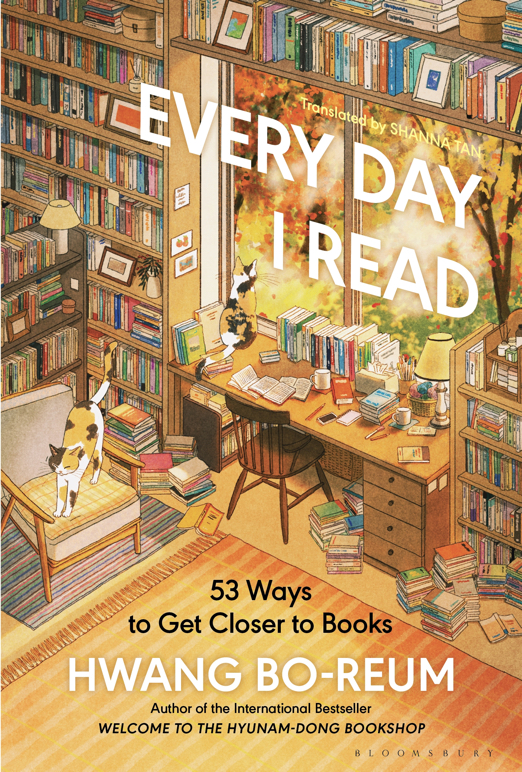
Knowing your “why” can keep you committed to a new project, or one that’s grown stale. Remembering your “why” can inspire you to return to the activity with renewed interest or excitement. Why do you continue in your career? Or volunteer or study the subjects that you study. Author Hwang Bo-Reum discusses her “why” for being an avid reader in her new book, Every Day I Read: 53 Ways to Get Closer to Books. The collection of bite-size essays reads like a love letter to books and the joy of reading.
One of her essays in the collection that resonated with me was how we hold onto books. As I look over at my bookshelf, I see a lot I’ve packed and unpacked over the years: ones I’ve loved enough to keep; a few classics I hope to read one day; and the pile of recently obtained ones that haven’t been put in reading order yet. Oh, and then there’s the few I leave on my nightstand that are easy to jump in and out of before I shut off the light. But what is my “why?”
In Every Day I Read, author Bo-Reum says reading is her favorite pastime. “Instead of dabbling in different hobbies, I devote all my free time to reading.” Then, she asks herself what her “why” is. What does she hope to gain from it, and what keeps her going?
Looking back through history, she notes that people believed a well-read person equaled great success. It’s a sentiment she doesn’t agree with. Her “why” is more personal. Feeling that she was lacking in many ways, she filled her life with books, embraced them for all they taught her, and wanted to keep learning.
It also got her through some tough times. When people betrayed her trust, she recuperated with books. When she reads about a character rising above adversity, she feels more powerful. “Books,” she says, “have taught me how to embrace all the good and bad in life.”
Throughout these essays, the author examines the reading experience from all angles, like visiting libraries and indie bookshops for what they offer, reading aloud versus silent reading, how she organizes her bookshelf, and what made her a reader in the first place. Each one offers a relatable story, making it hard to stop at just one; it’s like a book of potato chips. We’re introduced to notable authors she follows and includes quotes and passages from the ones that meant a lot to her. It can read like a literature lesson more than it does a collection of stories.
It’s refreshing to be reminded to continue doing what you love, simply for the love of it. As for my “why,” I’m still thinking about it. My love for it started in the fourth grade when Mrs. Hughes invited students to join her book club, which she was going to hold one morning a week before the school day started. I have no idea why that seemed like a fun idea. Get up early? For a book? But I did. We read and discussed A Wrinkle in Time, by Madeline L’Engle; in high school, I couldn’t put down Mary Higgins Clark’s Where Are the Children? Books were as much a constant for me then, as they are now.
As a solo traveler, they’re my companions, sharing breakfast with me in a foreign hotel coffee shop, keeping me company on trains and planes. In fact, one of the hardest decisions to make when packing for a trip is not how many shoes to bring, but what books to take. I weigh each one, not only on the subject matter but on how heavy it is. Depending upon where I’m going, I may choose a non-fiction book on human behavior or a paranormal thriller. My companions; that’s about as good a “why” as one could have.
That reminds me of the time about ten years ago when I was packing for a long flight. Not wanting to abandon the fascinating, but hefty autobiography I’d just started, I broke down and purchased an e-reader. I felt like a traitor to the physical book. However, it served its purpose but never became my preferred method of reading. It’s a subject Bo-Reum covers in one of her essays.
According to research, she says, people read very differently on devices. We tend to skip information, scan the text, and therefore absorb a lot less than if reading a real-live book. We’re distracted by the functions to play around with like changing fonts, lighting, bookmarking, and word searching. So, she’s particular about what she allows on her e-reader, since she wants “to dive deep between the lines and extract the meaning in every sentence.”
And what about the decision to give up on a book? That topic is also covered and was the first I one turned to. It’s called, “You Don’t Always Have to Finish It.” What a relief!! How many times have we tortured ourselves, feeling compelled to suffer through to The End? Maybe the writing didn’t captivate us, the story didn’t pull us forward, or we weren’t in the mood for the subject. As for our author, if she isn’t curious about what happens next, she moves on.
She compares it to a failed relationship, “I’d be better off finding a book I can vibe with.”
Every Day I Read: 53 Ways to Get Closer to Books
Hwang Bo-Reum
Translated by Shanna Tan
Top author photo by Seong Ji Min, Clayhouse Inc.
Our editors love to read and independently recommend these books. As an Amazon Affiliate, Woman Around Town may receive a small commission from the sale of any book. Thank you for supporting Woman Around Town.