The Truth Behind Tarot Card Reading: Myths and Realities

The following curated article is provided by our advertisers. Contributed articles help our readers in categories beyond our main Woman Around Town topics such as legal matters, personal issues, home improvement, and more. While we don’t endorse any of the products mentioned or linked to in these articles, we only publish articles that we hope our readers will find helpful. We often receive compliments about these articles and enjoy them ourselves. We hope you enjoy them as well!

For centuries, tarot cards have fascinated many with their mysterious imagery and cryptic symbolism. But as with most things rooted in the mystic realm, they come with a fair share of misconceptions. Today, let’s explore the reality behind tarot card reading and debunk some prevalent myths.

1. Origins of Tarot: Beyond the Crystal Ball

Let’s start at the very beginning. Tarot cards, contrary to popular belief, did not originate as a mystical tool. They began as playing cards in 15th century Europe. It was only much later that they found their way into the world of divination.

Myth: Tarot cards come from ancient Egypt or other ancient civilizations.

Reality: Their actual roots trace back to Renaissance Italy, where they were used for a game called “Tarocchi.”

It’s essential to understand this historical context. Knowing the true origins of tarot cards provides a clearer view of their purpose and use. They weren’t devised by ancient sages but have been adapted over time to provide insight and reflection.

2. Reading the Tarot: Intuition or Magic?

When diving deep into one card tarot enthusiast’s forum, you’ll find heated debates about how tarot readings work. Some argue it’s pure intuition, while others swear there’s a dash of the supernatural.

Myth: You need psychic abilities to read tarot cards.

Reality: Anyone can learn to read tarot. While some readers may claim to have psychic abilities, many rely on their intuition, knowledge of the cards, and the ability to interpret symbolism.

It’s the dance between the reader’s intuition, the card’s symbolism, and the querent’s life experiences that bring meaning to a reading—not any inherent “magic” within the cards.

3. The Tarot’s Messages: Fate or Guidance?

One widespread belief is that tarot cards predict the future. However, this isn’t entirely accurate.

Myth: Tarot readings are set-in-stone predictions of future events.

Reality: Most tarot readings offer guidance, perspectives, or highlight underlying emotions and factors in one’s life. They don’t necessarily “predict” the future.

If you get the “Death” card, for instance, it doesn’t mean someone will die. Instead, it often symbolizes the end of a phase or the necessity for transformation. It’s more about understanding life’s cycles than ominous predictions.

4. Tarot Ethics: Manipulation or Enlightenment?

Let’s touch upon the ethics surrounding tarot readings.

Myth: Tarot readers are just scam artists trying to make a quick buck.

Reality: Like any field, there are always a few bad apples. However, many tarot readers are genuine individuals passionate about helping others through guidance and introspection.

Myth: Relying on tarot readings can become an unhealthy obsession.

Reality: While it’s possible for someone to become overly dependent on readings, many use tarot as a tool for meditation, self-reflection, and personal growth.

To ensure a positive tarot experience, always approach readings with an open mind and use them as a source of insight, not as an absolute roadmap for life.

5. The Deck Diversity: One Size Doesn’t Fit All

Understanding the Types of Decks:

When most people think of tarot, they imagine the classic Rider-Waite deck with its iconic images. However, tarot has evolved, leading to a myriad of decks tailored to different cultures, themes, and philosophies.

Myth: The Rider-Waite is the only “true” tarot deck.

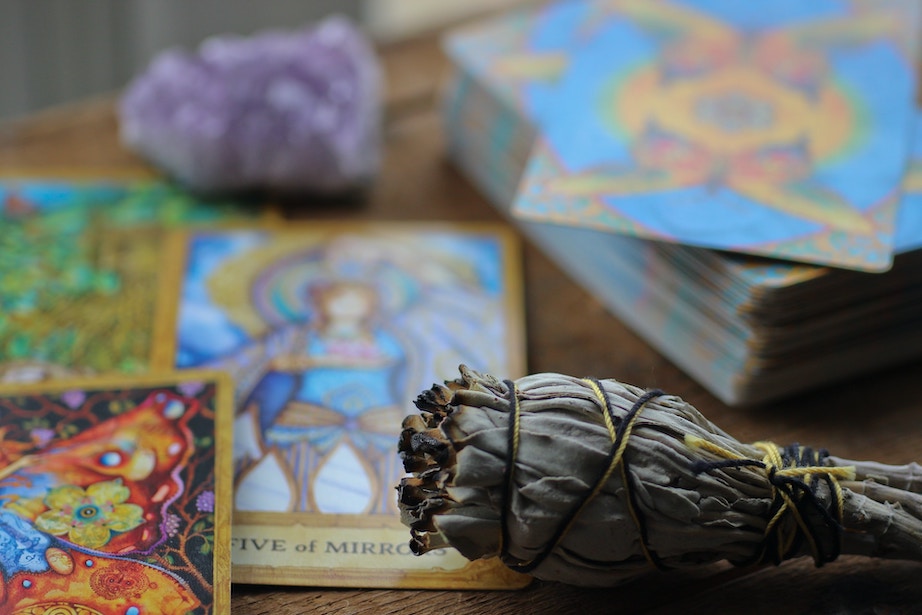
Reality: While the Rider-Waite is undoubtedly foundational, numerous decks resonate with different individuals. From the ethereal images of the Shadowscapes Tarot to the modern and inclusive depiction in the Modern Witch Tarot, there’s a deck for everyone.

6. The Role of the Querent: Passive Receiver or Active Participant?

Many believe that during a tarot reading, the querent merely sits back and listens. This passive perspective misses the profound interactive experience that tarot can provide.

Myth: The querent’s only job is to shuffle and listen.

Reality: The best tarot readings are a dialogue. 

A querent’s reactions, insights, and reflections can shape the direction of a reading, making it more personalized and relevant.

7. The Spread Spectrum: Is Bigger Always Better?

For many, the Celtic Cross, a ten-card spread, is the gold standard of tarot readings. But in reality, tarot spreads can range from a single card to an elaborate layout, each serving a unique purpose.

Myth: Complex spreads yield deeper insights.

Reality: The depth of a reading isn’t determined by the number of cards but by the clarity of the question and the skill of the reader. Sometimes, a single-card pull can provide a profound revelation.

8. Tarot’s Modern Revival: Ancient Tool or Contemporary Craze?

With the rise of technology, tarot has found a new platform. Apps, online readings, and virtual tarot communities have transformed the way we engage with these ancient cards.

Myth: Digital tarot readings aren’t as accurate as in-person readings.

Reality: Tarot’s essence lies in its symbolism and interpretation, which can be conveyed digitally. 

While some may prefer the tactile experience of physical cards, online readings offer accessibility and convenience, broadening tarot’s reach.

Conclusion

Tarot card readings, with their rich history and symbolic depth, offer a unique avenue for introspection and guidance. But as with any tool, understanding yes or no tarot card reading, its proper use and setting realistic expectations is crucial. By distinguishing between myths and realities, we can appreciate tarot for what it truly is: a blend of art, intuition, and personal reflection.

Photo by Kayla Maurais on Unsplash

Share This Post:

Bluesky Icon Bluesky
Facebook

Picture two drivers rear-ended in identical low-speed crashes. One walks away with a sore neck that fades in a week. The other, who had back surgery years earlier, ends up needing another operation. Same crash,…

AI glasses aren’t exactly a small purchase. You can easily spend $400 or more on a pair, and that’s before adding prescription lenses or other extras. Meta has offered its own-brand glasses starting at $299,…

A car crash can leave you focused on visible damage: the dented bumper, the broken glass, the obvious bruises. Brain injuries often work differently. Symptoms can appear slowly, feel confusing, and get dismissed as stress…

Pregnancy brings excitement, anticipation, and plenty of questions. While many concerns focus on the baby’s health, others involve understanding biological parentage or finding out which testing options are available before birth. These questions can feel…

Managing money becomes more challenging when your income is not the same every month. Freelancers, independent contractors, commission-based workers, seasonal employees, and small business owners may earn more during certain months and considerably less during…

Every dispatch morning begins the same way: hundreds of orders, a finite fleet, and narrow delivery windows. A multi route planner converts that scattered demand into sequenced, balanced routes that drivers can actually execute. It…

The Strange Legal Rule That Says You Must Take an Accident Victim as You Find Them

Picture two drivers rear-ended in identical low-speed crashes. One walks away with a sore neck that fades in a week. The other, who had back surgery years earlier, ends up needing another operation. Same crash, same force, wildly different consequences. The difference lies elsewhere. It seems natural to think the second driver’s prior surgery should shrink the responsibility of whoever caused the crash. After all, a healthier person might have been fine. But the law

read more

How to Budget for AI Glasses Without Cutting Into Your Savings

AI glasses aren’t exactly a small purchase. You can easily spend $400 or more on a pair, and that’s before adding prescription lenses or other extras. Meta has offered its own-brand glasses starting at $299, with Ray-Ban Meta frames starting at $379 and Oakley Meta HSTN models at $399. At those prices, it’s worth doing some planning rather than buying a pair simply because you’ve seen a good demonstration or found an attractive offer. The

read more

What You Should Actually Do After a Car Accident if a Brain Injury Might Be Involved

A car crash can leave you focused on visible damage: the dented bumper, the broken glass, the obvious bruises. Brain injuries often work differently. Symptoms can appear slowly, feel confusing, and get dismissed as stress or shock. If you’re trying to figure out what matters in the hours, days, and weeks after a collision, you need practical steps that protect both your health and your legal options, especially if the crash happened in a large,

read more

What Happens When Your Home Gets a Second First Impression?

There’s a house on the block that everyone used to drive right past. Faded siding, a few warped boards, colors that looked a little tired. Then one month, the crews show up. A few weeks later, the same house looks so different that neighbors slow down to stare. It’s the kind of change that stops people mid-walk. Nothing about the floor plan changed. The kitchen is the same, the bedrooms are the same, and the

read more
You've loaded all available articles in this category