Streamed live under the aegis of the 92nd Street Y
Tonight host Louis Rosen gives us a taste of 1970 albums from singer/songwriters Randy Newman and Neil Young, both tenaciously idiosyncratic artists.
Randy Newman
Randy Newman’s gravely southern-style vocals and music influenced by New Orleans blues (Newman lived there as a child), Americana, and the 1920s remain singular throughout his career. He often writes about unusual characters/misfits in songs whose melodies are incongruous with lyrics. Rosen compares the approach to that of Brecht/Weill whose darkest humor could be carried by the most genial tunes.
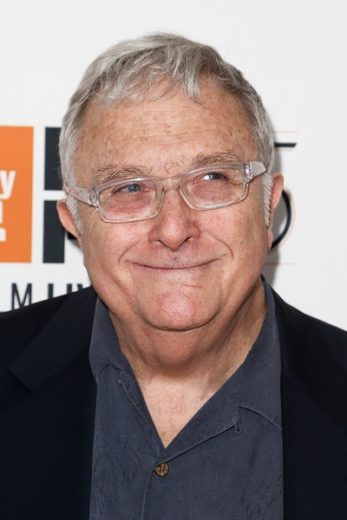
Two of the most important things to happen to Newman, the host begins, are: one, having been born to a family of movie-scoring royalty – three uncles composed film scores, one headed MGM’s music department; and, two, meeting Lenny Waronker when the boys were toddlers. Though Newman would spend the first part of his career (after UCLA) as a songwriter, then singer/songwriter, he turned to the “family business” in the 1980s. Waronker worked for Liberty Music, giving his friend his first publishing deal, then led A&R at Warner Brothers Music.
Newman wrote songs covered by dozens of vocalists. His first album, Randy Newman, never got traction. “Its orchestral arrangements didn’t work well, especially with his voice,” Rosen notes, “but, as I’ve said before, this was a time when record companies looked at select performers as long term investments. In 1970, Twelve Songs established him with the critics, but also sold very little.” A few months later, ping-pong buddy Harry Nilsson released Nilsson Sings Newman. Also not a commercial success, it nonetheless won “record of the year” from Stereo Magazine.
His record company encouraged Newman to do club dates. Playing Los Angeles’ Troubadour and New York’s Bitter End, he turned out to be a good live performer. “Lenny decided the Bitter End set was worth recording. It was released as Randy Newman Live and packaged like a demo tape. To my taste, this is when we hear who he is, his stylistic influences. Before we listen, here’s once again a segment from BBC Four. There’s a guitar and drummer, but you get a good sense of Newman.”
We watch and listen to “Mama Told Me Not to Come” which became a huge hit for Three Dog Night. The embodiment of cool, it has a swampy, syncopated, wah-wah blues sound. Rosen calls it “drunken.” Newman’s piano hands are rhythmic and sure, his shoulders hunched. We then listen to some cuts from the live album. “Tickle Me” is an example of what the host refers to as the writer’s adolescent side. To call it simple is an understatement. Dense chord work seems to weigh the lyric down.
“So Long, Dad” has a 1920s sound, its sentiment more somber than the tune: “Just drop by when it’s convenient to/Be sure to call before you do…” “Living Without You” is a song of unrequited love. It barely syncs and doesn’t rhyme but arrives sincere. “Lover’s Prayer” sashays in on honky-tonk piano: “…Don’t send me nobody with glasses/Don’t want no one above me./Don’t Send me nobody takin’ night classes/Send me somebody to love me…” It might be either misogynistic or satire on pseudo-intellectuals.
In a 2017 Rolling Stone interview, Newman had this to say about the melancholy “I Think It’s Gonna Rain Today”: “I have always loved those vanilla-kind of chords, straight-ahead Stephen Foster. And once I had a style, I crystallized it: The music is emotional – even beautiful – and the lyrics are not. The honest truth is the song bothered me because of the darkness – it felt sophomoric, too maudlin.” Rosen comments this seems to be the artist’s natural voice. “Many vocalists ruin the song by making it an anthem and it’s not. It’s extremely moving.” I agree.
According to Newman, “Yellow Man” is “a pinhead view of China.” “Eatin’ rice all day/while the children play …” “Not your typical subject for a soft shoe,” our host remarks.“My Old Kentucky Home” taps into minstrel music and ragtime. Lyrical melody contrasts with what we might identify today as right-wing thoughts in hillbilly vernacular. “Davy the Fat Boy,” is sung, its author says, “by a con man telling the parents of a freak he’ll take care of their son… Most of my narrators have more to like about ’em. But not this one – he is not a good guy.”
“It’s Lonely at the Top” was written for Frank Sinatra who didn’t record it for, I think, obvious reasons. Ol’ Blue Eyes had an image to maintain. It’s a sinuous sound evoking Bob Fosse choreography. From the same Rolling Stone interview Newman explains, “I thought – maybe stupidly – that he would be ready to make fun of that leaning-against-the-lamp-post shit: “Oh, I’m so lonely and miserable and the biggest singer in the world.” Instead, the vocalist was dismissive.
“The next album was Sail Away, then Good Old Boys. After that, Newman would regularly release something between film scoring. The pace slows down with 1998’s “Land of Dreams” then it’s 11 years until “Bad Love,” which Rosen recommends. We’re also told in the host’s opinion, Young’s recent, Dark Matter “has some of his best stuff.” “I have terrific respect for his songwriting, though you can cringe, duck, and sometimes laugh. People often don’t get the joke if it’s about them, but he’s not condescending. He’s kind of putting himself down there with them.”
Neil Young
Canadian Neil Young says that growing up he listened to such as Elvis Presley, Chuck Berry, Little Richard, Fats Domino, and Johnny Cash. The artist began with a ukulele, moved on to banjo and only then picked up a guitar. He played in rock bands and worked folk clubs. “Sugar Mountain,” about lost youth, was written when he could no longer get into a frequented club because he hit 21. Friend Joni Mitchell responded with “The Circle Game.” After touring solo, Young and bassist Bruce Palmer bought a Pontiac hearse and headed for Los Angeles.
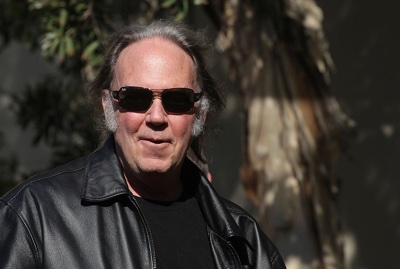
The artist had met Stephen Sills on the folk circuit, but didn’t know how to contact him. As luck would have it, Rosen tells us, Stills stopped to see the hearse on Sunset Boulevard and they found one another. (Well, it’s a good story.) He, Young, Palmer, Richie Furay and Dewey Martin formed Buffalo Springfield becoming the house band at West Hollywood’s Whiskey a Go Go. “Stills and Young had very different guitar styles and were both difficult personalities,” Rosen comments. Young’s exit from the group was unsurprising.
In 1969, Young recorded two albums for Reprise who handled Joni Mitchell. The first album, Neil Young, is heavily produced and very raw. It came on the scene to mixed reviews, even by its creator. The second, Everybody Knows This is Nowhere is credited to Neil Young and Crazy Horse. It was recorded in a mere two weeks.“He was starting to make a name for himself.”
Crosby, Stills, and Nash was the biggest album that year. It represented the second generation of rock: Crosby had come from The Byrds, Stills from Buffalo Springfield, Nash from The Hollies. When Ahmet Ertegun of Atlantic Records suggested they add a balancing musician, Young was asked whether he’d sign on as sideman. He rejected the offer, but countered by agreeing to join if formally made a band member.
Crosby, Stills, Nash, and Young debuted in Chicago, then played Woodstock. “They were so successful so fast, it was only their second live performance.” The artist balked when he saw the festival’s extreme commercialism. He refused to be filmed. “That band was a sad tale of ego success, and drugs,” Rosen notes, “But Neil Young was launched.”
Howard Stern recently asked Young whether he’d play with the group again and about apparent issues with Crosby. “[A reunion] will never happen,” he responded to the first question. “It was fixable, but it didn’t get fixed,” he answered, referring to the second. Young started to record in a home basement studio. He didn’t want to hear anyone else’s music or see them in hallways. “Instead of cinema vérité, I wanted to get into audio vérité,” he declared. After the Goldrush was the result.
“Neil Young brought two really distinctive things to the album,” Rosen says picking up a guitar. “While James Taylor had a folk-based finger style, Young played with a pick like Maybelle Carter. (He demonstrates.) Not only are you strumming, but you’re picking the melody out and pounding at the same time. You can hear him against the wood of the guitar. He also had this singular high voice. There’s a vulnerability about it.”
Once again, we watch a segment of BBC Four. Young sings “Old Man” which would appear on his album, Harvest. Written for the caregiver of a ranch he purchased, the song compares the lives of an old and young man finding much the same. Young described his inspiration: “He gets me up there on the top side of the place…and he says, “Well, tell me, how does a young man like yourself have enough money to buy a place like this?” And I said, “Well, just lucky, Louis, just real lucky.” And he said, “Well, that’s the darnedest thing I ever heard.” And I wrote this song for him.”
“So there are two sides to Young,” Rosen observes, “A hard driving electric side and the feel of After the Goldrush. (We listen.) You can hear in both essential parts of who he was… He’s an artist who practices first thought-best thought. In fact, Young said he didn’t edit his songs.” Sometimes in interviews, he looks back and admits he doesn’t know what he meant. This is apparently true of the chorus to “Tell Me Why:” “Tell me why, tell me why/Is it hard to make/arrangements with yourself,/When you’re old enough to repay/But young enough to sell?”
Randy Newman has said Young’s songs can be superficially artless and still affect you. “I don’t believe I liked After the Goldrush. It doesn’t hold up to analysis, it just sounds good…You can’t put those lyrics on a page and say this guy is great. They lay there like a turd…It’s like a child grabbing what he finds, sort of a primal urge for a better time which may never have existed, but Neil thinks it did.” Rosen muses that he finds Young’s work inexplicably affecting.
“Here’s an overtly country song Young supposedly wrote for Graham Nash after he broke up with Joni Mitchell” introduces “Only Love Can Break Your Heart.” Like a swinging hammock, it’s unfussy and calm. “Dead man lying/By the side of the road/With the daylight in his eyes is an immensely evocative phrase from “Don’t Let It Bring You Down.” “Southern Man” is ostensibly about the Civil Rights movement. Rosen remarks the lyric is unclear. Newman has said “I don’t think he knows enough about it.” “I saw cotton/and I saw black/Tall white mansions/and little shacks…”
“Young started recording in 1967 and he’s still recording. He’s been shrewd in the way he’s kept himself relevant. I have great fondness for his work, but it can be inscrutable for no apparent reason and drive me crazy. Neil Young wanted to be a combination of Bob Dylan and The Rolling Stones.”
LOUIS ROSEN’S NEXT SINGER/SONGWRITER CLASS: will be on George Harrison. Tickets through above link
Wednesday July 8 at 7:15 PM
Photos of Randy Newman and Neil Young, Bigstock