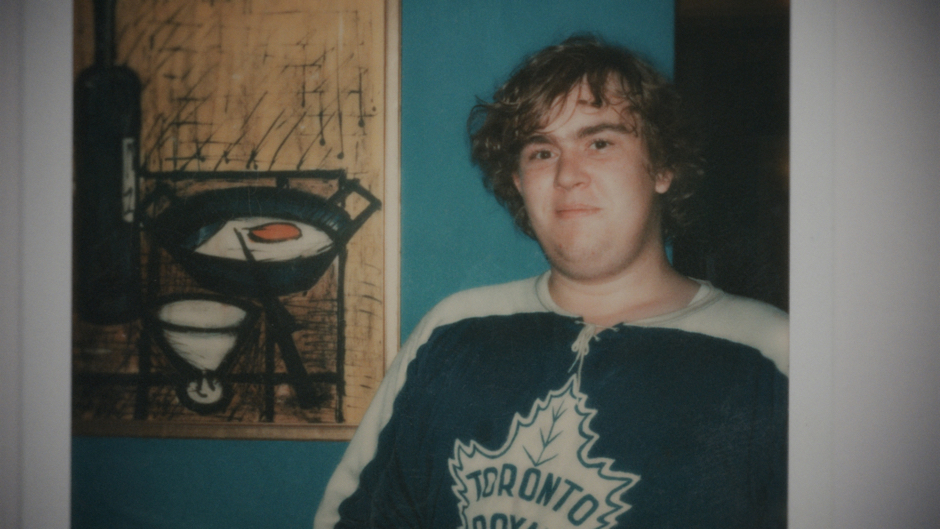
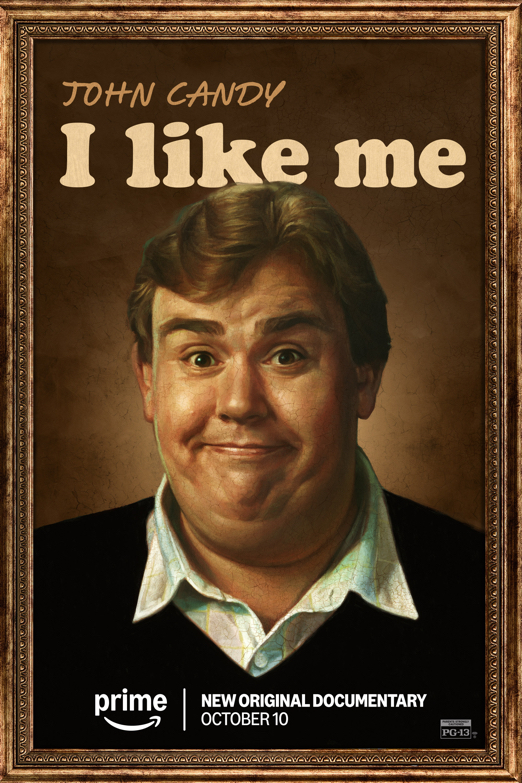
It’s that time of year when certain films are on everyone’s watch list. Two, Home Alone and Uncle Buck, star John Candy, who first rose to fame with SCTV. John Candy fans have their own favorite films: Splash, Stripes, Cool Runnings, Planes, Trains and Automobiles, and Spaceballs, to name a few. People fell in love with his characters, big, teddy-bear like creatures who were funny, goofy, kind, generous, and very human. Turns out what we saw on the screen is what his family, friends, and co-stars saw close up. Bill Murray sums it up at the beginning of this documentary, John Candy: I Like Me, when he says that no one ever said anything bad about the Canadian comedian.
Murray is just one actor to speak so warmly about Candy in this 113 minute film now streaming on Amazon Prime. Some like Murray and Dan Ackroyd knew him well, others like Conan O’Brien had just one encounter with Candy that was transformative. Candy’s wife, Rosemary, and children, Christopher and Jennifer, often get emotional talking about a husband and father who was as warm and loving to them as he was to his two-time co-star Macaulay Culkin, who as a child actor had an abusive relationship with his controlling father. Culkin says that Candy would often check in with him to ask how he was doing.
Candy’s own father, Sidney, died from complications of heart disease when he was 35. John was five and carried that loss throughout his own life. Unfortunately, the pattern would be repeated. While Candy’s characters were known for being overweight and indulging in cigarettes and alcohol, those addictions defined his own life. He also suffered from severe anxiety and would often have panic attacks. He was filming Wagons East in Durango , Mexico, when he died of a heart attack. He was 43.
John was popular in high school where he was treasurer of the student council and a star offensive tackle on the football team. He actually hoped to play professional football, but a serious knee accident made that impossible. The backup plan was acting, which he began doing while enrolled in Centennial College in Toronto. After taking on small parts in local productions, Candy joined the Toronto branch of Chicago’s Second City in 1972. His popularity began to grow when NBC picked up SCTV, Second City Television, in 1981. He began to appear in other TV shows and then several films, including in 1941, Steven Spielberg ’s comedy where he played a U.S. Army soldier. (He was shocked, he says during an interview, when Spielberg approached him about the part.)
One of Candy’s most memorable roles was as Tom Hanks’ brother in Splash, directed by Ron Howard. Hanks’ character Allen Bauer, falls in love with a mermaid, Madison, played by Daryl Hannah. When Allen hesitates to leave his life on land to be with Madison, Candy’s Freddie, who is having no luck with women, points out how rare it is for two people to truly find love.
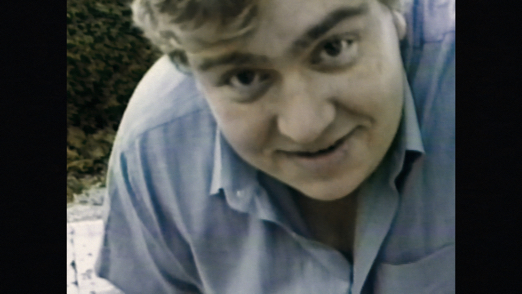
Unlike Freddie, Candy did find love, marrying Rosemary in 1979, and their marriage was admired by many in the acting world where unions often last as long as the credits that run at the end of a film. Once fame hit, John wore that mantle lightly. When asked to make an appearance, he did. Conan O’Brien admits he was shocked when Candy accepted an invitation to speak at Harvard. When O’Brien told Candy, ”I’m thinking I might try comedy.” Candy replied very seriously: “You don’t try comedy. You do it or you don’t do it.” In 1991, Candy, still a football fan, became an owner, along with Wayne Gretzky, of the Canadian Football League’s Toronto Argonauts. He once stood around for three hours to sign autographs for fans.
Candy came up through the ranks with a who’s who of comedians – besides Ackroyd, Eugene Levy, Andrea Martin, Martin Short, and Catherine O’Hara, who delivered one of the beautiful eulogies during Candy’s funeral mass at St. Martin of Tours Catholic Church in Los Angeles. Candy was a practicing Catholic all his life.
For viewers, there’s often a disconnect when watching a film, trying to reconcile the actor who may be playing a hero, with the real life person whose exploits may be splashed across Page Six in the New York Post. Candy’s physical appearance may have dictated the roles he was offered and he was never going to become a Hollywood heartthrob. But what we saw on the screen was the John Candy those around him saw every day. As legacies go, that’s pretty amazing.
Photos: Photo Credit: Prime Video © Amazon Content Services LLC