Based in part on a Shady Ladies lecture by Edith de Belleville and Andrew Lear
“People say French cooking started with Italians- when French girls married into the Medici family,” begins Edith de Belleville. “I disagree. The French did more than create recipes (and cookbooks), they built an entire culture around eating. Religion in France is not Catholicism, it’s food.”

Though there was gastronomy (the practice or art of choosing, cooking, and eating good food) in the Middle Ages, it was reserved for the rich. In the court of the Valois Kings, Guillaume Tirel, known as Taillevent began as enfant de cuisine (kitchen boy), eventually rising to head chef with a career that spanned 66 years. Considered one of the first true professionals, the chef wrote Le Viandier, one of the first published recipe collections. Heavy spices, salt, and honey were used even in wine (imbibed warm) to season and preserve. Foods were smoked, brined, and dried. Only the very rich ate meat. Bread was paramount to all classes and often consumed three times a day.
During the reign of Louis XIV, Pierre Francois de la Varenne (1618-1678) wrote Le Cuisinier françois which includes the first known reference to ‘roux’ (a smooth paste, made from flour fried in fat, added to sauces, soups or gravy to make them thick and rich.) A book on pastry followed introducing pies and turnovers as individual deserts. He invented oeufs a la neige (small poached meringues floating in a custard sauce), mille feuille (crisp layers of puff pastry filled with custard pastry cream and iced), and boeuf a la mode (browned tough cuts of beef braised in herb infused red wine and tomatoes) selling 250,000 copies of his book which was much translated. Food was used to show sophistication, to illustrate the French art of living.
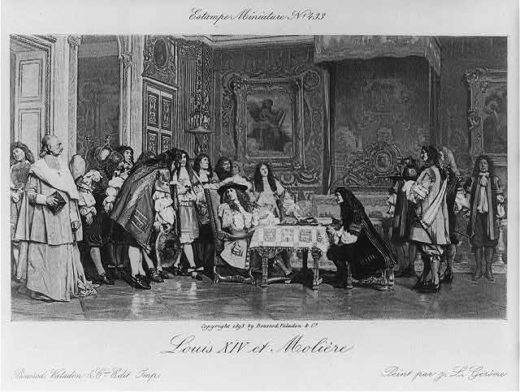
Louis XIV began importing less and working with local, seasonal foods and seasonings. Formerly a lawyer, Jean-Baptiste La Quintinie created “The King’s Vegetable Garden” near Versailles providing the court with several tons of vegetables and fruits every year. He cultivated techniques for off-season production – strawberries at the end of March, asparagus in winter and lettuce in December. Apparently Louis’ favorite was green peas. Women even snacked on these after a night out.
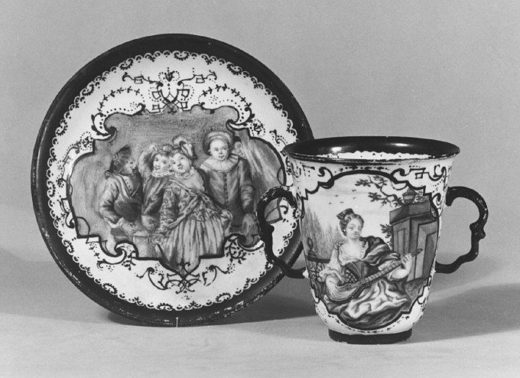
The first coffee in France arrived in 1644 and was immediately planted in Paris’s Jardin des Plantes. Chocolate came from Mexico (where they even put it on chicken), but only until the 19th century was only turned into a beverage. Anne Autriche, who married Louis XIII, apocryphally arrived with a suitcase filled with cocoa. One cup cost the equivalent of a week’s wages. Porcelain services were made exclusively for the extravagant treat. Before this, breakfast often consisted of bread dipped in wine.
Francois Vatel (1631-1671) was the maître d’hôtel at Chantilly Palace. Responsible for an extravagant banquet for 2,000 people hosted in honor of Louis XIV by the Grand Conde in 1671, we’re told he committed suicide because the fish didn’t show up on time. In the 17th and 18th century, Catholics were not allowed to eat meat, cream, or eggs, 150 days a year. Fish were vital. The entertaining film Vatel with Gerard Depardieu, Tim Roth, and Uma Thurman shows edible opulence of the era.
Francois Massialot, chef de cuisine to a number of wealthy, powerful men, wrote what became several volumes of one cookbook and then another, alphabetizing his recipes. He’s credited with inventing creme brulee (a dessert of custard topped with caramelized sugar), putting chocolate in cake, and writing about marinades (the process of soaking foods in seasoned, often acidic liquid before cooking)-separately for poultry and fish. Translated into English as The Court and Country Cook, Le Cuisinier roïal et bourgeois was used by professional chefs for decades.
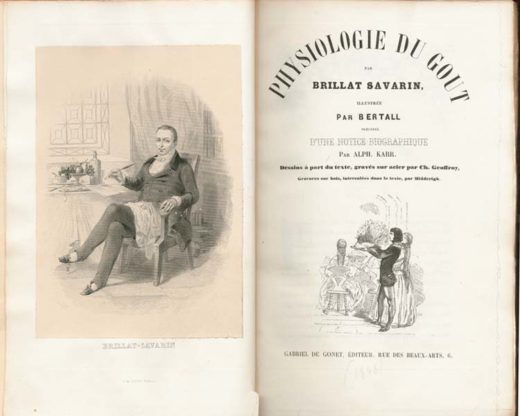
In the 18th century, the art of conversation during a meal was almost as important as the food. Everyone spoke French. Even Italian Casanova wrote his memoir in that language. Table settings gained prominence. Sittings extended. Lawyer/judge/ foodie Jean-Anthelme Brillat-Savarin (1755-1826) wrote Physiologie du Gout. Savarin considered starch, sugar and white flour to be the cause of obesity and suggested a protein rich diet.
Jean-Francois de Troyes’ 1735 Oyster Lunch is one of the first instances one sees champagne at an ostensibly midday meal. The men are looking up at a flying cork. There are only men because oysters are considered an aphrodisiac. Louis liked the bivalves so much he declared no one could indulge from April to October while they reproduced.

Cafes serving coffee, tea, chocolate, liqueurs, ice cream and confiture are thought to have started in 1689; Boullions in 1855, when a Parisian butcher served bouillon with a hunk of meat in it to local workers at the market. At the latter, classic French dishes were offered cheaply in massive rooms at family style tables. Taverne Anglaise, the first luxury restaurant (at the Palais Royal), had linen tablecloths, chandeliers, trained waiters and menus with successive courses= service a la russe, which arrived with visiting Russians unimpressed by bragging-right tables that held every aspect of a meal at once.
In the first years of the Napoleonic Wars, Napoleon offered a reward for anyone who could invent a cheap, effective way to keep food fresh. He was thinking of the army, not aristocrats. Confectioner Nicolas Appert the “father of Food Science” developed a way to seal food in thick glass jars by making them airtight with cork and sealing wax, then placed in boiling water. It would be 50 years before Louis Pasteur’s work involved microbes and food spoilage. War ended before the process could be perfected. Meanwhile Josephine Bonaparte decided to set two glasses, one for wine, one for water.
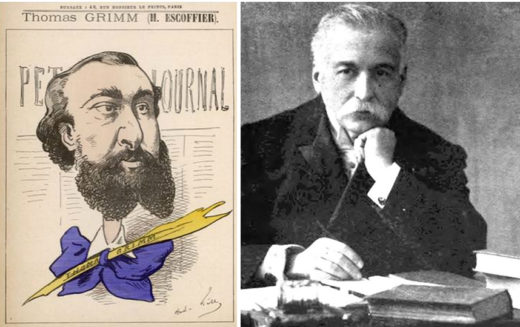
Auguste Escoffier (1846-1935) popularized and updated French cooking methods, elevating the profession- requiring decorum, discipline and cleanliness in kitchens. He authored Le Guide Culinaire, still used as a guide and reference. The volume deemphasized the use of heavy sauces and leaned toward lighter fare. With Cesar Ritz, Escoffier opened elegant restaurants in London and Paris. In 1900, the international Exposition in Paris brought cars and the very first Michelin Guide to eateries. Brasseries, where one could dine casually any hour of the day, became popular…
De Belleville recommends three other films about cooking and eating: L’Aile de la Cuisse, the Danish Babette’s Feast, and Haute Cuisine.
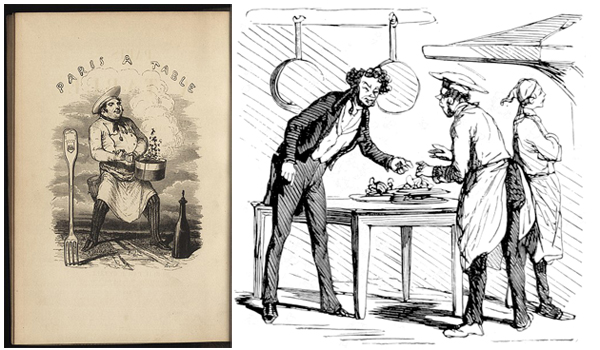
Opening- Left: Paris à table by Eugene Biffault 1846 (Flickr API: Public Domain) Right: Cham Charivari 1862 Lorsque vous avez dîné en ville, n’allez pas dans la cuisine après le repas pour demander à emporter les restes. (Public Domain)
Coming Up NEXT: Women Artists of Modern New York: https://www.eventbrite.com/e/299993046277
Kiki de Montparnasse, the Wild Muse of the 1920s: https://www.eventbrite.com/e/310235862817AND
AND A LIVE TOUR IN PARIS this summer https://shadyladiestours.com/shady-ladies-of-paris/