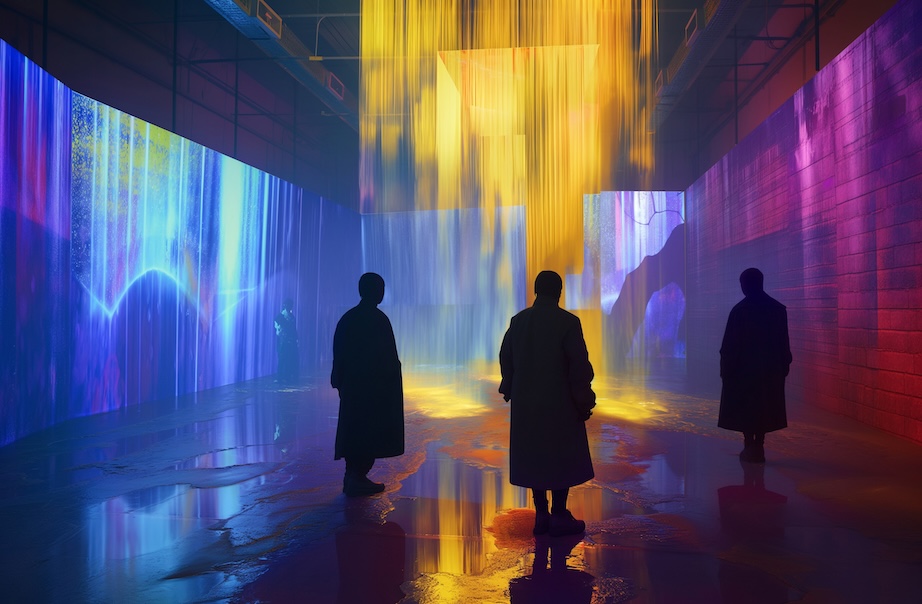
Art is no longer limited to the serene corridors of museums or the glass-enclosed paintings on display. Around the globe, immersive installations are redefining destination selection, making the act of traveling an interactive experience rather than an observational one. Rather than organizing their trips based solely on the presence of monuments, many tourists are now creating full travel plans based on immersive artistic experiences that stimulate their senses and even require movement. This shift is redefining what it means to “see” art, while also influencing where and why people travel.
Sensory Immersion Redefining Destinations
These kinds of immersive exhibits emphasize bodily involvement, whereby the visitor is encouraged to walk around spaces where many senses are simultaneously stimulated. From light tunnels and sound-sensitive rooms to aromatic atmospheres, people can now become more actively involved in the experience, as opposed to passively observing the artwork. Consequently, locations that offer such installations cease to be mere cultural experiences but become travel destinations per se. Cities are increasingly being chosen because of the opportunities for entering rather than looking at art. Moreover, the change in sensory input leads to a different way of remembering one’s travels. Experiences become emotionally charged instead of simply visual.
Social Media-Driven Itineraries
Visual storytelling platforms have greatly impacted the way experiential arts reach people. Tourists find out about the installations through the short clips or the picture series that feature them and go ahead to plan trips based on the experience. This trend has developed a cycle in which the installation attracts tourists, and they document their experience, leading to even greater popularity and visits from other tourists. It has become necessary for cities and artists to ensure that their installations are visually appealing because they will be viewed online and may attract tourism. This process has also reduced the time between finding out about an experience and traveling to visit it.
Immersive Art Culture and Destination Appeal
Cities like Miami have been able to develop into artistic centers where large installations are built to create interactive exhibitions that engage people throughout the entire year. This city uses its unique environment, which includes the ocean, to build interesting spatial stories through its artistic installations. A growing number of visitors now plan entire trips around immersive art experiences, with many choosing to visit Superblue to experience stunning immersive art by world-renowned artists. This type of attraction has helped position Miami as a leading destination where art, entertainment, and travel converge seamlessly. The city’s cultural landscape continues to expand as new installations and creative hubs emerge. Seasonal events further reinforce its reputation as a place where artistic experimentation thrives.
Museums Becoming Interactive Environments
Conventional museums are shifting towards becoming interactive learning centers. As opposed to fixed exhibitions, most modern museums have started adopting technologies such as digital projection and interactive displays. This enables the visitor to affect the artwork directly by controlling its color, sound, or configuration depending on their movements. The effect of these changes is to turn the visit to a museum into an interactive process. This aspect also increases the likelihood of revisiting the museums since each visit presents something different from previous ones. Returning guests often discover new layers of interaction that were not visible before.
Pop-Up Installations Shaping Limited-Time Travel
Exhibition tours have added an element of urgency in relation to travel. Exhibition tours can be set up in a warehouse, an open public square or even in renovated buildings on a temporary basis. Visitors will be motivated by the idea of visiting the tour before it comes to an end. The cities that organize these tours usually experience an increase in the number of tourists because people combine their interest in art with other activities, such as eating and entertainment, while the tour is going on. The limited availability also increases emotional impact, as visitors feel part of a fleeting cultural moment. The urgency created by these tours acts as motivation for people to travel.
Technology Expanding the Boundaries of Artistic Travel
Progress made in the areas of projection mapping, augmented reality, and virtual reality allows for more possibilities within the realm of installations. The artist does not need to be concerned with material limitations and can build an ever-changing environment where the audience can interact. It has become possible for travelers to venture into a digital realm where physical architecture is intertwined with virtual components. Technology has redefined the very idea of traveling, making it possible to encounter several artistic realities within one destination. The fact that such technologies are becoming easier to access will also enable smaller creative groups to develop their own installations on a large scale.
Experiential art installations are revolutionizing the travel experience by making it a carefully crafted experience of involvement and discovery rather than ticking off sites. As the worlds of sensory design, digital culture, and transient exhibitions develop further, visitors are becoming attracted to places that offer not only viewing but also participation and immersion. Art is becoming a destination in itself.
Contributed posts are advertisements written by third parties who have paid Woman Around Town for publication.