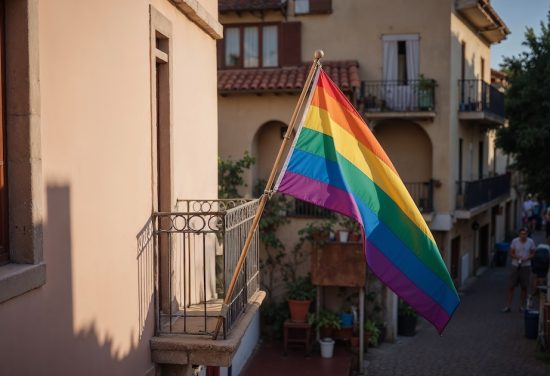


A 2022 Center for American Progress survey found LGBTQ+ adults are more than twice as likely as non-LGBTQ+ adults to report experiencing discrimination in housing situations. A landlord who won’t rent to you because you’re gay or transgender may be violating federal law, state law, both, or neither, depending on where you live.
A landlord who rents to you but neglects necessary repairs has a separate set of obligations that exist in every state, regardless of local nondiscrimination protections. A clear sense of where your rights start and stop puts you in a much better position when a landlord acts in bad faith, whether that means refusing to rent outright or selectively enforcing lease terms once you’re in the unit.
Federal Protections and Where They Stop
The Fair Housing Act has prohibited housing discrimination based on race, color, national origin, religion, sex, disability, and familial status since 1968, with sexual orientation and gender identity absent from the original text.
A 2021 executive order and subsequent HUD guidance extended Fair Housing Act protections to LGBTQ+ renters on the basis that discrimination against gay or transgender people constitutes sex discrimination, consistent with the Supreme Court’s 2020 reasoning in Bostock v. Clayton County.
HUD’s position has changed across presidential administrations, which affects how actively federal protections get enforced at any given time. Submitting a complaint with HUD is an available option when you experience discrimination, but the practical outcome depends heavily on current enforcement priorities and whether your state has its own independent protections in place. Federal coverage establishes a baseline, and for renters in states with strong nondiscrimination laws, state law tends to be the more reliable avenue.
State and Local Protections Vary Dramatically
Dozens of states have explicit nondiscrimination protections covering sexual orientation and gender identity in housing, and the strength of those protections varies significantly. In states without them, LGBTQ+ renters have to rely on the federal baseline, which is subject to enforcement variability across administrations.
City and county ordinances add another layer in several parts of the country, and a renter in a city with strong local protections may have significantly more recourse than a renter elsewhere in the same state. The nondiscrimination tracker on this site breaks down protections by state and is a practical starting point for identifying what applies where you live.
Discrimination That’s Harder to Name
Discrimination doesn’t always arrive as an outright refusal. LGBTQ+ renters regularly encounter subtler forms that are harder to document and easier for landlords to deny:
- Being told a unit is no longer available after a landlord learns of a renter’s identity
- Higher security deposit requirements applied selectively
- Lease terms enforced more strictly for LGBTQ+ tenants than for others in the building
- Harassment through noise complaints or lease violation notices used as pressure to vacate
- Refusal to renew a lease without a stated reason in states that allow no-cause nonrenewal
- Maintenance requests ignored or delayed as a form of retaliation
Any of them can constitute unlawful discrimination depending on where you live and the evidence available. In states with explicit protections, a documented record of selective treatment can support a discrimination case even when no landlord has made an explicitly discriminatory statement. Discrimination cases that succeed without a “smoking gun” typically do so because the tenant kept contemporaneous records (dates, communications, and observations about how other tenants were treated) that together tell a clear story.
A Landlord’s Obligation to Maintain the Property
Every state recognizes an implied warranty of habitability in residential leases, which means a landlord is required to maintain the property in a livable condition regardless of what the lease says or how long a tenant has been in the unit. Conditions that most states recognize as habitability breaches are:
- No heat or hot water
- Pest or rodent infestation
- Mold or water intrusion that poses a health risk
- Broken locks or compromised entry security
- Structural hazards like damaged stairs, flooring, or ceilings
- Non-functioning electrical or plumbing systems
A landlord who receives written notice of a habitability problem and fails to address it within a reasonable timeframe is in breach. How long is reasonable depends on the severity of the condition, and a broken heater in winter carries a much shorter acceptable response window than a cosmetic repair. Most states allow tenants to pursue rent withholding, repair-and-deduct, or lease termination if a landlord fails to act.
Landlord Negligence and Injury Liability
When a hazardous condition in a rental property causes an injury (a fall on a broken stairwell, a ceiling collapse from unaddressed water damage), a landlord’s failure to act can go beyond a habitability breach and create liability for the injury itself.
Premises liability law covers situations where a property owner’s negligence in maintaining a space leads to physical harm to the people living in or passing through it. If you’ve been hurt in a rental property and the hazard was known to your landlord before the injury, speaking with a premises liability attorney costs nothing upfront, and most work on contingency, which means no fee unless they recover compensation on your behalf.
Creating a Record From the Start
When dealing with a landlord who discriminates or refuses to maintain the property, a documented record is what separates a case you can pursue from one you can’t. Written communication carries more weight than verbal exchanges, and creating that record starts from the moment a problem arises. From the start of a tenancy, consistent documentation makes a significant difference if a dispute arises later:
- Send all complaints and repair requests in writing (by email or certified mail) and keep copies of everything sent and received
- After any verbal conversation with your landlord or property manager, write down the date, time, and substance of what was discussed
- Photograph any condition you report (hazards, damage, or access concerns) with a timestamp before any repair is made
- Keep copies of your original lease, any amendments, and all landlord communications throughout your tenancy
- If you observe different treatment compared to other tenants in the building, document the specifics in writing while the details are clear
In practice, documented complaints tend to get taken more seriously at every stage, from a landlord’s initial response to any formal proceeding that follows. A discrimination case built on contemporaneous written records and dated photographs is harder to dismiss than one that relies on a tenant’s account alone.
Finding the Right Help
When a landlord’s conduct crosses from difficult to unlawful, several avenues exist depending on the severity of the situation and what outcome you’re seeking.
HUD and State Civil Rights Agencies
Submitting a complaint with HUD is an option for discrimination that falls under the Fair Housing Act. HUD will investigate and can pursue remedies including monetary damages and injunctive relief, though the process can be lengthy and outcomes depend on active enforcement priorities. State civil rights agencies run parallel processes for state-law violations, and in states with strong independent protections, the state process may be more direct and more reliably enforced.
Fair Housing Organizations
Local fair housing organizations provide free counseling, help assess whether a discrimination case is viable, and can assist in submitting complaints or connecting renters with attorneys. Searching the National Fair Housing Alliance’s directory is a practical starting point for finding an organization in your area. Fair housing organizations are particularly useful in the earlier stages; assessing whether what happened constitutes discrimination and identifying the right avenue for addressing it.
Attorneys and Advocacy Organizations
A housing attorney can assess the strength of a case, advise on strategy, and represent you in proceedings that a fair housing organization isn’t equipped to handle. HUD complaints and agency processes can result in policy changes or civil penalties, but a private lawsuit under the Fair Housing Act can result in direct monetary damages paid to you.
For renters who want personal accountability and compensation, not just a formal finding, working with an attorney is the more direct path. Contingency arrangements and sliding-scale fees are available through private attorneys, and renters who qualify based on income can access free representation through tenant advocacy nonprofits and law school clinics.
Contributed posts are advertisements written by third parties who have paid Woman Around Town for publication.