For more than 150 years, dental amalgam was the default choice for restoring decayed teeth — durable, affordable, and easy to place. Then composite resin changed the conversation entirely. Today, with the FDA issuing updated guidance in 2020 recommending that certain high-risk groups avoid amalgam fillings when possible, patients increasingly walk into their dentist’s office with questions their grandparents never thought to ask. The choice between a silver filling and a tooth-colored one involves more than aesthetics. It touches on material science, clinical technique, personal health considerations, and even environmental policy.
What makes this decision genuinely complicated is that neither material is universally superior. Each has real strengths and real limitations — and the right answer often depends on factors specific to the individual tooth, the patient’s bite, and the dentist’s skill set. A filling placed on a back molar in someone who grinds their teeth presents a very different set of demands than a small cavity on a visible front tooth. Understanding the distinctions between these two materials at a practical level helps patients have more informed conversations with their providers — and make choices they won’t regret five or ten years down the line.
—
What Are Composite and Amalgam Fillings Made Of?
The mechanical behavior of any filling material starts with its chemistry, and dental amalgam and composite resin could hardly be more different at the molecular level.
Dental amalgam is a metal alloy formed by mixing liquid mercury with a powdered combination of silver, tin, copper, and sometimes zinc. Mercury makes up roughly 50% of the final mixture by weight and serves a critical functional role — it reacts with the other metals to create a workable paste that hardens into a dimensionally stable, load-bearing solid. The resulting material is dense, strong, and corrosion-resistant, though it doesn’t bond to tooth structure chemically. Instead, it achieves retention through mechanical means: the dentist cuts the cavity preparation into a specific shape — wider at the base than the opening — so the hardened amalgam is physically locked in place. That requirement for undercuts means more healthy tooth tissue must be removed than the cavity itself actually requires.
Composite resin, by contrast, is a polymer-based material consisting of a methacrylate resin matrix (most commonly bis-GMA or UDMA) reinforced with inorganic filler particles — typically silica, quartz, or ceramic compounds. The filler-to-resin ratio and the size of those particles directly influence the material’s strength, polishability, and wear behavior. Traditional composites used relatively coarse filler particles, which limited their performance in high-stress posterior locations. Modern formulations now incorporate nano-sized particles (as small as 5–75 nanometers) that pack more densely into the matrix, producing a material that achieves significantly better surface smoothness and wear resistance than earlier generations.
Unlike amalgam, composite bonds directly to tooth enamel and dentin through an adhesive bonding system that uses acid etching and primer resins. That chemical adhesion is fundamental — it changes not only how the restoration holds, but how much tooth structure needs to be removed to place it, a distinction with real clinical consequences explored in later sections.
—
How Do Composite and Amalgam Fillings Compare in Durability?
Durability is often the deciding factor in clinical settings, and the honest answer is that amalgam has the edge — but that gap is narrowing.
Long-term clinical studies have consistently shown that amalgam restorations in posterior teeth survive longer on average than composite fillings. Research published in the *Journal of Dental Research* has tracked both materials over multi-decade periods, finding that amalgam restorations placed in molars and premolars demonstrate lower annual failure rates under conditions of high occlusal stress. Amalgam’s mechanical properties — particularly its compressive strength and resistance to fracture under repetitive loading — make it well-suited for the posterior region of the mouth, where biting forces can exceed 200 pounds per square inch.
Composite restorations have historically been more vulnerable to wear, microleakage at the margins, and polymerization shrinkage — a phenomenon where the resin contracts slightly as it sets, which can create microscopic gaps between the filling and the cavity wall. Those gaps become pathways for bacteria and saliva, which contributes to secondary decay. The degree of shrinkage depends on the volume of composite placed and the technique used to cure it, which is part of why composite placement is considered significantly more technique-sensitive than amalgam.
That said, current-generation composites — especially those using nano-filler technology and newer bulk-fill formulations designed to reduce shrinkage stress — have meaningfully closed the performance gap. Bulk-fill composites can be placed in thicker increments (up to 4mm rather than the traditional 2mm layering technique), which reduces chair time and can improve adaptation to cavity walls when used correctly. For small-to-medium cavities in areas not subjected to extreme bite forces, modern composite restorations routinely achieve clinically acceptable longevity. For large restorations in heavy-load areas, amalgam or indirect ceramic restorations often remain the more predictable choice.
—
What Are the Aesthetic and Tooth Preservation Benefits of Composite?
How Composite Fillings Improve Appearance
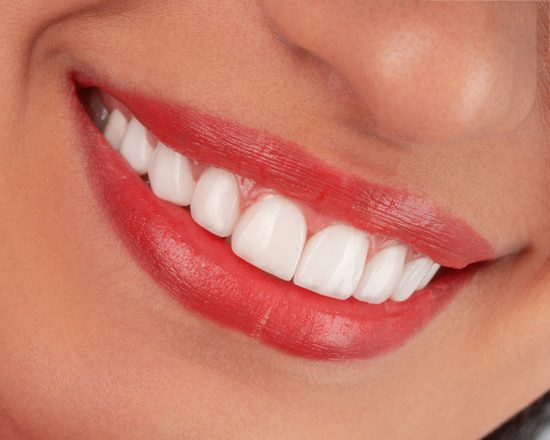
The most immediately obvious advantage of composite resin is visible: it matches the color of surrounding tooth structure. Composite comes in a wide range of shades that can be blended to replicate not just the base color of a tooth but its translucency and surface texture. For cavities on anterior teeth — incisors and canines — this makes composite the near-universal default. Even a small amalgam filling on a front tooth creates a noticeable gray shadow, and over time, amalgam can cause discoloration of the surrounding enamel.
Composite does stain over time, particularly when patients consume coffee, red wine, or tobacco regularly. The surface resin is somewhat more porous than enamel and can absorb chromogens with sustained exposure. Polishing can restore some surface luster, and the outer resin layer can be selectively refreshed without replacing the entire restoration — a meaningful maintenance advantage compared to amalgam. For patients exploring cosmetic dental filling options, composite offers a flexibility that amalgam fundamentally cannot match: shade selection, surface contouring, and the ability to blend seamlessly with natural tooth anatomy all make it the dominant choice in any aesthetically visible area.
How Composite Fillings Preserve More Tooth Structure
Because composite bonds chemically to tooth structure rather than relying on mechanical retention, cavity preparations for composite restorations don’t require the same undercut geometry that amalgam demands. A dentist placing composite can follow the natural outline of the decay more closely, removing only the diseased material and leaving healthy enamel and dentin intact.
This matters more than it might initially seem. Every millimeter of tooth structure preserved keeps the remaining tooth stronger and reduces the probability that it will eventually need more invasive treatment. Teeth that lose large amounts of structure to repeated restorations become progressively more fragile, increasing the risk of cusp fracture or, ultimately, the need for a crown. The minimally invasive philosophy that now guides much of contemporary restorative dentistry — remove only what’s necessary, preserve what isn’t — aligns more naturally with composite than with amalgam.
—
What Are the Health and Environmental Issues Related to These Fillings?
The health conversation around amalgam centers almost entirely on its mercury content, and that conversation is worth approaching with precision rather than alarm.
The mercury in hardened amalgam is not the same as elemental liquid mercury or the methylmercury found in contaminated fish — the form most associated with neurological toxicity. In its set state, amalgam releases only trace amounts of mercury vapor, primarily during chewing, grinding, and temperature changes. For the general population, the FDA and the World Health Organization have historically concluded that those exposure levels are below thresholds associated with harm. However, the FDA’s 2020 updated guidance specifically identified groups for whom amalgam should be avoided when possible: pregnant women, nursing mothers, children under six, and individuals with kidney impairment or mercury hypersensitivity. The concern for these populations isn’t theoretical — it reflects a precautionary stance given the difficulty of establishing safe minimums in developing systems.
Mercury released during amalgam placement, removal, and ultimately from tooth cremation or disposal also represents a genuine environmental load. Dental offices are required by EPA regulations (effective since 2020) to use amalgam separators to capture particles before they enter wastewater systems, but historical disposal practices have contributed to measurable mercury contamination in aquatic environments. Several countries have already moved toward partial or complete phase-outs of dental amalgam under the Minamata Convention on Mercury.
From a sensitivity standpoint, composite and amalgam behave differently. Amalgam conducts temperature rapidly — patients sometimes report heightened sensitivity to hot and cold in teeth with large amalgam restorations, due to the material’s thermal conductivity. Composite is a poorer conductor, which can reduce post-placement thermal sensitivity, though polymerization shrinkage can itself cause transient sensitivity if the bonding procedure isn’t executed carefully. True allergic reactions to amalgam components are rare but documented, primarily to mercury, tin, or copper rather than to silver.
—
How Do Dentists Choose Between Composite and Amalgam Fillings Today?
Most practicing dentists in private settings now place composite as their primary restorative material, a shift driven by patient demand, material improvements, and evolving professional training. But the decision isn’t purely cosmetic or political — experienced clinicians weigh a cluster of clinical factors that determine which material will perform best in a given situation.
Cavity size and location remain primary considerations. Small cavities in visible areas almost always receive composite. Large, multi-surface restorations in heavily loaded posterior teeth present a more complex picture — some dentists still prefer amalgam for its forgiveness under imperfect isolation conditions, while others achieve excellent results with high-viscosity bulk-fill composites or indirect ceramic inlays. Moisture control is a real variable: composite’s adhesive system requires a dry field during placement, and in patients where isolation is difficult (young children, those with high salivary flow, deep subgingival margins), amalgam’s relative tolerance for moisture contamination has practical value.
Technique sensitivity shapes outcomes considerably. A well-placed composite restoration in an ideal environment outperforms a poorly placed one — the incremental layering required to minimize shrinkage stress, proper light-curing intensity and duration, and precise adhesive protocol all influence the final result. Dental programs now train extensively in composite placement, and the quality gap between clinicians has narrowed, but experience still matters.
Nano-filler and bulk-fill advances are gradually removing the last performance arguments for amalgam in routine restorations. As the evidence base for these newer composite formulations matures, the clinical case for amalgam in standard practice continues to narrow — though it hasn’t disappeared entirely. The most important thing a patient can do is ask their dentist not just *what* material they recommend, but *why* — a clinician who can explain the reasoning specific to your tooth, your bite, and your oral health history is offering a genuinely informed recommendation.
Top Pexels photo by Anna Shvets
Contributed posts are advertisements written by third parties who have paid Woman Around Town for publication.