Modern aesthetic treatments offer several non-surgical or minimally invasive options for concerns such as uneven skin tone, textural irregularities, mild skin laxity, unwanted hair and localised body-contouring goals.
However, “non-surgical” does not always mean completely non-invasive. RF microneedling, for example, uses fine needles to penetrate the skin but does not involve surgical incisions or general anaesthesia.
Knowing a treatment’s basic name rarely tells the whole story. These procedures are not interchangeable alternatives to surgery, nor can they guarantee a particular outcome. Results, comfort, downtime and suitability depend on several factors, including:
- the type of energy used;
- the depth at which it is delivered;
- the device’s capabilities;
- the settings selected by the practitioner;
- the patient’s skin type, anatomy and treatment goals; and
- the operator’s qualifications and experience.
Why the Technology Behind a Treatment Matters
Two providers may advertise the same general treatment while using devices with substantially different capabilities.
The technology used can influence treatment depth, comfort, risks and recovery, but outcomes also depend on patient selection, device settings, practitioner skill, technique and individual response. Professional aesthetic platforms vary in their energy-delivery methods, wavelengths, applicators, cooling systems, treatment depths and safety controls.
Consumers do not need to become experts in medical equipment, but they should ask which device will be used, what type of energy it delivers and whether it is intended for their specific concern.
Professional equipment suppliers such as Rejuva Fresh offer technologies that include RF microneedling, fractional lasers, IPL, HIFU and laser hair-removal systems. The availability of a particular technology does not guarantee suitability or results, so the provider should explain the device’s intended use, settings, safety features and relevance to the patient’s skin type and treatment goals.
1. RF Microneedling for Texture and Collagen Remodelling
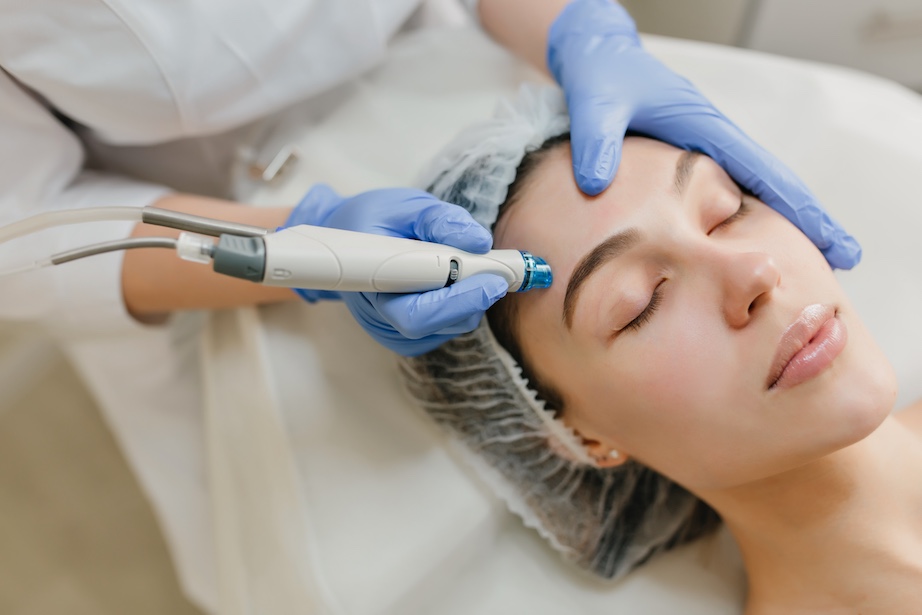
Radiofrequency microneedling combines physical microneedling with RF energy delivered beneath the skin at selected depths.
Providers may use this minimally invasive approach to improve uneven texture, the appearance of acne scars, enlarged-looking pores, fine lines and mild skin laxity. The needles create controlled micro-injuries while RF energy produces localised heating intended to stimulate tissue remodelling.
Results depend heavily on the practitioner selecting appropriate needle depths, energy levels and treatment patterns for the treatment area and patient.
Common short-term effects may include:
- redness;
- swelling;
- sensitivity;
- pinpoint bleeding or marks; and
- temporary discomfort.
More serious complications have also been reported with certain uses of RF microneedling, including burns, scarring, unintended fat loss and nerve injury. Treatment should therefore be performed by an appropriately licensed and trained professional using a device and settings suitable for the area being treated.
RF microneedling may improve the appearance of selected concerns, but it cannot guarantee complete scar removal or permanent skin tightening.
2. Fractional Laser Resurfacing for Sun Damage and Scarring
Fractional laser systems create microscopic treatment zones while leaving areas of surrounding tissue untreated to support healing.
Depending on the device, clinicians may use fractional resurfacing for:
- uneven skin texture;
- fine lines;
- sun-related skin damage;
- selected pigmentation concerns; and
- the appearance of acne scars.
“Fractional laser” is a broad category rather than a single standardised procedure. Treatments generally fall into two groups:
- Non-ablative fractional lasers, which heat or coagulate tissue beneath the surface without removing the outermost layer.
- Ablative fractional lasers, which remove microscopic columns of surface tissue and usually involve more downtime.
Depending on the platform, fractional treatments may use technologies such as 10,600 nm carbon dioxide, 2,940 nm Er:YAG, 1,927 nm thulium or 1,550 nm erbium-glass lasers.
Risks and recovery differ substantially between ablative and non-ablative treatments. Possible complications may include prolonged redness, swelling, pigment changes, infection or scarring. The provider should explain the exact device, wavelength, expected recovery and suitability for the patient’s skin type.
3. IPL and Advanced Light-Based Treatments for Redness and Pigmentation
Intense pulsed light uses a broad spectrum of light rather than a single fixed laser wavelength.
Depending on the device, filters and patient selection, IPL may improve selected concerns associated with photodamage, including:
- visible redness;
- small superficial vessels;
- sun spots;
- uneven pigmentation; and
- general skin discolouration.
The practitioner must select appropriate filters, pulse duration, energy level and cooling for the patient’s skin tone and treatment goal. Some platforms also combine IPL with other technologies, but the purpose and evidence for each component should be explained clearly.
Temporary redness and short-term darkening of treated pigmented spots may occur. Patients may also need to avoid tanning and follow strict pre- and post-treatment sun-protection instructions.
IPL is not appropriate for every pigmentation condition or skin type. Incorrect treatment selection or settings can cause burns, blistering or unwanted pigment changes.
4. HIFU for Focused Non-Surgical Lifting
High-intensity focused ultrasound delivers focused energy to selected tissue depths without surgical incisions.
Depending on the specific device and its authorised indications, focused ultrasound may be used on selected facial, neck or body areas to produce gradual tissue and collagen-remodelling effects.
Some systems use interchangeable cartridges designed to reach different depths. Results generally develop gradually over several weeks or months and are usually subtler than those produced by a surgical facelift.
HIFU may not be suitable for severe skin laxity or every facial anatomy. Possible risks can include:
- pain;
- swelling;
- bruising;
- burns;
- temporary numbness;
- nerve effects; or
- unintended tissue injury.
The practitioner should explain the device’s intended treatment area, expected degree of improvement and potential limitations. Reputable providers should not advertise HIFU as an instant or equivalent replacement for surgical lifting.
5. Electrical or Electromagnetic Muscle Stimulation
Electrical and electromagnetic muscle-stimulation devices induce involuntary muscle contractions using different forms of energy.
Depending on the device’s legally marketed indication, treatment may temporarily improve muscle tone, firmness, strength or visible definition. These procedures are commonly used on areas such as the abdomen or buttocks.
Some platforms combine muscle stimulation with radiofrequency heating. Each component may have a separate intended use, so patients should ask whether the device is intended for:
- muscle stimulation;
- tissue heating;
- temporary circumference reduction;
- fat reduction; or
- another specific outcome.
Muscle-stimulation treatments should not be promoted as substitutes for exercise, nutrition or medical weight management. They are also not interchangeable with fat-freezing, ultrasound or skin-tightening procedures.
6. Advanced Energy-Based Body Contouring
Non-surgical body contouring is a broad category that includes several different technologies. Each has a distinct mechanism, intended purpose and risk profile.
Radiofrequency Treatments
Radiofrequency devices heat targeted tissue. Depending on the platform and indication, they may temporarily improve circumference, cellulite appearance or skin firmness.
Results and risks vary according to the device, treatment area and energy settings. Potential side effects may include redness, swelling, discomfort or burns.
Controlled Cooling
Cryolipolysis uses controlled cooling to damage selected subcutaneous fat cells, which are gradually cleared by the body.
The treatment is intended for localised fatty bulges rather than substantial weight loss. Possible risks include:
- pain;
- numbness;
- swelling;
- cold injury; and
- paradoxical adipose hyperplasia.
Paradoxical adipose hyperplasia is a rare complication in which the treated fatty area enlarges rather than decreases.
Laser-Based Fat Reduction
Laser-based body-contouring systems vary considerably.
Certain devices use low-level light, while others use thermal energy to affect targeted subcutaneous fat. The mechanism, intended outcome and potential risks depend on the individual platform.
The provider should explain whether the device is legally marketed for fat reduction, temporary circumference change, tissue heating or another specific use.
Thermal-Mechanical and Massage-Based Systems
Some platforms combine heat, vacuum, rollers or massage-based mechanisms.
Depending on the device, these treatments may be intended to produce temporary changes in cellulite appearance, circulation, massage or skin texture. They should not be presented as equivalent to permanent fat removal or systemic weight loss.
Patients should understand two important distinctions:
- fat reduction is not the same as muscle toning; and
- localised skin tightening is not the same as weight loss.
7. Multi-Wavelength Diode Laser Hair Removal
Diode laser hair-removal systems target melanin in the hair follicle to produce long-term hair reduction.
Because only a proportion of hair follicles are in the active growth phase at any given time, a course of treatments is usually needed. Laser treatment is intended to reduce hair growth over time rather than guarantee the permanent removal of every hair.
Results depend on factors such as:
- skin tone;
- hair colour and thickness;
- the hair-growth cycle;
- wavelength;
- pulse duration;
- spot size;
- cooling; and
- practitioner technique.
Some multi-wavelength systems combine outputs near 755 nm, 808–810 nm and 1,064 nm, while other devices use a single wavelength. The provider should explain the exact system being used and why it is appropriate for the patient’s skin and hair characteristics.
White, grey, very light blond and some red hairs may respond poorly because they contain less targetable pigment.
Possible risks include burns, blistering, pigment changes, scarring and temporary discomfort, particularly when treatment settings are unsuitable for the patient’s skin type.
How to Match a Treatment to Your Main Concern
| Primary concern | Treatments a provider may discuss |
| Uneven texture or acne scars | RF microneedling, fractional laser |
| Sun spots or visible redness | IPL or other light-based treatments |
| Mild skin laxity | HIFU, radiofrequency |
| Muscle definition | Electrical or electromagnetic muscle stimulation |
| Localised body-contouring goals | Radiofrequency, controlled cooling, selected laser systems |
| Unwanted hair | Diode laser hair removal |
This comparison is for general education rather than a medical recommendation.
Treatment categories are not interchangeable. The most appropriate option depends on the underlying concern, medical history, skin type, medications, treatment area, tolerance for downtime and budget.
A professional consultation should prioritise safety and determine whether the proposed device and procedure are suitable.
Questions to Ask Before Booking a Treatment
Use these questions during a consultation:
- What exact device will be used?
- What type of energy does it deliver?
- Is it cleared, approved or otherwise legally marketed for the proposed treatment and body area?
- Why is this technology suitable for my concern?
- Who will perform the treatment?
- What qualifications and device-specific training do they have?
- What results can I realistically expect?
- What is the expected number of sessions, and how was that estimate determined?
- Which side effects are common?
- What serious complications are possible?
- What downtime should I expect?
- What aftercare will be required?
- Can you show before-and-after results from similar patients treated with the same device?
- How does the clinic manage unexpected reactions or complications?
Popular Does Not Always Mean Appropriate
A treatment’s popularity should not be the main reason for choosing it.
The most suitable option should align the patient’s concern with an appropriate technology, treatment depth, device capability and qualified practitioner. Results are also influenced by medical history, anatomy, skin characteristics and individual response.
Choose a provider who clearly explains the treatment’s mechanism, risks, limitations and expected recovery, and who carefully evaluates whether the procedure is appropriate for you.
Image by lookstudio on Magnific
Contributed posts are advertisements written by third parties who have paid Woman Around Town for publication.