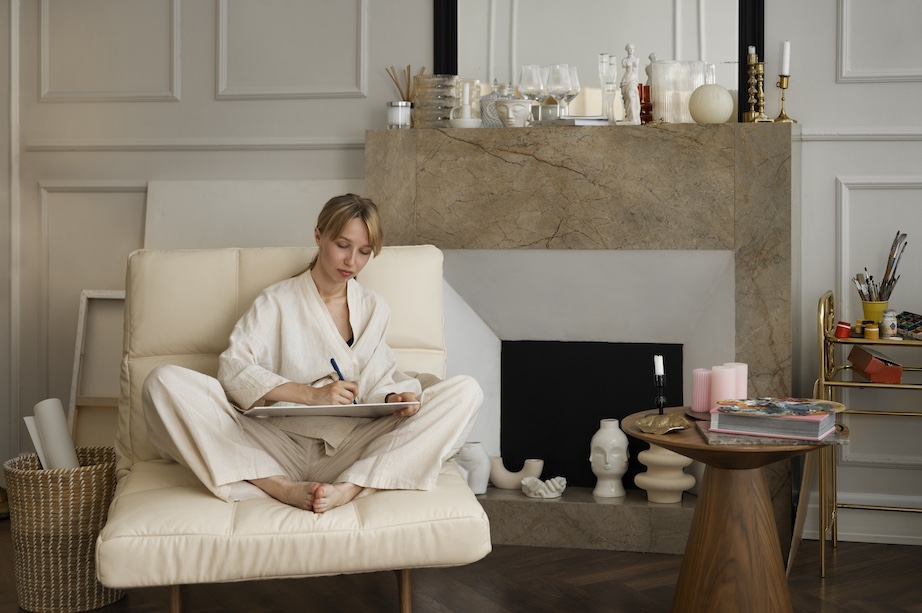
There was a time when self-care meant stepping outside, booking an appointment, planning a day off, or carving out time in an already full schedule. Today, that idea is evolving. More women are rethinking what it means to care for themselves, shifting the focus inward, toward the spaces they already inhabit.
This change is not driven by convenience alone. It reflects a deeper understanding that well-being is not something to be scheduled occasionally, but something to be integrated into everyday life. The home, once primarily associated with routine and responsibility, is becoming a place where restoration is not only possible, but intentional.
Why the Home Matters More Than Ever
Modern life often feels fragmented. Work, social obligations, and digital engagement overlap in ways that make it difficult to fully disconnect. In this context, the importance of a personal, controlled environment becomes clear.
Creating a wellness space at home is not about luxury in the traditional sense. It is about having a place that supports pause, a space where the pace of the outside world does not dictate the experience within it. Even a small corner, when designed thoughtfully, can provide a sense of separation and calm.
This is particularly meaningful for women who balance multiple roles throughout the day. A dedicated space, however modest, offers a way to transition out of those roles and into a more personal state of being.
The Rise of Intentional Design
As the idea of at-home wellness grows, so does the attention paid to how spaces are designed. It is no longer just about aesthetics, but about how a space feels and functions.
Natural materials, soft lighting, and minimal distractions are becoming central elements. These choices are not accidental, they are designed to reduce sensory overload and encourage relaxation. The goal is to create an environment that invites stillness rather than activity.
Within this shift, traditional wellness elements are finding new relevance. For example, incorporating features like a sauna into the home is no longer reserved for luxury properties alone. Many are exploring options through platforms such as https://premiumsaunas.com/, where different styles and configurations make it possible to integrate heat therapy into a variety of living spaces. This approach transforms wellness from something occasional into something consistently accessible.
The Power of Routine
A space alone does not create change; it is how that space is used that matters. This is where routine comes into play. Small, consistent practices, whether it’s a few quiet minutes in the morning or an evening ritual, help turn a physical environment into a meaningful experience.
Routines provide structure, but they also offer predictability. In a world where so much feels uncertain, this predictability can be grounding. It creates a rhythm that supports both mental clarity and emotional balance.
Over time, these moments begin to accumulate. What starts as a small habit becomes a reliable source of restoration, shaping how the rest of the day unfolds.
The Science of Rest and Recovery
The growing emphasis on at-home wellness is supported by a deeper understanding of how rest affects the body and mind. Recovery is not simply about inactivity; it involves processes that help regulate stress, restore energy, and maintain overall health.
According to the Harvard Health Publishing, incorporating regular periods of relaxation and heat exposure, such as sauna use, may support cardiovascular health and promote a sense of well-being. These findings reinforce what many have experienced intuitively, that creating time and space for recovery has tangible benefits.
Understanding this connection helps shift the perception of self-care from indulgence to necessity. It becomes something that supports not only how we feel, but how we function.
Privacy as a Form of Freedom
One of the most compelling aspects of at-home wellness is privacy. Unlike shared or public environments, a personal space allows for complete autonomy. There are no expectations, no schedules, and no need to perform.
This freedom changes the nature of the experience. It allows for honesty, choosing what feels right in the moment rather than what is expected. Whether it’s a brief pause or a longer period of rest, the experience becomes self-directed.
In this sense, privacy becomes a form of luxury. It is not about exclusivity, but about the ability to engage with oneself without interruption.
Small Changes, Lasting Impact
The transformation of a home into a wellness space does not require dramatic changes. Often, it begins with small adjustments, rearranging a room, introducing a calming element, or setting aside dedicated time.
These changes may seem minor, but their impact is cumulative. They shift how a space is experienced, turning it from a place of obligation into a place of support. Over time, this shift influences not just the environment, but the mindset associated with it.
This is what makes the movement toward at-home wellness so accessible. It does not demand perfection, only intention.
A New Definition of Self-Care
Self-care is often misunderstood as something that requires significant time or resources. In reality, it is defined more by consistency than by scale. It is about creating moments that support well-being, even within the constraints of daily life.
By bringing wellness into the home, women are redefining what self-care looks like. It is no longer something separate from everyday routines, but something woven into them.
This integration makes it more sustainable. It removes the barriers that often prevent self-care from happening, replacing them with opportunities that are always within reach.
The shift toward creating wellness spaces at home reflects a deeper change in how self-care is understood. It moves away from occasional escape and toward everyday presence, where rest and restoration are part of the daily rhythm.
Through thoughtful design, consistent routines, and a willingness to prioritize well-being, women are transforming their homes into environments that support both body and mind. These spaces may be simple, but their impact is significant.
In the end, self-care is not about where you go, it is about what you create. And increasingly, that creation is happening right at home.
Image by pikisuperstar on Freepik
Contributed posts are advertisements written by third parties who have paid Woman Around Town for publication.