The right material for your outdoor restaurant furniture is more important than most imagine. Outdoor furniture pieces are subject to inclement weather, temperature changes, and daily use. The reason you want to pick durable ones is to ensure guests are comfortable and owners can keep replacement costs down. The following eight materials seem to always hold up exceptionally well in nearly every climate.
Aluminum: Lightweight and Durable
Corrosion resistance makes aluminum an attractive choice outdoors. Aluminum will not rust in the presence of moisture, unlike steel. It also stays light, which facilitates the movement of chairs and tables made from this material. Powder-coated finishes provide extra protection against scratching and fading. For people looking for long-term solutions, the low-maintenance property of aluminum is attractive.
Teak: Tough, Weather Resistant and Natural
Teak wood is also one of the favorite selections for numerous outdoor configurations. It has inherent oils that give way to moisture and bug resistance. Teak does not warp or split, even if it is in humid or rainy areas. Teak naturally matures to a silver-grey patina over time that is often regarded as highly appealing.
With a bit of occasional cleaning and a touch of oil, its full-bodied look can last for many years. For durable patio setups, outdoor restaurant furniture often features teak wood, since its natural oils resist moisture and pests while maintaining strength in humid or rainy conditions.
Stainless Steel: Contemporary Appearance with Extreme Strength
Stainless steel doesn’t rust easily and has a modern look. This alloy is suitable for moist climates or locations in proximity to the water and salt air. The weight of stainless steel makes them stable, so they are less likely to tip on windy days. Furniture also looked fashionable with little maintenance because of a brushed or polished look. Keeping surfaces spotless will avoid both fingerprints and smudges.
Synthetic Resin Wicker: The Look, The Weatherproof Benefit
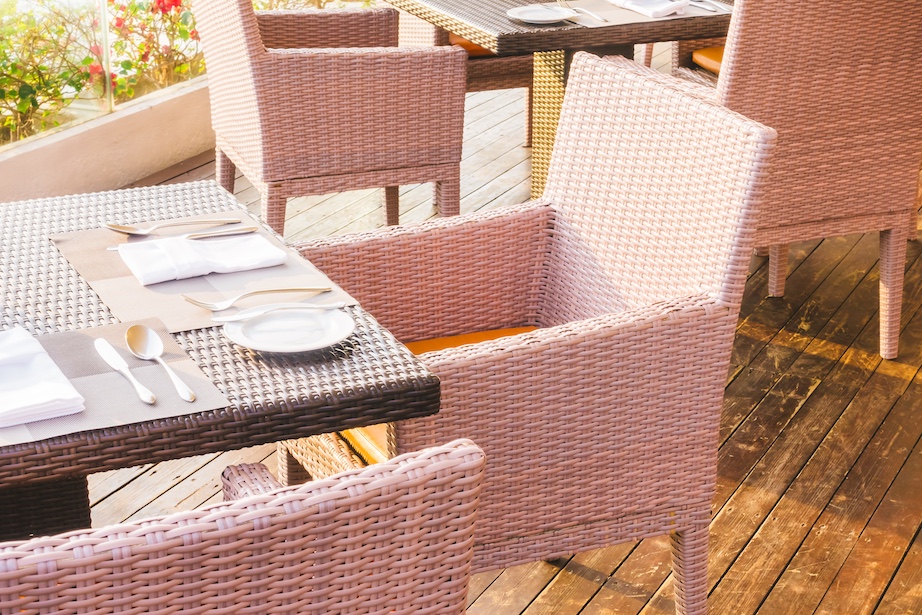
Resin wicker elements have the appearance of traditionally woven furniture but provide more longevity. It is also made of synthetic fibers that can resist rain, sun, and weather changes. Resin wicker will not peel, crack, or fade beneath harsh sunlight. High-quality frames allow you to use them, and their flexible design keeps you comfortable. Using gentle soap and water makes the cleaning a breeze.
Powder-Coated Steel: Strength with Added Protection
The stylish steel furniture exhibits a strong and solid nature. The metal is protected with a powder coating, preventing any chipping as well as rust. The coating also makes for different colors, finishes, and styles, which accommodate the many different restaurant themes. Powder-coated steel indeed suits hot and cold climates. Periodic checks for scratches ensure that we preserve its coatings.
Plastic: Durable and Low Maintenance
Plastic furniture has come a long way in recent years. New plastics are more resistant to the ultraviolet rays that fade material colors, causing materials that are placed in sunny areas to remain tinted for longer periods of time. Plastic parts are low in weight and highly durable; they also don’t absorb moisture and can be cleaned easily. Most designs are stackable to store and put away for the off-season. Wiping them regularly helps them to look fresh and appealing.
Concrete: Solid and Weatherproof
Outdoors, concrete tables and benches cannot be beat for stability. They are heavy enough that they do not tip or blow over in storms and high winds. Cleanliness is a no-brainer since sealed concrete resists water and stains. One reason why many love concrete is that its industrial look works well with modern and rustic styles. However, concrete furniture is durable and can last for many decades without requiring much care and preservation.
Recycled Plastics: Eco-Friendly and Long-Lasting
Plastics recyclers make furniture for anyone who wants to do their part. These plastics are highly resistant to moisture, mold, and insects. Color pigments weave their way into the material, which attenuates scratches and discoloration. Plastic shavings similar to wood do not need much scaffolding. They thrive in warm, cool, humid, or arid environments.
Conclusion
Using the right outdoor restaurant furniture material can prolong its longevity and elevate the dining experience. These eight materials have specific strengths, so you can trust any of them during some weather conditions. The finish and style can be chosen to suit the brand without losing practicality. Proper maintenance will enhance durability even further and provide guests with comfortable furniture for years to come.
Image by lifeforstock on Freepik
Contributed posts are advertisements written by third parties who have paid Woman Around Town for publication.