I had the privilege of meeting opera superstar Renée Fleming in 2005 when I interviewed her for Classical Singer magazine. Four years later, that interview was featured in my book Life in Opera. It was an absolute joy to reconnect with Ms. Fleming and speak about her recent endeavors that include her directorial debut at Aspen Music Festival and School, and her new role as Artist Development Advisor at Wolf Trap Opera (WTO).
A summer residency program of the Wolf Trap Foundation for the Performing Arts, Wolf Trap Opera offers one of the finest career development and performing experiences in the United States for emerging professional singers. After their annual audition tour, during which the most promising artists from all over the country are selected, WTO chooses the repertoire that will best showcase these artists’ distinctive talents. Located near Washington DC, in Vienna, Virginia, Wolf Trap Opera has contributed to the career development of over 700 emerging singers, many of whom—such as Stephanie Blythe, Lawrence Brownlee, Denyce Graves, Dawn Upshaw, to name a few—went on to stellar careers. Ms. Fleming shared her delight at working with exceptional young singers.
It’s wonderful to speak with you again after such a long time! We’re meeting in a new landscape in the opera world…
Absolutely! There are certain things that the pandemic really changed for us. One is the audience’s desire for shorter pieces and another, a strong interest in new work, which I find heartening. I think audiences have come back because they understand the benefits of being in a shared artistic experience.

Renée Fleming in rehearsal directing Mozart’s Così fan tutte at the Aspen Music Festival and School (Photo: AOTVA/Diego Redel)
You recently made your directorial debut with Così fan tutte at the Aspen Music Festival and School. How do you like directing?
You know, I really enjoyed this experience. It was a fun, unusual concept that I came up with and it worked. It gave all the young artists a chance to be creative and enjoy it. I set it in 1980s Massachusetts in a community gym and then on the beach, rather than the usual house and garden. Audiences loved it too, so we had a great time.
This season, you are Wolf Trap Opera’s Artist Development Advisor. Please tell us about your work there.
It’s really fascinating for me to be able to work with young singers who are, in many cases, further along in their careers. They’re young artists, actually working artists, whereas I have been working with slightly younger groups, so it’s a kind of a continuation that allows me to see a larger spectrum of the landscape for singing in the U.S. I started recently so I can’t say too much about my experience here yet, but it’s very exciting. It’s a beautiful place; the atmosphere is more relaxed and yet the young artists are getting tremendous experience performing in one of three operas and doing other class work as well. If you think about it, the summer programs for singers in the U.S. have grown tremendously. They are extremely competitive now, and I mean competitive for people working in this field to get the best talent. Wolf Trap Opera has consistently succeeded in doing that. It’s a long-established program, it’s on the East Coast, and it offers a salary to the young singers who come here, so it’s extremely advantageous. Then, these young artists tend to keep getting work later, which is a sign of success.
Wolf Trap Opera is a women-led company. What do you think that female perspectives bring to leading this institution?
I can’t say that it’s too different, really. We’re all professionals with varied experience in the opera world and we bring that into it. I mean, it is a very collaborative and nurturing atmosphere for these artists. I think they feel comfortable talking with Lee Anne [Myslewski, WTO Vice President] or Arianna [Zukerman, Manager, WTO Artistic Administration] or myself and sharing where they are in this moment of time.
I know that you’re about to go into a master class at Wolf Trap Opera right after our interview. When you teach in a master class, what is important to you to convey to these young artists, and what do you look for in them?
I look for mastery of skills, artistry, artistic imagination, a certain curiosity about repertoire. Obviously, the instrument is important as well. I try to be honest in a master class setting and convey what I really think, but with kindness, with respect, and not too much.

Renée Fleming teaching a master class at Wolf Trap Opera, with Studio artist Adam Catangui (Photo: Courtesy of Wolf Trap Opera)
That can be overwhelming for a young singer, at times. I’ve seen master classes where there’s too much information thrown at them, in front of an audience, and they seem lost.
Yes. When I was at Juilliard, I remember crying in the middle of a master class and just feeling so frustrated. I have also seen master classes where people made the audience laugh at the expense of the singer. I remember thinking at the time: I’ll never do that!
When I spoke with composer Laura Kaminsky about her new opera Lucidity, she brought up the essay anthology that you edited—Music and Mind: Harnessing the Arts for Health and Wellness—and she mentioned that you also did a panel discussion about it. After learning so many fascinating insights about music’s positive, healing effects on the brain, do you bring those insights into your teaching or interaction with young artists?
I do bring it into my interactions with audiences when I’m performing. I try to share some of the insights from the book explaining the health benefits of being in this shared artistic experience and attending concerts together. There’s so much more knowledge now regarding our intake of the arts and music on a cellular level: our brain waves align, our heartrates sink, the oxytocin goes up, and the stress hormone cortisol goes down, and other tremendous health benefits, like stimulating the vagus nerve. Singing is one of the best ways to do that.
And it combats cognitive decline…
Right, exactly. Any kind of learning that brings a benefit for cognitive reserve [the brain’s ability to cope with damage or disease while maintaining cognitive function] is very helpful but it’s also about the sense of community that singing together and seeing performances together gives us.
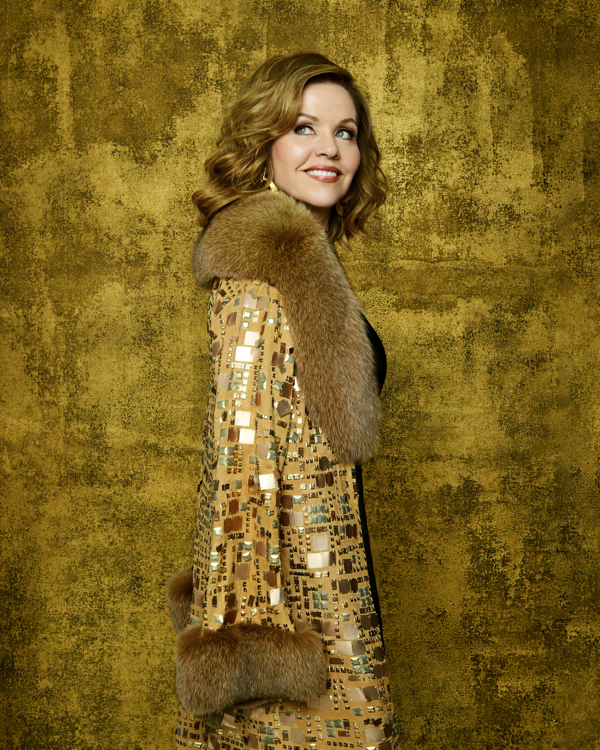
Renée Fleming (Photo: Andrew Eccles)
This is a very individual question for each singer, but ideally, how might the relationship with one’s art evolve so that a certain, let’s say healthy, novelty is always brought into it for the public as well as for the artist?
Performing has to be enjoyable. It has to be something that’s not bringing you terror or that you’re having nightmares about. Performing can be so for some people, and facing that is an individual journey. I had terrible stage fright, so I had to work through that. Then, once it is enjoyable and becomes something that you’ve shared, it can be not only awe inspiring but also a gift to the performer and the audience.
And I think the novelty is also maintained by a sense of curiosity in exploring new repertoire…
Yes, definitely!
How does the landscape of the opera industry seem to you today?
It’s challenging. There’s no question that it’s becoming even more challenging; companies are producing fewer works, and I think the whole opera industry landscape in the U.S. is shrinking. I suspect it is in Europe as well. Today, there’s so much more that drives people’s attention than there was when I was growing up: the digital world, the streaming world. But I don’t think the opera industry is going away. Maybe it will become smaller. Ideally, people will understand, partly from science, that we benefit tremendously from engaging with art, because it’s been such an important part of our evolution since the beginning of mankind. It’s hugely beneficial, that’s why there’s a whole slew of books out there like Your Brain on Art by Susan Magsamen and Ivy Ross, and Dan Levitin’s new book, I Heard There Was a Secret Chord, and other books coming out that really extol the virtues of engaging with art for health, especially brain health, and well-being.
And not just for professionals. Reading these books might also encourage people to practice music as a hobby…
Right, it’s fantastic for dealing with aging, for childhood development, for mental health especially with this worldwide crisis in mental health right now. I think music is one way that we can heal ourselves.
What do you think that emerging young artists should look to in the past to help them navigate today’s operatic industry?
Oh, there are so many more recordings and videos online now! I encourage them to listen, to watch and learn from past artists and performance practices. That’s so important in what we do now. It’s really helpful to stay connected to the artists who came before.
Even in terms of learning to deal with a different relationship with time and artistic development. Life expectancy has increased but we seem to have less time…
Certainly! We don’t have time; we’re trying to pack so many things into a day and that’s definitely difficult! I give myself the gift of some artistic experience every day; it’s important to do that. Sometimes, it’s just being in nature. And I’m reading a lot of novels right now. I go to museums, concerts, and theater as much as I can, and I find that a very calming way to spend our time, in addition to work.
What would you tell potential audiences who have never been to Wolf Trap?
First of all, they should come and see all the incredible concerts here, even beyond the summer. I think the summer season is sold out, which is incredible because not very many performing arts venues could say that. Before the concert, I would suggest that they go for a walk in the park; it’s beautiful. And you can also sit on the lawn for a concert. It’s a fantastic place; my husband and I love to come here just to attend. The performances are usually packed.
So, people need to get tickets way in advance…
Definitely!
Anything else you’d like to mention about your current role at Wolf Trap Opera?
I’m just very heartened to see the extraordinary talent that is still interested in doing what we do! It’s my privilege to try and support them.
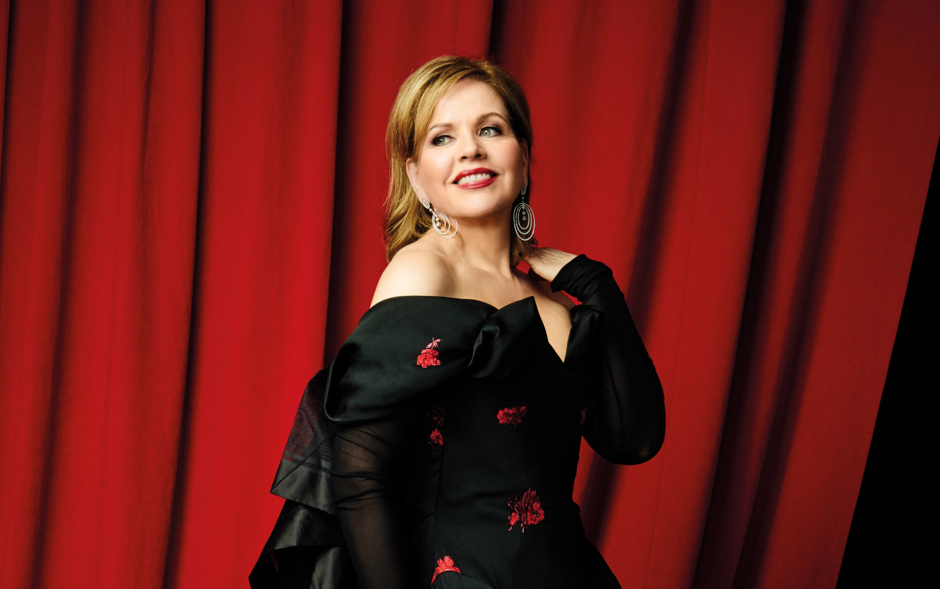
Top: Renée Fleming (Photo: Andrew Eccles)