In 1957, jazz saxophonist and composer John Coltrane (1926-1967), had a religious revelation that may have helped overcome heroin addiction and alcoholism. His liner notes for A Love Supreme acknowledge “a spiritual awakening which was to lead me to a richer, fuller, more productive life.” Coltrane was raised Christian in North Carolina. Both grandfathers had been ministers. By the time he experienced his epiphany, however, he’d done considerable theological and theosophical exploration. In the liner notes of Meditations he wrote “I believe in all religions.”
This semester, Host Louis Rosen begins his 92Y jazz course with the venerated musician; in particular, how spiritual awakening affected his music. Giant Steps, an album featuring only his own compositions, established Coltrane as a band leader, not just a sideman. It was followed in 1960 by “a most unusual occurrence,” popular success (outside of jazz circles) of his reinterpretation of Rodgers and Hammerstein’s “My Favorite Things.”
At this point, the musician left Atlantic to become the first artist signed by Impulse! with a lucrative recording contract unheard of in Jazz. Africa /Brass (1961) was his initial effort on the new label and is the subject of today’s class. Rosen tells us Coltrane was neither intentionally provocative/ subversive nor driven by money. “He didn’t use the words ‘art’ or ‘artist’ but brings qualities of both.” The subject read religion, theosophy, the occult, science and math-texts not typically explored by musicians.
Rosen cites two books that influenced Coltrane: 19th century composer, writer, poet, and occultist Cyril Scott’s The Philosophy of Modernism (In Its Connection with Music) was one. (The term “modernism” is derived from the Latin “modo,” meaning “just now.”) Composers were in the forefront of artists who broke from convention in the first decade of the 20th Century. The movement gave rise, in part, to abstract art, stream of consciousness writing, atonal and twelve-tone music.
The second book was The History of Soul and Music by Sufi Master/musician Hazrat Inayat Khan who wrote that music is truth emerging from the depths of one’s being, altering consciousness.
The Host compares Coltrane’s new approach to Jackson Pollack’s (drip) painting which he calls controlled improvisation. “Trane preferred to see his music along these lines believing in the spiritual force of music, that it can come out of a trance-like state. After 1960, he wasn’t sure where to go next…Chord progression in the modal jazz* of Blue and Giant Steps is minimal if it exists at all. There’s no prescribed beginning, middle, and end. He was moving towards a virtuosic simplicity,” Rosen observes.
Africa/Brass, Coltrane’s 8th studio album, came out of the famous Van Gelder Recording Studio in Englewood Cliffs, New Jersey to which the saxophonist became loyal. “Rudy Van Gelder was a great engineer, not just technically astute, also remarkably musical. He understood how to capture a mix at a time when recording was live.” Impulse! wanted their new acquisition to play with a much larger group than his usual quartet, one totaling 21 musicians.
Bassists Reggie Workman and Art Davis – one high, one low – would create a drone (in E) which persists for the entire 16 ½ minutes of the track Africa. McCoy Tyner remained piano ballast. Eric Dolphy (alto saxophonist, bass clarinetist and flautist ) was brought in from what had become Coltrane’s quintet. French horns and euphonium added a very different sound. Several critics called out “overblowing,” causing pitch to jump to a higher one through supplied air, rather than a fingering change.
Rosen tells us the musician integrated classical, folk, spiritual, and Indian (Ravi Shanker) genres with this album. We listen. Side one, Africa, arrives, to me, like the cacophony of a Middle Eastern street market. When I make the comment, Rosen remarks that the term implies something out of control which the music is definitely not. As always, listening is very personal.
Side two contains an original version of the classic “Greensleeves”, a jazz waltz in triple time. Coltrane used the same “voicing” (the way you distribute a chord among instruments) as Tyner’s piano. This cut starts with accessible melody then takes off in diverse, elusively coordinated flight. The last tune is “Blues Minor” which has a strong, primary theme or “head.” Dolphy said Coltrane wrote out parts on the spot. The group got it down in one take.
In January 1962, Martin Williams of Downbeat Magazine wrote a review of Africa/Brass: “I question…whether here this exposition of skills adds up to anything more than a dazzling and passionate array of scales and arpeggios. If one looks for melodic development or even for some sort of technical order or logic, he may find none here.” Fifty years later with a lengthier reissue, the album is often referred to as iconic.
“I myself don’t recognize the word jazz. I mean, we’re sold under the name, but to me the word doesn’t exist. I just feel that I play John Coltrane.” John Coltrane
“The term “modal jazz” refers to improvisational music organized in a scalar (“horizontal”) way rather than in a chordal (“vertical”) manner. By de-emphasizing the role of chords, a modal approach forces the improviser to create interest by other means: melody, rhythm, timbre, and emotion…” Peter Spitzer- author, musician, educator
All unattributed quotes Louis Rosen
Next week: Rosen explores Ornette Coleman’s The Shape of Jazz to Come. “Some jazz artists really bridled at the album’s title,” he notes. Here was another musician who broke free of traditional structure and harmony. Liberties taken by Coleman are the same that interested Coltrane.
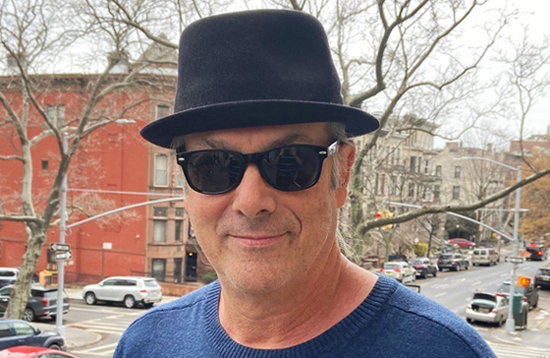
Photo Courtesy of Louis Rosen
Louis Rosen, composer, lyricist, performer, author and educator, is a Guggenheim Foundation Fellowship recipient whose musical style is a fusion of folk, jazz, classical, rock and blues idioms. He’s designed and taught the Music Appreciation/History and Music Theory curriculum for the 92Y’s School of Music over 35 years.
The Course: 1960s is a vibrant decade in jazz, remarkably rich in its broad range of expression. Young but established composer/players including John Coltrane, Horace Silver, Charles Mingus, Ornette Coleman and Antonio Carlos Jobim are entering their prime; a younger generation such as Wayne Shorter, Bill Evans, Herbie Hancock and Sun Ra are coming into their own; and giants in the field such as Miles Davis, Duke Ellington and Thelonious Monk continue to reinvent themselves, always staying one step ahead of the rest.
All is explored in the historical context of the exploding Civil Rights Movement, the tumultuous politics and social upheaval of the decade, the gradual dominance of rock music in popular culture, and the regular pronouncements throughout the era that jazz was dead. The pronouncements were wrong—the music is terrific. Louis Rosen