In celebration of 92Y NY’s 150th Birthday
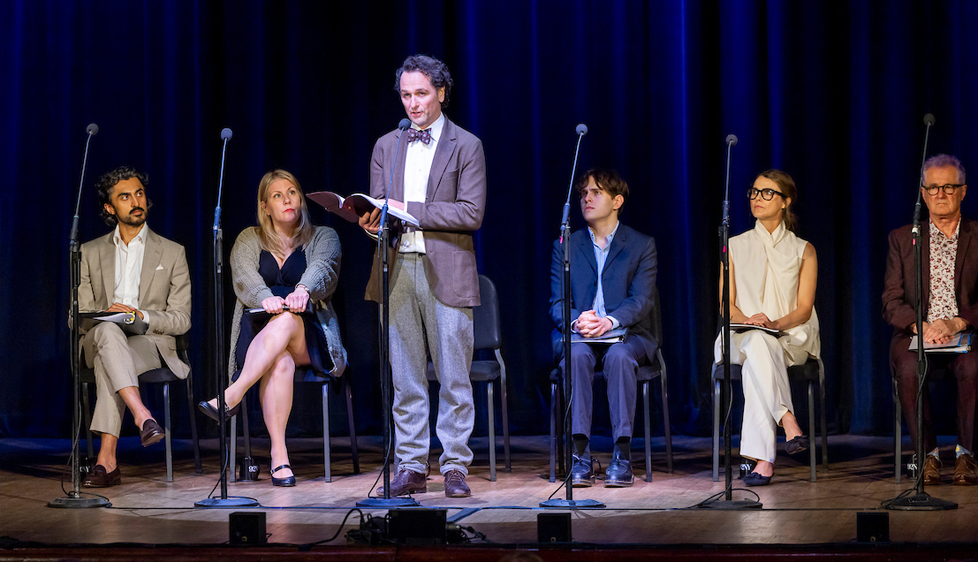
Dear Mr. Thomas is a story of the warm, chaotic, frustrating relationship between Canadian poet John Malcom Brinnin (1916-1998) and Welsh poet Dylan Thomas (1914-1953); of Brinnin’s unfailing devotion and support in the face of Thomas’s lying, profligacy, alcoholism, unreliability, charm, and talent. The play’s axis is the debut of Thomas’s play for voices, Under Milkwood on the 92Y NY Kaufmann stage in 1953. Its writer, self-titled, “assembler,” Christopher Monger, has integrated dialogue with two narrators, tonight Kate Burton (Welsh) and Betsy Zajko.
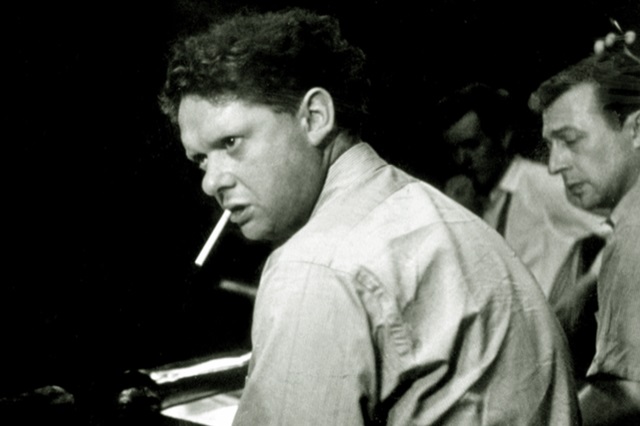
Dylan Thomas (Public Domain)
At 33, John Malcom Brinnin (Taylor Trensch) accepted the post as director of the 92Y NY’s Unterberg Poetry Center in large part to facilitate bringing Dylan Thomas (Matthew Rhys – Welsh) to America. He wrote repeatedly to the Welshman. “Time passes. Listen. Time passes,” a narrator intones (from Under Milkwood).
Generally speaking, the Thomases didn’t open any correspondence except checks and cash. Dylan would eventually get to some few portending work. We hear droll excerpts riddled with excuses of disaster, one ending in his being hit by lightening. Haggling for immediate funds, the poet accepts Brinnin’s offer to organize a tour.
He arrives in New York in 1950, “boisterous, scatological, childish, crude – and immediately vomited.” Expelled from his first hotel for overtaxing room service, Thomas settled at The Chelsea. Initial performance on the Kaufmann stage included the work of other poets as well as his own. Rhys recites Thomas’s “Fern Hill”: Now as I was young and easy under the apple boughs/About the lilting house and happy as the grass was green…Phrasing, enunciation, and conjuring are evocative.
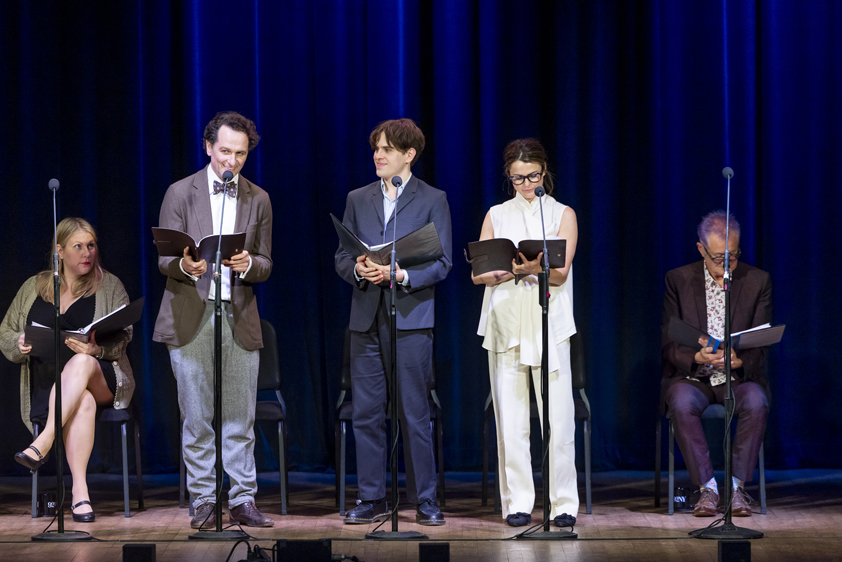
Lorna Bennett, Matthew Rhys, Taylor Trensch, Keri Russell, Christopher Monger
A gushing letter to his wife Caitlin (Lorna Bennett) is met by her with: “If only one fucking word of it were true.” She’d already heard about highjinks surrounding his readings. The couple were as notorious for knock down drag out fights as Thomas was for drunken behavior and bedding admirers. “If he had arrived now, he would’ve been ‘canceled’ online,” a narrator notes. “Can you imagine a poet today being followed and cheered by crowds?” This unnecessarily intrudes.
The tour begins. In three months, Thomas reads at 40 universities. He’s uncomfortable with academics, but gleefully avails himself of hospitality. Returning to New York, much to Brinnin’s astonishment, the Welshman has not a penny left. He spent, lost, or gave away about 60 thousand of today’s dollars, going home to wife and family with little to show.
Never above desperate financial solicitation, the poet writes pleading, often promising missives. Excerpts are wonderful. Debts are vast. “Who’s the incubus?” pajama-wearing Thomas asks, encountering a tax man in his kitchen. Earnings from writing and broadcasting for the BBC were unaccounted for. “Money is liquid and Dylan a colander,” Caitlin comments. Another American tour is the only way out.
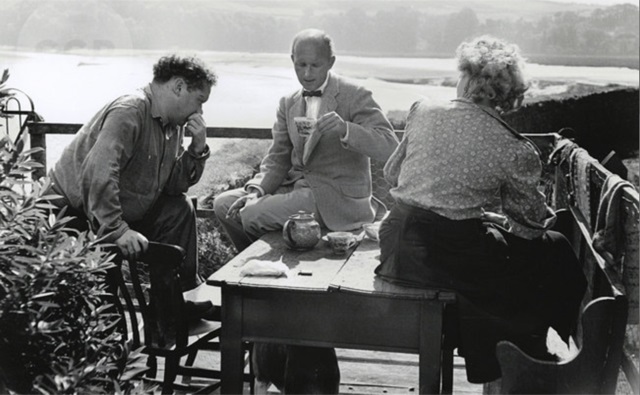
Dylan Thomas, Malcom Brinnin, Caitlin Thomas (Public Domain)
Life was poor at home. Half to enjoy anticipated luxury and half to keep an eye on her husband, Caitlin accompanies Thomas this time. They travel to 46 engagements. The poet also makes his first vinyl recording: A Child’s Christmas in Wales. (Marvelous. Available on CD.) Caitlin asks for payment in order to keep it from slipping through her husband’s fingers, then spends thousands on clothes. The two passionate immoderates have much in common. They return to Laugharne with extra luggage. When Thomas’ father dies, he writes Do Not Go Gentle Into That Good Night/ Old age should burn and rave at close of day; Rage, rage against the dying of the light…
After a time, broke again, a third trip is planned. Having found a suitcase of American love letters, Caitlin declines accompanying Thomas. When his Collected Poems are published, the endearing dedication reads: “To Caitlin.” The question of how to make this tour different is solved when Brinnin hears about an unfinished play for voices then called The Town That Went Mad. It was he that convinced Thomas to change the title to Under Milkwood.
The piece had already been sold to the BBC in anticipation of production and to patron Princess Marguerite Caetani in expectation of publishing. Thomas referred to it as “My lonely, half of a looney maybe play.” Unaware, Brinnin makes plans for its international debut at 92Y NY. This visit includes new assistant Liz Reitell (Keri Russell), who will lock the reprobate in a room so that he’ll finish the piece. Its last lines are handed to actors as they apply make-up.
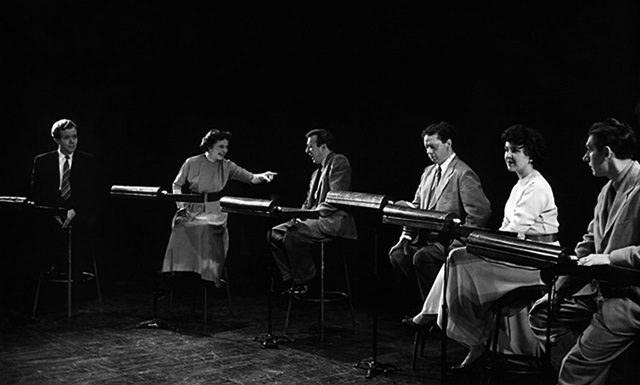
Rehearsal of the original event-Photo by Rollie McKenna Courtesy of The 92Y NY
Roy Poole, Nancy Wickwire, Dion Allen, Dylan Thomas himself, Sada Thompson and Allen F. Collins.
“Note the commas, phrases will fall into place like a baby’s blanket. I’m really good with commas,” Thomas says in the play. “The stage was dim until a soft breath of light showed Dylan’s face… . One by one, the faces of the other actors came into view as the morning light of Milk Wood broadened and Dylan’s voice, removed and godlike in tone, yet pathetically human in the details upon which it dwelt, made a story, a mosaic and an aubade of the beginning movements of a village day.” (John Malcom Brinnin)
“To begin at the beginning: It is a spring, moonless night in the small town, starless and bible-black, the cobblestreets silent and the hunched, courters’-and-rabbits’ wood limping invisible down to the sloeblack, slow, black, crowblack, fishingboat-bobbing sea.” (Under Milkwood) There are 14 curtain calls at a time when that had meaning.
We follow Thomas back and forth with ancillary characters played by Gopal Divan (In a credible roster of accents) and Betsy Zajko. There are Thomas poems and quotes, Brinnin quotes and material gathered from other sources.
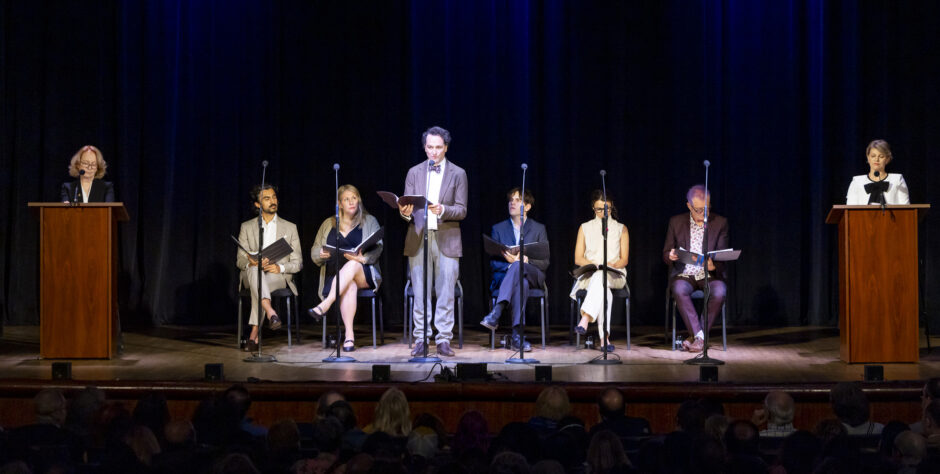
Kate Burton, Gopal Divan, Lorna Bennett, Matthew Rhys, Taylor TRensch, Keri Russell, Christopher Monger, Betsy Zajko
At 39, Thomas made his last trip here. “He looked sickly and sixty…lived on raw eggs, beer and shots,” (supposedly cortisone) from a doctor to whom Liz introduced him. “Everyone knows how it ends, oh please!” Monger’s Thomas exclaims.” Eighteen whiskey shots at the White Horse (Tavern), then collapsed in Liz’s arms; overdosed on morphine; a private eye said he drank Benzedrine. (Thomas had bronchitis, emphysema, pneumonia, and asthma as well as fatty liver.) Dylan Thomas died before the BBC recorded him reading Under Milkwood. Richard Burton stepped in. (The recording is still available.)
And death shall have no dominion./ Dead men naked they shall be one/ With the man in the wind and the west moon;/ When their bones are picked clean and the clean bones gone…
Dear Mr. Thomas is more fragmented than it need be because of two narrators rather than one. I find reference to how the poet would be received today pandering that takes us out of natural trajectory. Otherwise, this is an entertaining and illuminating piece, offering a glimpse of Thomas, Brinnin, Caitlin, and the Welshman’s time in the States in a spirit of which he’d probably approve.
“Much of the play comes from contemporary sources – but that does not mean it is true. And the rest I have invented – but that doesn’t mean that it is necessarily false.” Christopher Monger
Event Photography Karl Ault/Michael Priest Photography
Dear Mr. Thomas: A New Play for Voices
Assembled by Christopher Monger
Theresa L. Kaufmann Concert Hall
92Y NY
Dylan Thomas in America by John Malcom Brinnin (1955) is in print.
Caitlin Thomas’s book, Caitlin – with George Tremlet is also readily available.
The Life of Dylan Thomas by Constantine Fitzgibbon is fun to read, but I gather not all factual.