Waking Up With Upper Back Pain? Here’s What Your Sleep Setup Might Be Doing Wrong

The following curated article is provided by our advertisers. Contributed articles help our readers in categories beyond our main Woman Around Town topics such as legal matters, personal issues, home improvement, and more. While we don’t endorse any of the products mentioned or linked to in these articles, we only publish articles that we hope our readers will find helpful. We often receive compliments about these articles and enjoy them ourselves. We hope you enjoy them as well!

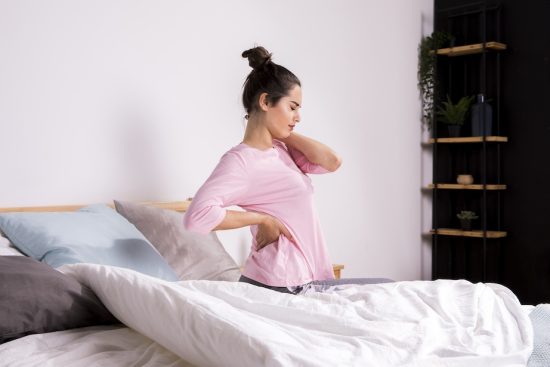
There are few ways to start a day worse than waking up in more pain than you went to sleep with. If upper back pain after sleeping is a regular part of your mornings, it’s a signal worth paying attention to, not just for your comfort, but for your overall health. The upper back is a complex region, and the causes of sleep-related pain there are more varied than most people realize.

What’s Actually Happening

The upper back is roughly the area between the shoulder blades and up to the base of the neck, and it’s less prone to the kind of disc-related pain that affects the lower back. Instead, upper back pain in this region is more commonly muscular and postural. The muscles, tendons, and joints that support the upper spine and shoulders are sensitive to position, pressure, and sustained tension.

During sleep, you’re in a single position (or a small number of positions) for hours at a time. If that position creates sustained tension, misalignment, or poor pressure distribution in the upper back, those structures spend the entire night under stress rather than recovering. The result is the stiffness and ache that greets you in the morning.

The Most Common Culprits

  • Pillow height mismatch: A pillow that’s too high or too low forces the cervical spine out of neutral alignment. That misalignment travels. The upper back muscles compensate for an improperly positioned head and neck by working harder than they should for hours. This is one of the most common and overlooked causes of morning upper back pain.
  • Mattress issues: A mattress that’s too soft can allow the upper body to sink unevenly, creating subtle but sustained torque on the thoracic spine. A mattress that’s too firm can create pressure points at the shoulders and upper back that result in pain by morning. The right level of support varies by body type and sleep position.
  • Side sleeping mechanics: Side sleeping is popular and can be perfectly healthy, but it concentrates a significant amount of body weight on the shoulder of the arm you’re lying on. Over time, and especially without the right lateral support, this can create recurring upper back and shoulder pain. The shoulder that’s on the mattress effectively absorbs pressure that, without proper support, doesn’t distribute evenly.
  • Arm position: Where your arms go during sleep affects upper back tension more than most people realize. Sleeping with an arm extended overhead, tucked under a pillow, or crossed over the body can all create strain patterns that show up as upper back pain in the morning.

What to Do About It

For many people, the most effective solution is rethinking their sleep setup as a whole. A full-body sleep system addresses upper back pain at the source by creating coordinated support across the entire body rather than patching one problem at a time. Upper back pain during sleep is rarely caused by just one thing. It’s usually a combination of factors, including: 

  • Head and neck position
  • Shoulder pressure
  • The angle of the upper body
  • How well the rest of the body is supported

Fixing only one of those variables while leaving the others unchanged often produces limited results. A full-body pillow system for managing upper back pain typically includes elevation for the upper body, which shifts pressure off the shoulders and upper back. 

This involves support beneath the legs to keep the spine in a more neutral alignment, and lateral cushioning to manage shoulder pressure for side sleepers. When these elements work together, the body is held in a position that reduces the sustained tension that accumulates over hours of sleep.

This is a meaningfully different approach from adjusting your pillow height or rotating your mattress, both of which have value, but neither of which addresses the full picture. For people dealing with persistent morning upper back pain who haven’t found relief through individual fixes, a more comprehensive sleep positioning solution is often the missing piece.

More Than Positioning

If adjusting your sleep environment doesn’t improve your upper back pain after a few weeks, it’s worth speaking with a healthcare provider. Persistent upper back pain can sometimes be related to structural issues, referred pain from internal organs, or conditions that require more targeted treatment than a positioning change can provide.

However, for a large proportion of people, the root cause is the sleep setup, and it’s fixable. A few targeted changes to pillow support, sleep position, and lateral alignment can make a surprising difference in how you feel when the alarm goes off.

Pay attention to the pattern. If you wake up feeling worse than when you went to sleep on a regular basis, your body is telling you that your mattress and pillows aren’t doing their job. 

Image by freepik

Contributed posts are advertisements written by third parties who have paid Woman Around Town for publication.


Share This Post:

Bluesky Icon Bluesky
Facebook

Most business owners spend money on CCTV, alarm systems, roller grilles, padlocks, and still get surprised when a break-in happens, or when they open up on a Tuesday and find their merchandise bleached out and…

Glucagon-like peptide-1, commonly known as GLP-1, is a naturally occurring hormone that has become central to conversations about appetite regulation and metabolic health. Produced in the intestines after eating, this hormone signals satiety to the…

You can get used to blurry vision more than you think. Squinting at your phone, holding books a little closer, avoiding night driving, these things slowly become part of your routine. At first, it feels…

Wellness is no longer built around isolated habits. Instead, it is becoming a combination of routines that support both physical and mental well-being in a consistent, sustainable way. From skincare to stress management, people are…

Something has quietly shifted in the way women think about income. The old model, focusing on one job, one paycheck, one path, is giving way to something more fluid, more creative, and frankly more interesting.…

Why does a child chatter at home but clam up in front of a therapist? It is not about effort. It is about comfort. It is about whether the moment feels like life or like…

Beyond Blinds: The Dual Functionality of Rolling Shutters

Most business owners spend money on CCTV, alarm systems, roller grilles, padlocks, and still get surprised when a break-in happens, or when they open up on a Tuesday and find their merchandise bleached out and faded from months of direct sunlight sitting behind glass. The problem isn’t your security budget. It’s that you’ve been treating two separate business problems, protection and climate control, as two separate expenses. They don’t have to be. Rolling shutters solve both.

read more

The Science Behind GLP-1 Supplement Drinks for Managing Sugar Cravings

Glucagon-like peptide-1, commonly known as GLP-1, is a naturally occurring hormone that has become central to conversations about appetite regulation and metabolic health. Produced in the intestines after eating, this hormone signals satiety to the brain, helps regulate blood sugar levels, and influences how quickly food moves through the digestive system. As researchers have deepened their understanding of GLP-1’s mechanisms, a new category of wellness products has emerged: GLP-1 supplement drinks designed to support the

read more

5 Common Vision Problems That May Qualify for Surgical Correction

You can get used to blurry vision more than you think. Squinting at your phone, holding books a little closer, avoiding night driving, these things slowly become part of your routine. At first, it feels manageable. Then one day, you realize you are planning your life around what you can and cannot see clearly. In many places, including busy areas like New Jersey, where people rely on clear vision for work, commuting, and daily life,

read more

Waking Up With Upper Back Pain? Here’s What Your Sleep Setup Might Be Doing Wrong

There are few ways to start a day worse than waking up in more pain than you went to sleep with. If upper back pain after sleeping is a regular part of your mornings, it’s a signal worth paying attention to, not just for your comfort, but for your overall health. The upper back is a complex region, and the causes of sleep-related pain there are more varied than most people realize. What’s Actually Happening

read more

Modern Wellness Routines Are Blending Skincare Science and Everyday Balance

Wellness is no longer built around isolated habits. Instead, it is becoming a combination of routines that support both physical and mental well-being in a consistent, sustainable way. From skincare to stress management, people are looking for approaches that fit naturally into their daily lives without feeling overly complex or time-consuming. This shift reflects a broader understanding that long-term results come from habits that can be maintained, not just from occasional effort. At the same

read more
You've loaded all available articles in this category

Beyond Blinds: The Dual Functionality of Rolling Shutters

Most business owners spend money on CCTV, alarm systems, roller grilles, padlocks, and still get surprised when a break-in happens, or when they open up on a Tuesday and find their merchandise bleached out and faded from months of direct sunlight sitting behind glass. The problem isn’t your security budget. It’s that you’ve been treating two separate business problems, protection and climate control, as two separate expenses. They don’t have to be. Rolling shutters solve both.

read more

The Science Behind GLP-1 Supplement Drinks for Managing Sugar Cravings

Glucagon-like peptide-1, commonly known as GLP-1, is a naturally occurring hormone that has become central to conversations about appetite regulation and metabolic health. Produced in the intestines after eating, this hormone signals satiety to the brain, helps regulate blood sugar levels, and influences how quickly food moves through the digestive system. As researchers have deepened their understanding of GLP-1’s mechanisms, a new category of wellness products has emerged: GLP-1 supplement drinks designed to support the

read more

5 Common Vision Problems That May Qualify for Surgical Correction

You can get used to blurry vision more than you think. Squinting at your phone, holding books a little closer, avoiding night driving, these things slowly become part of your routine. At first, it feels manageable. Then one day, you realize you are planning your life around what you can and cannot see clearly. In many places, including busy areas like New Jersey, where people rely on clear vision for work, commuting, and daily life,

read more

Waking Up With Upper Back Pain? Here’s What Your Sleep Setup Might Be Doing Wrong

There are few ways to start a day worse than waking up in more pain than you went to sleep with. If upper back pain after sleeping is a regular part of your mornings, it’s a signal worth paying attention to, not just for your comfort, but for your overall health. The upper back is a complex region, and the causes of sleep-related pain there are more varied than most people realize. What’s Actually Happening

read more

Modern Wellness Routines Are Blending Skincare Science and Everyday Balance

Wellness is no longer built around isolated habits. Instead, it is becoming a combination of routines that support both physical and mental well-being in a consistent, sustainable way. From skincare to stress management, people are looking for approaches that fit naturally into their daily lives without feeling overly complex or time-consuming. This shift reflects a broader understanding that long-term results come from habits that can be maintained, not just from occasional effort. At the same

read more
You've loaded all available articles in this category